What do you hold sacred?

Sacred means deserving of respect (typically in relation to a spiritual or religious affiliation).
Sacred is also used to describe sites or places too significant to alter or change.
For many indigenous tribes, certain landscapes are held sacred due to their spiritual and historical connections. Many indigenous tribes believe that the natural landscape is a living being, deserving of respect rather than ownership.
Public lands are places for our souls to connect with those who have passed on, they are places to connect with those who are here right now, places for our minds to find peace from the stressors of daily life, places to witness the diversity of wildlife, and places for the telling of our past so that we know how to move forward.
I am grateful for organizations that seek to PROTECT and PRESERVE our sacred public lands.
Will you help protect these places?

I recently took a long weekend to explore some of our national monuments, many of which are at risk of being downsized. I wanted to visit them now, just in case something unfortunate happens in the future and they end up—heaven forbid—developed or taken over by industrial companies. I’m staying hopeful…but you never know what might happen.
Natural Bridges National Monument
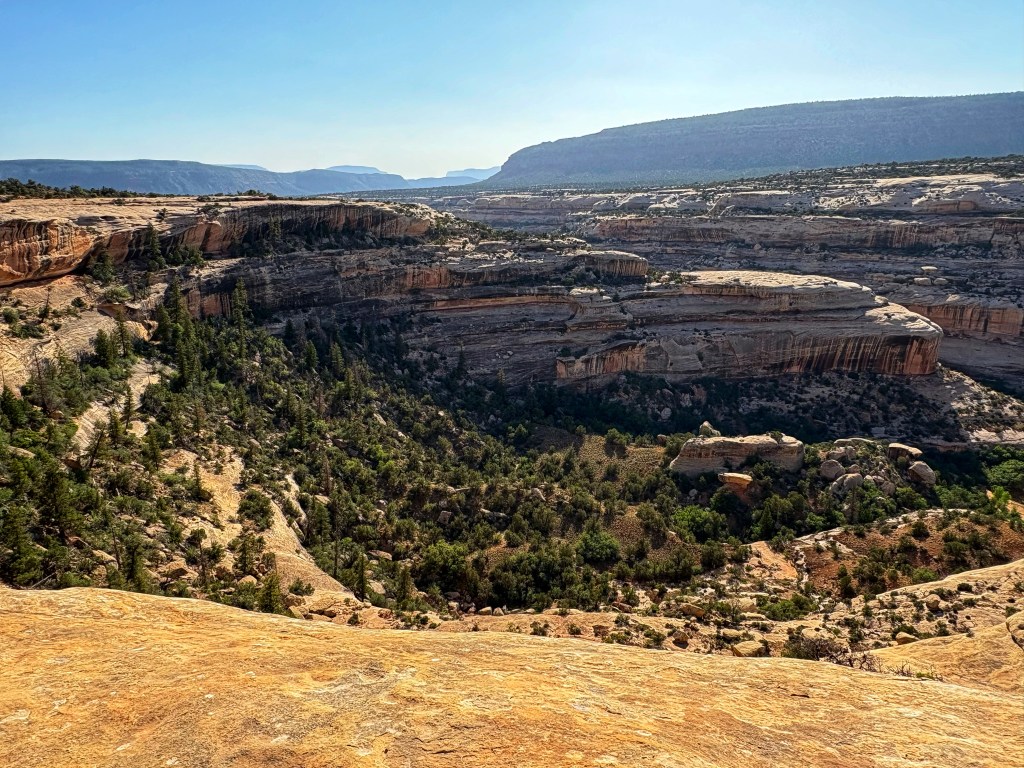
At Natural Bridges National Monument, the bridge formations are stunning reminders of the passage of time (even rocks age). These walls hold thousands of years of history and culture within them.
An unmaintained trail links a lot of the bridges together at the very bottom of the canyon. In the heat of the day, it is not recommended for those who are unprepared as the heat and the hike are pretty intense. However, you do not have to venture all the way down to appreciate the beauty and significance of the area. There are viewpoints all along Bridge View Drive to see the bridges: Sipapu Bridge, Kachina Bridge, and Owachomo Bridge. Interestingly, the word Sipapu is a Hopi term meaning “place of emergence,” eluding to the passageway by which the Hopi believe their ancestors entered this world.

Living in a rural mountainous area of Colorado, I’m accustomed to stunning night skies, but the sky above Natural Bridges National Monument was by far the deepest and darkest I’ve ever seen.The next most beautiful sky I’ve ever seen was in the heart of the Navajo Reservation, about an hour outside of Flagstaff, AZ. We went to a night sky program hosted by a National Park Ranger at the Natural Bridges Visitor Center. The Milky Way was so vivid that my camera didn’t even need a special setting or filter.
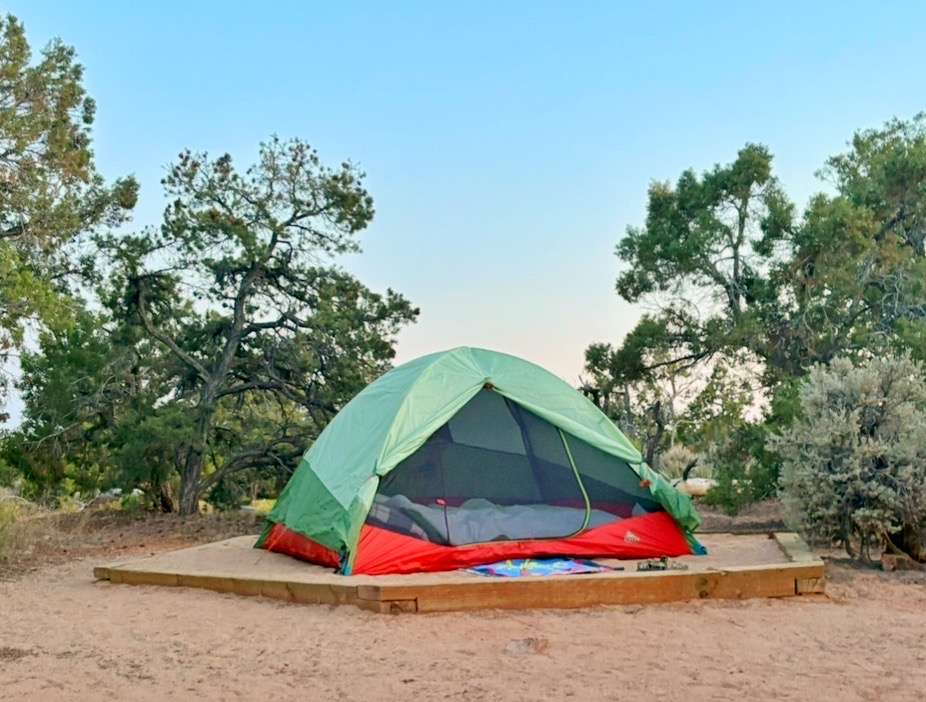
I really enjoyed camping at Natural Bridges National Monument. There were other campers not too far away, but everyone was respectful of quiet hours, and it felt very peaceful at the campsite. I woke up in the middle of the night and stared up at the sky for a while, and for a moment, nothing else mattered. Just a moment of pure peace and an awareness of the earth around me.
I honestly didn’t know what to expect at this monument. I had barely heard of this place before, and I was not very familiar with it. But the stillness and the night sky were very refreshing to my mind and soul. I thoroughly enjoyed the views, the trails, and the cultural significance.
Hovenweep National Monument

Hovenweep National Monument had been on my list of places to visit for over a decade but due to its remote location, it took me awhile to plan a trip out there. I was glad to finally see it in person!
“In the desert, the two primary elements are stone and water. Stone comes in abundance, exposed by weathering and a lack of vegetation. It is a canvas. Water crosses the stone with such rarity and ferocity that it tells all of its secrets in the shapes left behind.” -Craig Childs
Known for several ancestral Puebloan villages and a kiva, Hovenweep National Monument is a journey through time. Archeologists are still divided as to why these stone towers were built where they are. Were they built for defense? Were they built to protect water resources? One thing remains clear: the historical and cultural significance of this area is undeniable and the meaning that it holds for many indigenous tribes in the four corners region is vast.

Chimney Rock National Monument
“Even though Chimney Rock is no longer inhabited physically, it is still inhabited by spirits that have never left.”
-Paul Pino, Laguna Pueblo
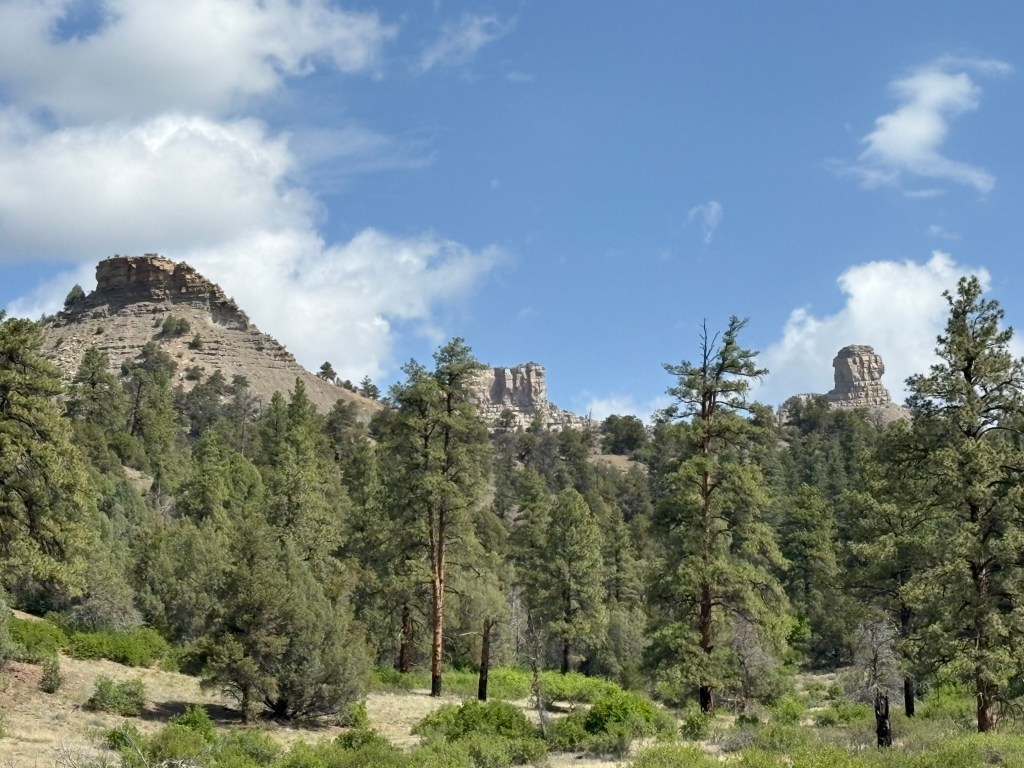
In southern Colorado there is a small national monument that many folks probably drive right by and have no idea how cool this site is. One of only 15 national monuments that is operated by the National Forest Service (as opposed to the National Park Service).
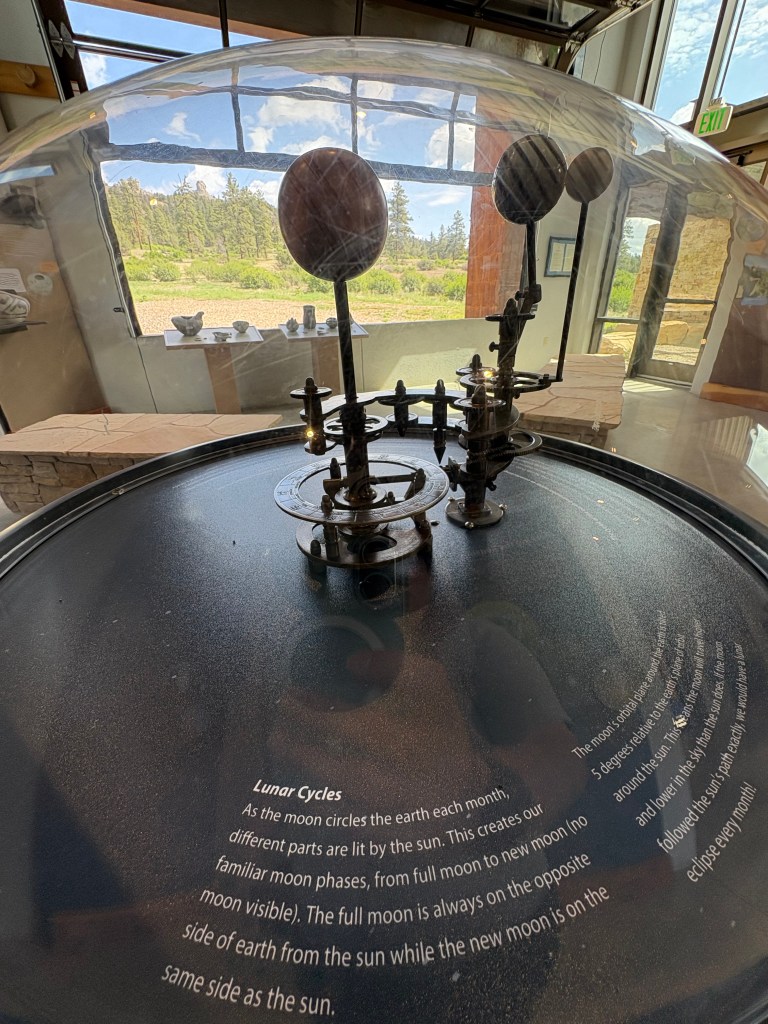
Chimney Rock National Monument is a really cool ancestral Puebloan site that was built with astronomical purposes in mind! Two sandstone pillars on top of a mountain were built to observe the northern major lunar standstill–a celestial event that happens every 18.6 years. There are also an ancestral Puebloan village and Chacoan-style Great House Pueblo. Thank you to the Forest Service for preserving and interpreting this site! The visitor center has also won interpretation awards from the National Association for Interpretation.

Bears Ears National Monument
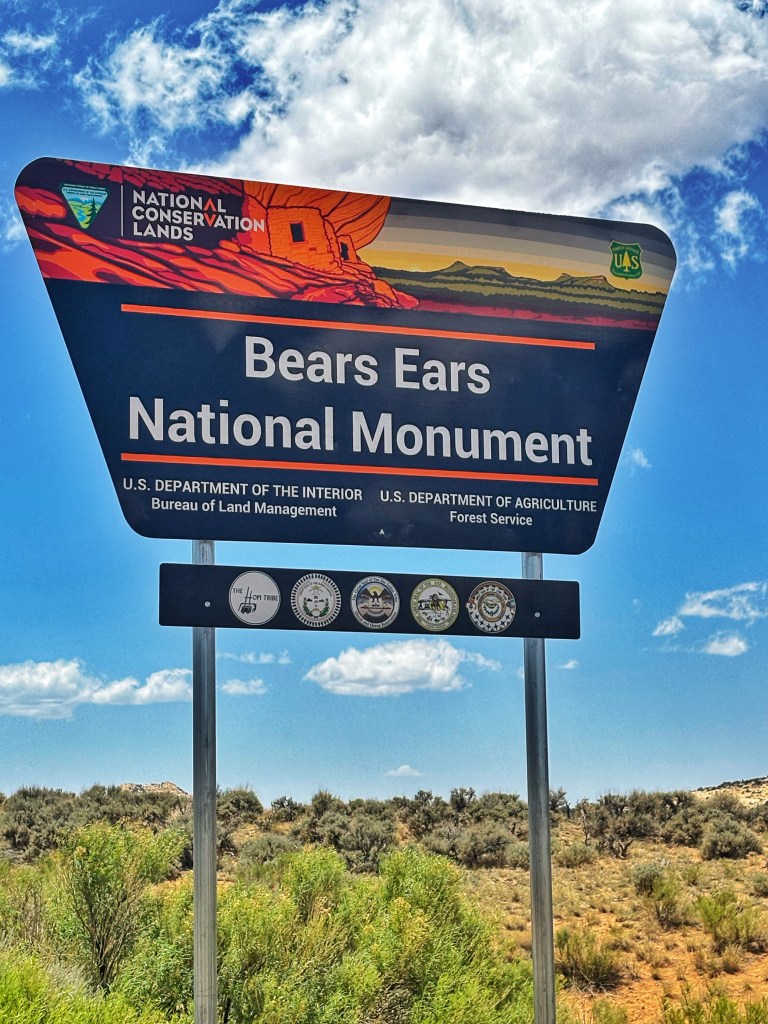
Bears Ears National Monument is co-managed by the Bureau of Land Management and the United States Forest Service. The land is held sacred by many indigenous tribes who continue to rely on these lands for traditional and ceremonial purposes.
This area of southeast Utah is considered sacred.
I don’t want to say too much about this area so as to protect the history and culture contained within its boundaries.
However, please know that this area is in need of ongoing protection.
Note: For those who collect the National Park Service passport stamps, you can get your Bears Ears National Monument stamp from the Kane Gulch Ranger Station, located on Utah highway 261, about twelve minutes southeast of Natural Bridges National Monument. (They keep the stamp secured outside so that you can get your stamp even when the station is closed.)

Devils Tower National Monument
Devils Tower National Monument was America’s first national monument, created in 1906 under the Antiquities Act by Theodore Roosevelt. The monument and surrounding area hold sacred significance to over twenty different indigenous tribes. The tower is known as Bear Lodge or Bear’s Tipi in several indigenous circles. Many tribal members often perform ceremonies and return to the area for prayers.

The name Devils Tower originated when Colonel Richard Dodge, on an expedition for the U.S. Geological Survey, misinterpreted the Lakota word wahanksica (meaning black bear) for the word wakansica (meaning evil spirit).
[Source: Standing Witness; Devils Tower National Monument A History by Jeanne Rogers, 2008.}
Devils Tower, made of the igneous rock phonolite porphyry, is the world’s largest example of columnar jointing! There are still a lot of theories as to how the tower was formed.
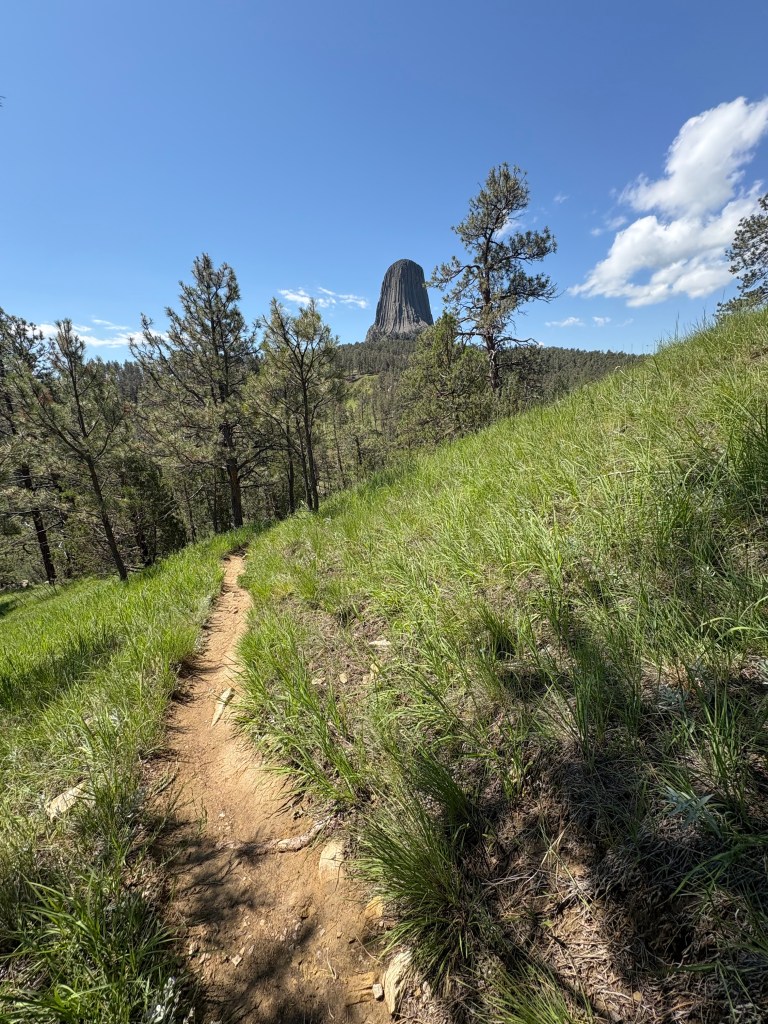
I traveled to Devils Tower not knowing much about the area except for its location in the Black Hills. I don’t usually go around talking about feeling energy, but I really did sense a certain spirituality surrounding this place. As I walked along the Joyner Ridge Trail, I stopped and raised my hands and remembered my own family members who have gone before me. And I felt a deep sense of gratitude for the present moment. I am grateful for open space and public lands where our hearts and minds are able to expand and breath.

I came away from this trip not just with a deeper appreciation for these landscapes but also a palpable sense of the spiritual realm that is ultimately inherent in time and space. Observing the spiritual significance these sites hold for others, brought me into a mindset of the bigger picture: that many have come before us…they are always STILL around us…and one day we will also cross over from the physical world to the invisible. From a pictographic handprint left on a remote sandstone wall to a brightly woven prayer flag left tied to a branch; spirituality and wilderness go hand in hand.
Public lands are indeed sacred.
#Public Lands Forever
#Visit With Respect

 Wilderness & Rye