-
Five National Parks, One State: A Kansas National Parks Road Trip
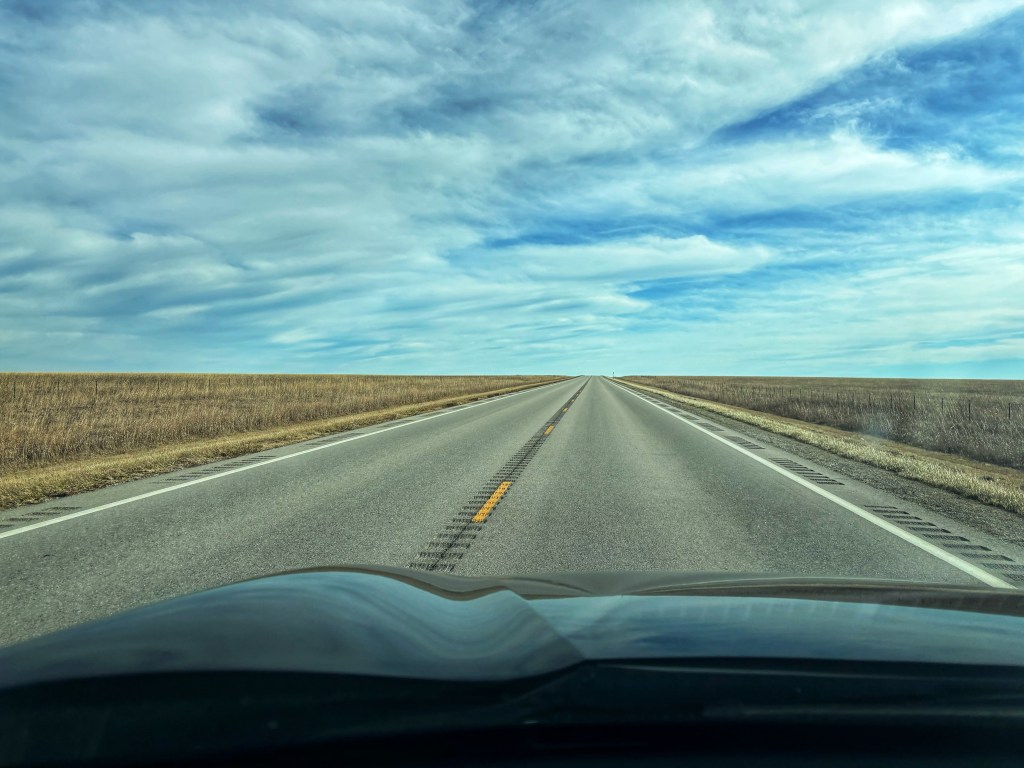
Driving along the open road in Kansas, photo: J. Foster, 2026 Kansas is usually one of the states I am either passing through or flying over. However, recently my spouse and I set out on an adventure with Kansas as the ultimate destination.
Five days and 1800 miles later, we visited all five of the Kansas National Park sites: Fort Scott, Brown vs. Board of Education, Tallgrass Prairie National Preserve, Nicodemus National Historic Site, and Fort Larned.
I learned a lot about indigenous tribes, military outposts used during western expansion, civil rights, the Santa Fe Trail, and the significance of the prairie ecosystem on this adventure. Kansas is at the heart of American history.
Fort Scott National Historic Site
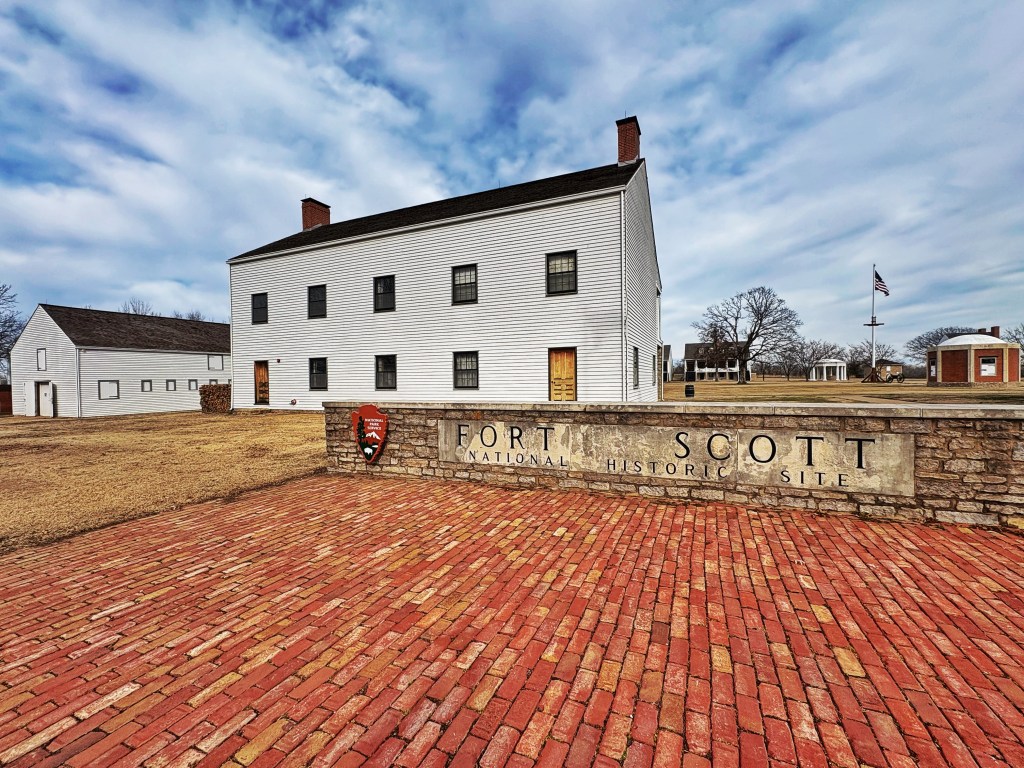
Entrance to Fort Scott, Photo: J. Foster, 2026. Just beyond the small downtown of Fort Scott, Kansas, stands an old military fort from which the town takes its name. (Named after General Winfield Scott who served in the Mexican-American war). Similar to many of the forts we have visited, Fort Scott National Historic Site is laid out in the shape of a square with several buildings making up the perimeter.
With the Indian Removal Act of 1830 and then the Indian Trade and Intercourse Act of 1834, the U.S. Government sought to push the Plains tribes further West and to establish military outposts along the frontier. Some might say these forts were to protect the Permanent Indian Territory, others argue they were buffer zones that facilitated white settlement.
Established in 1842, if the walls of Fort Scott could talk…they could tell stories of soldiers who worked hard to keep the peace during the changing frontier. They also bore witness to the Civil War era, and the battle over the Kansas Territory on the subject of slavery. Interestingly, Kansas was the first Northern state to recruit and train black soldiers for combat in the Civil War. Fort Scott was the home base for the 1st and 2nd Kansas Colored Infantry.
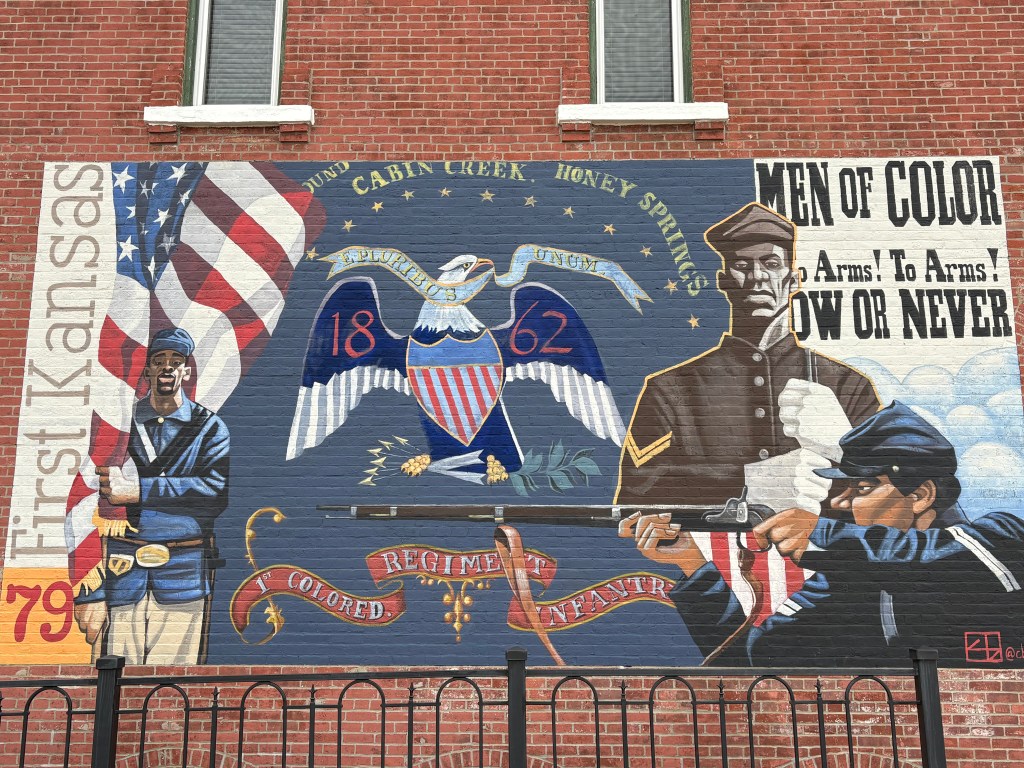
Mural in downtown Fort Scott, across the street from the military fort of the same name. Photo: J. Foster, 2026. The park has an informative 20-minute film, several nicely constructed exhibits, and various facilities to explore.
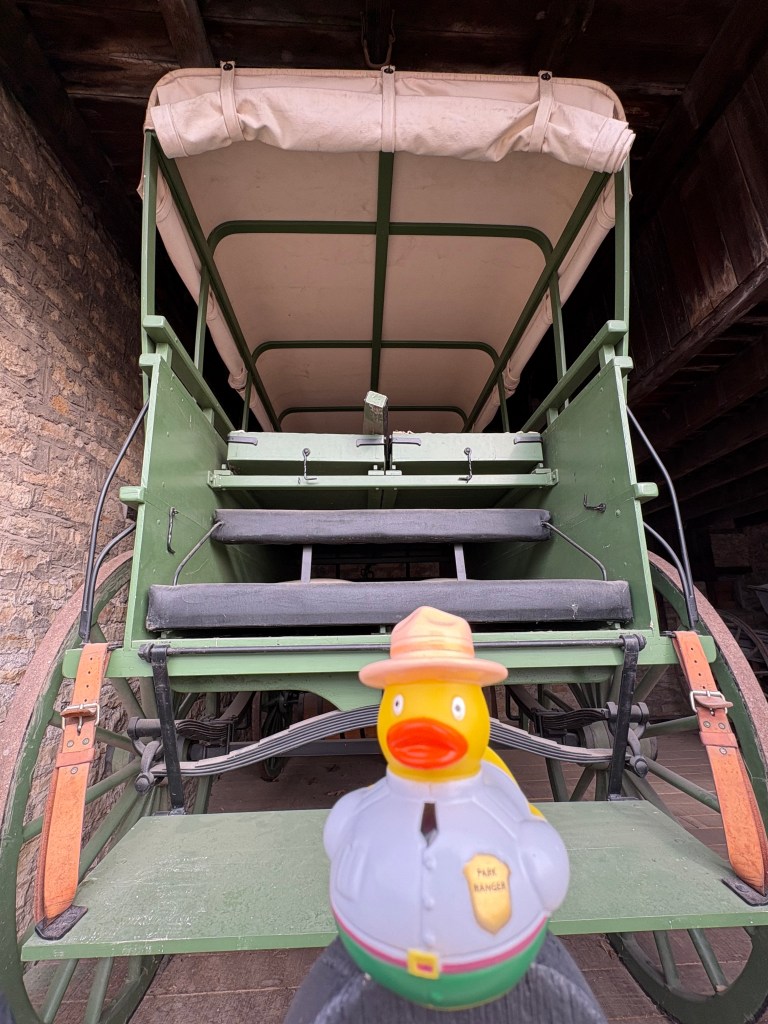
Behind the rubber ducky ranger is a replica of an ambulance wagon used to transport soldiers during the Civil War. Designed by Charles Tripler, first medical director for the Army of the Potomac. Photo: J. Foster, 2026. Walking the grounds at Fort Scott National Historic Site, J. Foster, 2026. Nicodemus National Historic Site
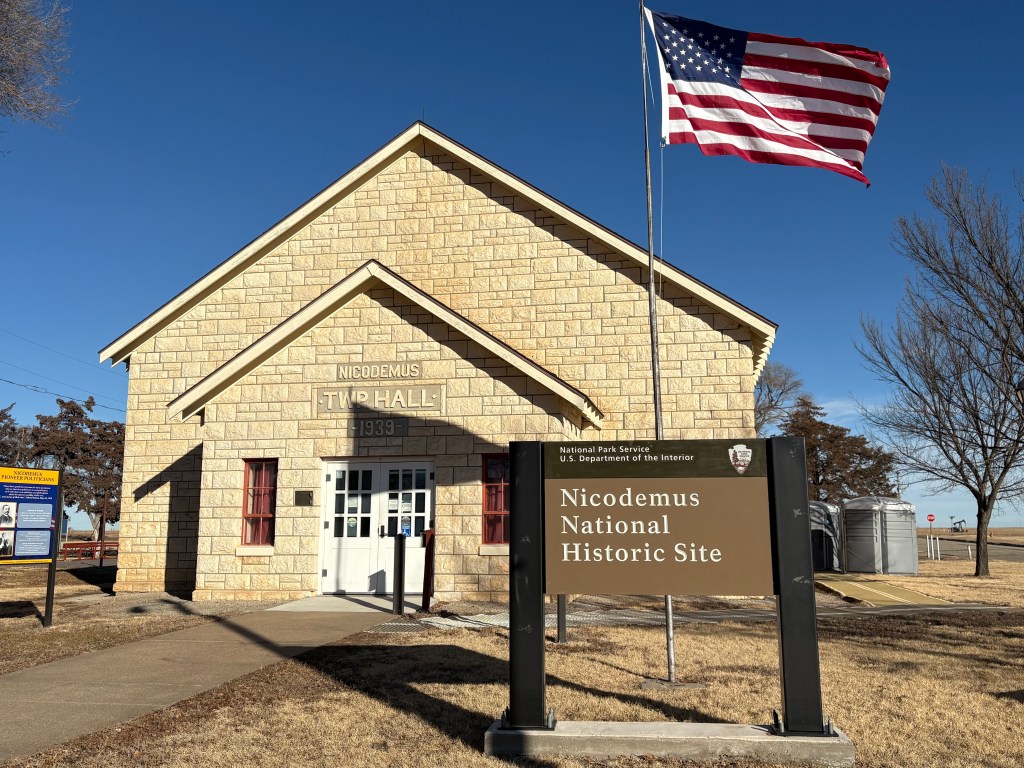
Nicodemus National Historic Site Visitor Center, J. Foster, 2026. One of the sites I was most excited about visiting was the Nicodemus National Historic Site, located in Nicodemus, Kansas.
I am so grateful that the National Park Service is protecting this site and sharing the story of the “oldest remaining Black settlement West of the Mississippi.” Formerly enslaved African Americans left Kentucky (and a few other states) in search of a community they could make their own, and to escape from racism and Jim Crow laws that were rampant in the South.
Many of these brave individuals lived in hand-carved dugouts before they were able to build more conducive homesteads and buildings. Faith played (and continues to play) a vital role in the Nicodemus community. There are a handful of descendants remaining as many have moved to larger cities for better economic opportunities. Most of the town is now white retirees but the legacy of the Nicodemus lives on its descendants. The visitor center showed a handful of 3-5 minute clips that tell the history and resilience of the Nicodemus community.
One of the most moving video clips included a spoken word poem shared by Sunni Patterson. Listen below:
Powerful, beautiful spoken word poem “O Nicodemus” by Sunni Patterson. There are five historic buildings that remain in the community and help to tell the story of this community. They are listed on the NPS website here.
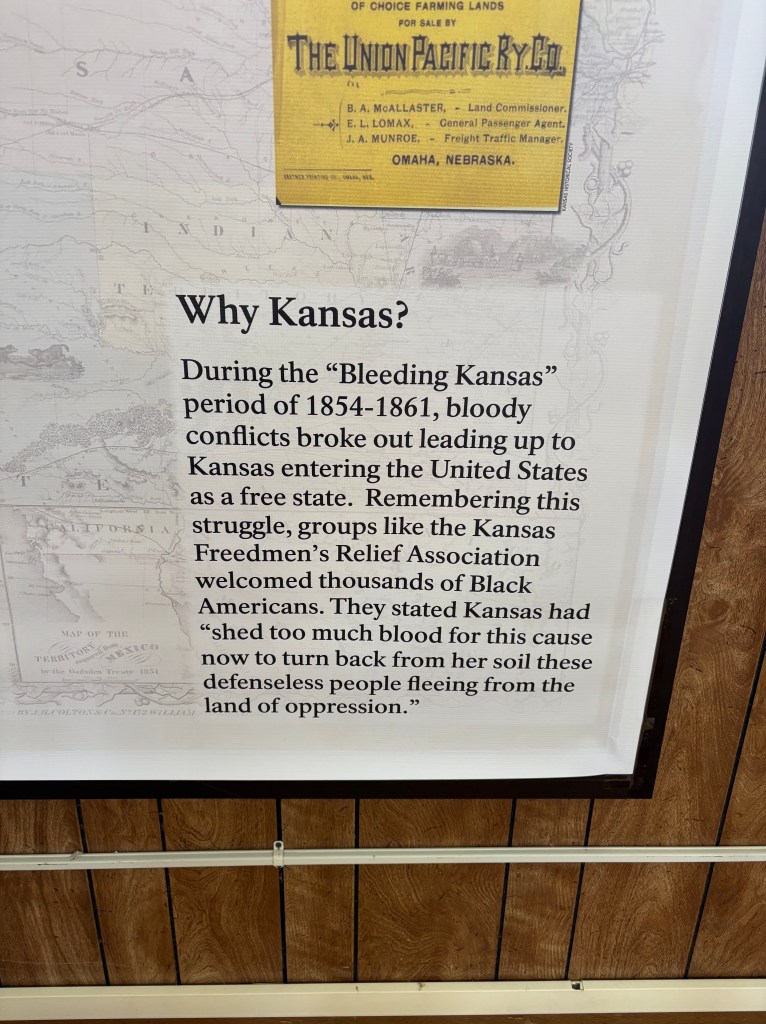
From an interpretive display at the visitor center. 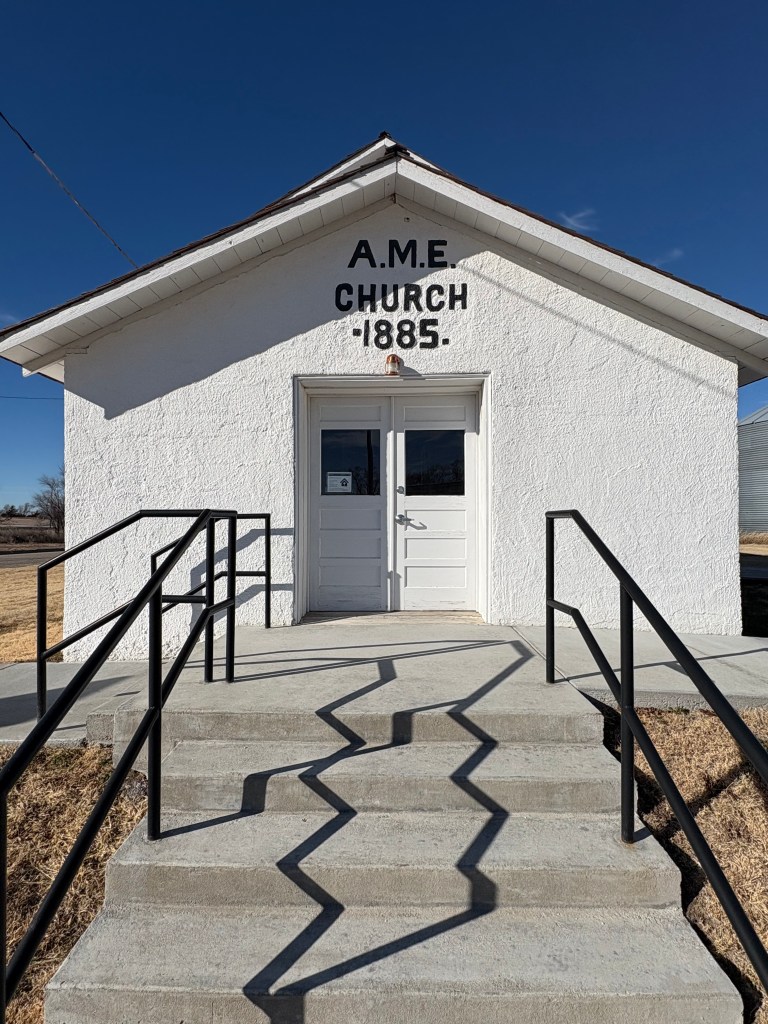
The A.M.E. Church onsite. Tallgrass Prairie National Preserve
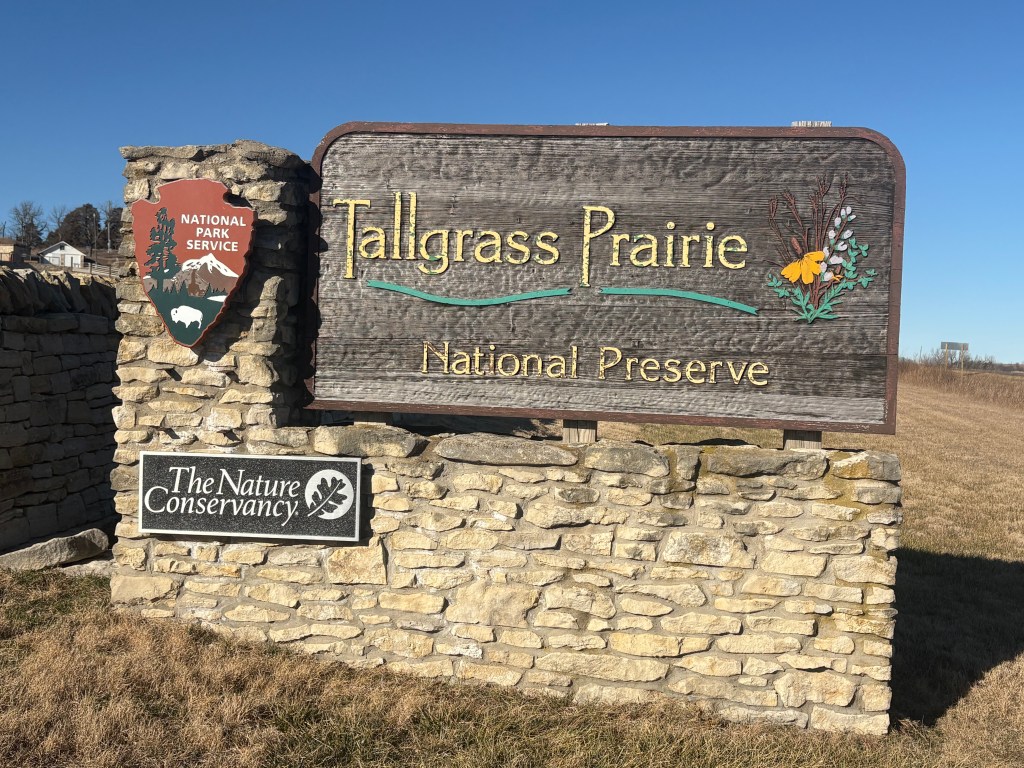
Entrance to Tallgrass Prairie National Preserve. Before farms, towns, and cities took over the landscape, over 170 million acres of the United States was made up of tallgrass prairie. Now, less than 4% of tallgrass prairie ecosystem remains intact.
The National Park Service, in partnership with The Nature Conservancy, helps to conserve and protect the Tallgrass Prairie National Preserve.
The preserve is home to over 500 species of plants, as well as various animals, birds, and a small bison herd. You might get a chance to see the Greater Prairie-Chicken, the famous bird of the plains. During Springtime, they are known for their iconic mating dance ritual, known as “booming.”
There are 12 hiking trails in Tallgrass Prairie National Preserve, as well as various tours of the park. Click here for more information on tours.
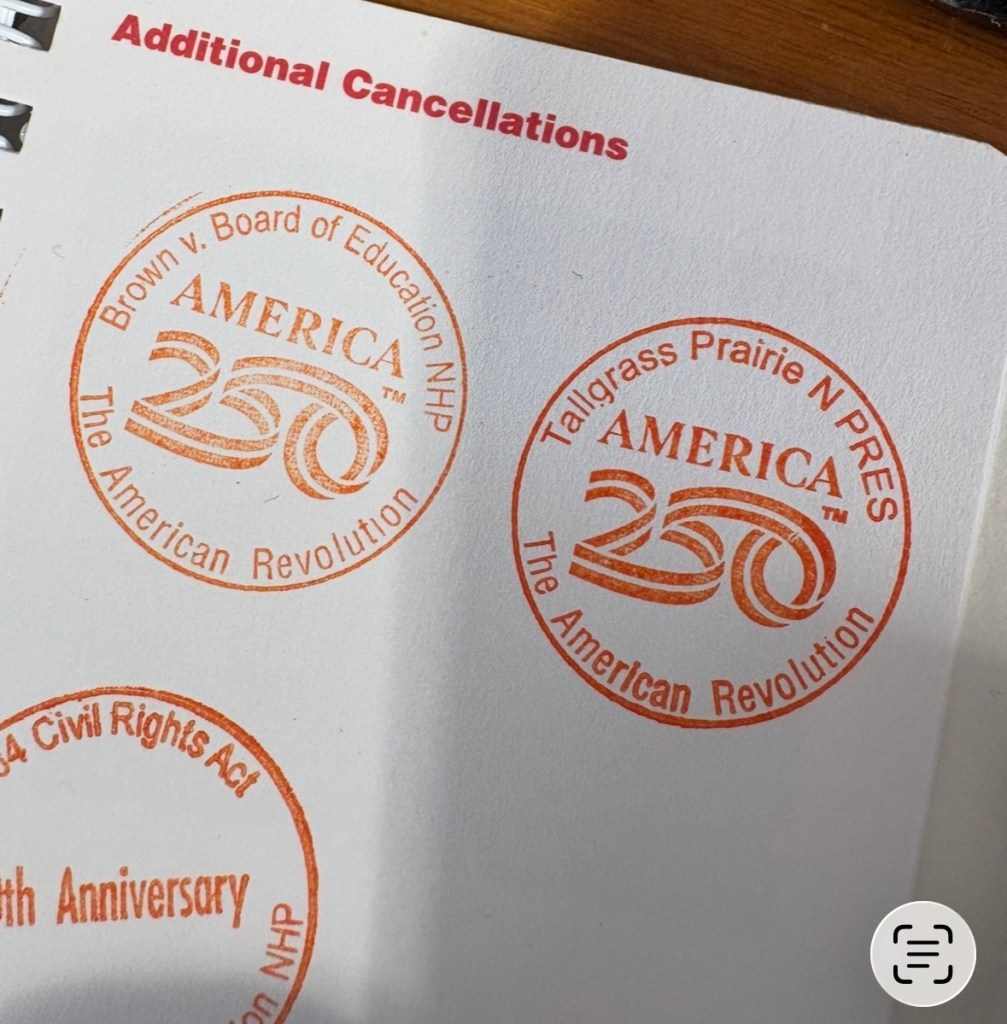
NPS passport stamps showing the “America250” collection, 2026. Fort Larned National Historic Site
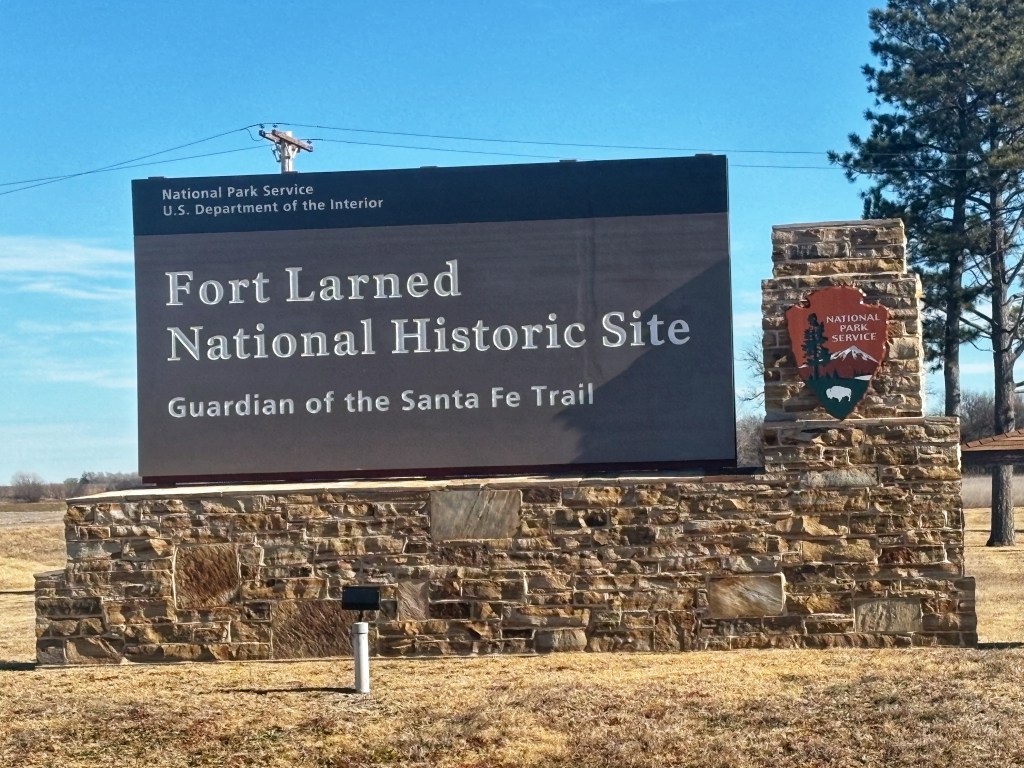
Entrance to Fort Larned, 2026. Built in 1860, Fort Larned was established to protect mail carriers and travelers along the Santa Fe Trail. (Again, one of several forts built during the period of westward expansion). Located next to the Pawnee River, this site remains in great condition. The visitor center had a good selection of history books and a nice exhibit starting with Spanish explorers and going into the Indian Wars era and up to present day. They even had a small display highlighting the Buffalo Soldiers. With the remote location of this site, it helped to imagine what it might have been like walking along the Santa Fe Trail.
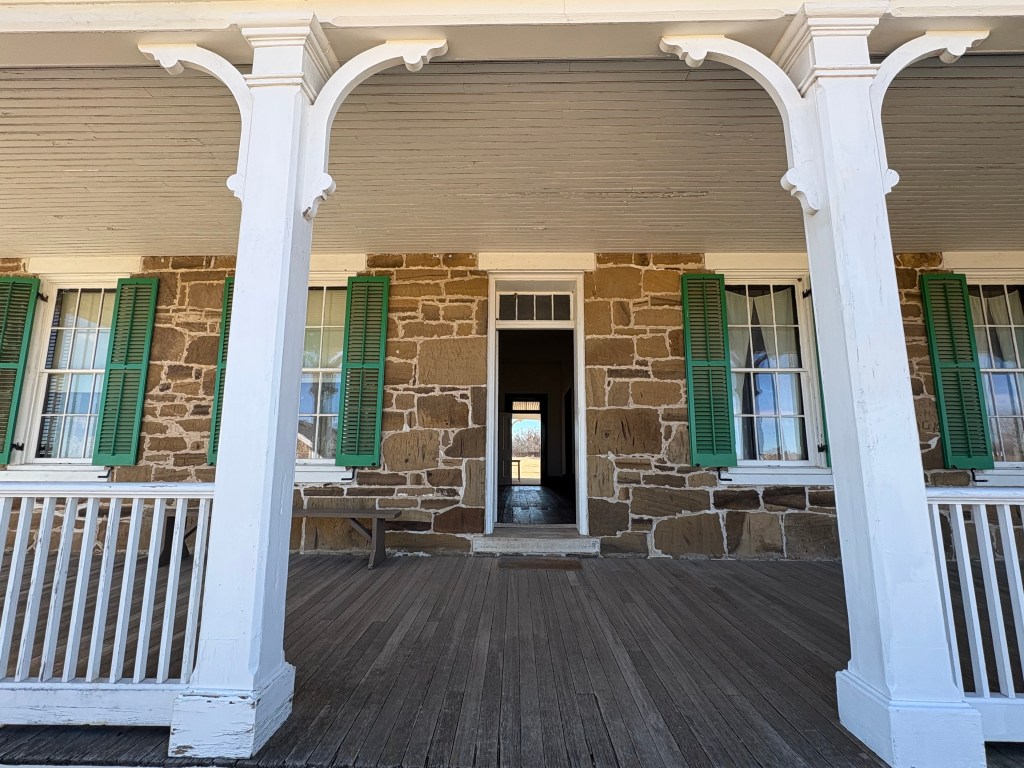
Officers Row 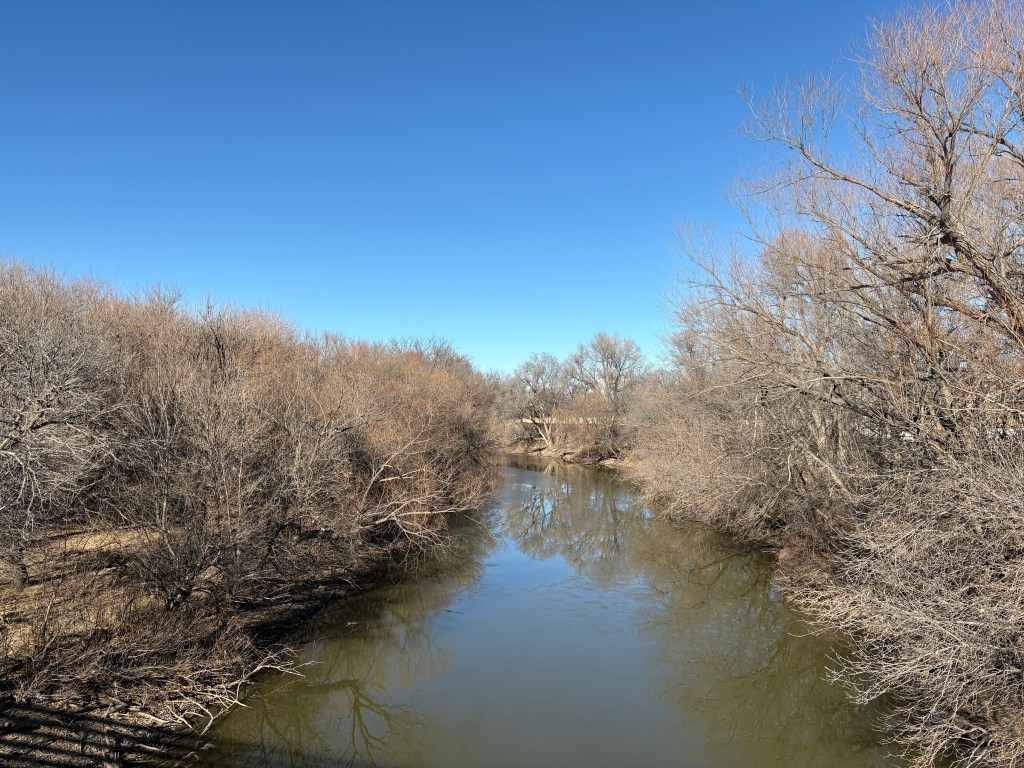
Pawnee River 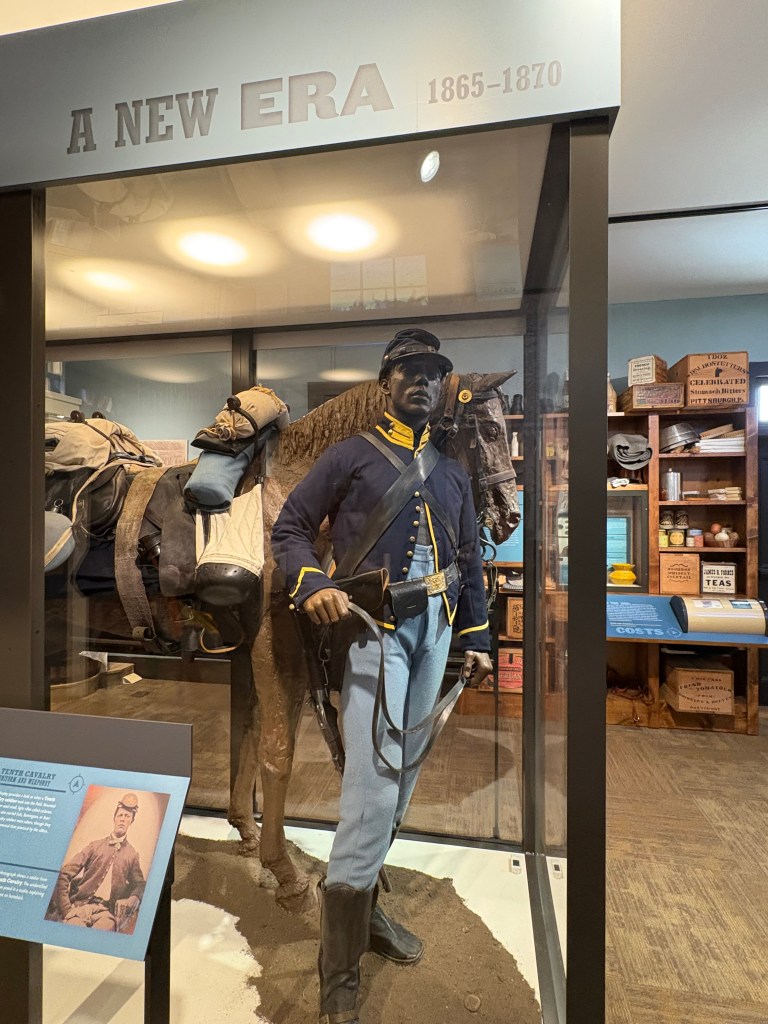
10th Cavalry Regiment, also known as the Buffalo Soldiers, exhibit at Fort Larned. Brown vs. Board of Education
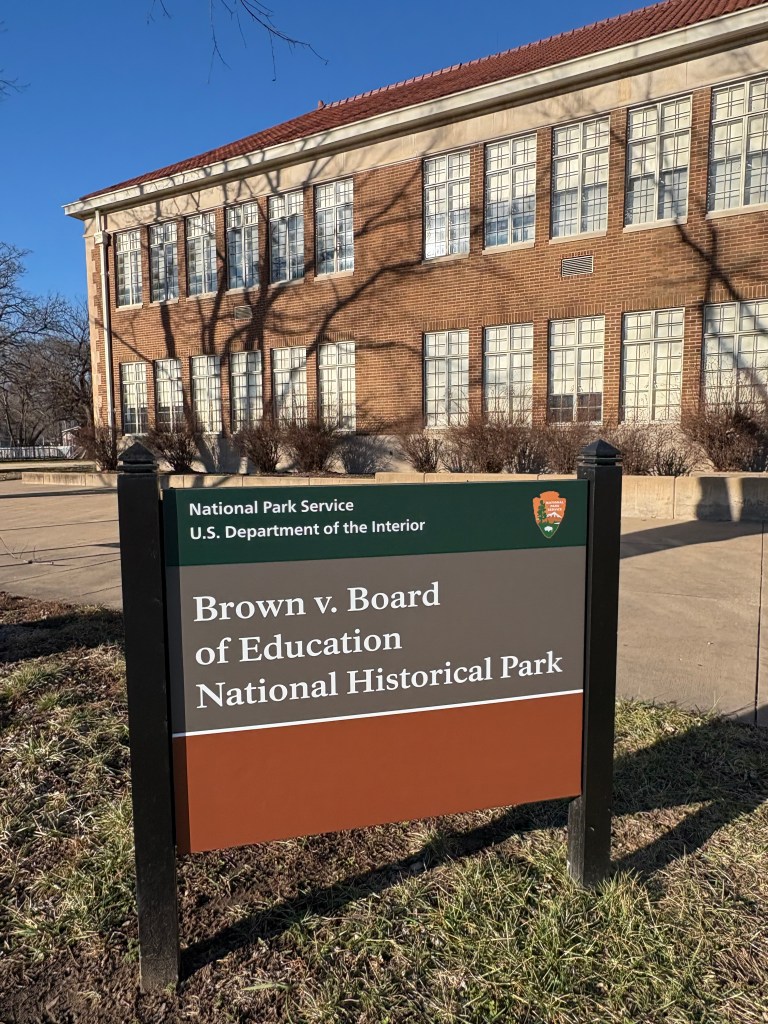
Entrance to Brown vs. Board of Education, 2026. The Brown vs. Board of Education Visitor Center is located inside of the Monroe Elementary School. Established in 1927, the Monroe Elementary School was one of four segregated black schools in Topeka. After trying to enroll his daughter, Linda Brown, into their neighborhood school, Oliver Brown was told his daughter would have to attend school across town due to segregation. Oliver and his daughter became the plaintiffs in the Brown vs. Board of Education of Topeka, which landed on the desk of the Supreme Court.
In 1954, the Supreme Court ruled that the segregation of schools was unconstitutional.
“We conclude that in the field of public education the doctrine of ‘separate but equal’ has no place. Separate educational facilities are inherently unequal.”
–Chief Justice Earl Warren
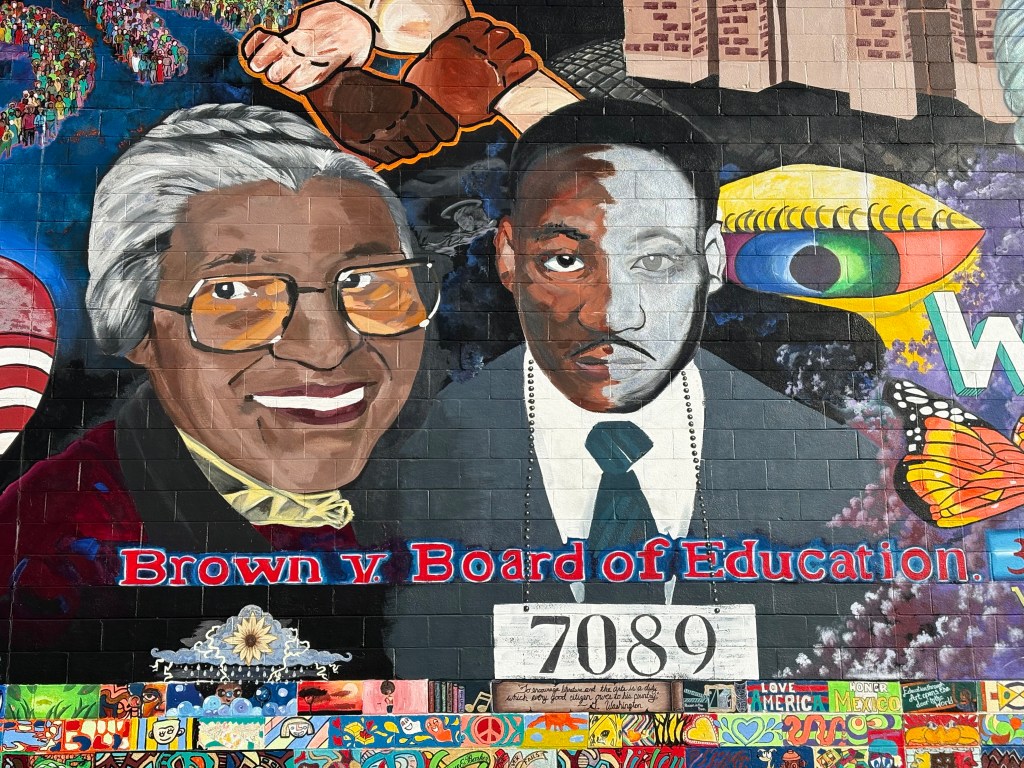
Mural across the street from the Monroe School, Brown vs. Board of Education site. I really enjoyed the exhibit hall which featured civil rights history. They also have several well-made film clips that depict the struggle for freedom and the importance of civil rights. This may be a small park site, but it is packed with powerful history and cultural significance.
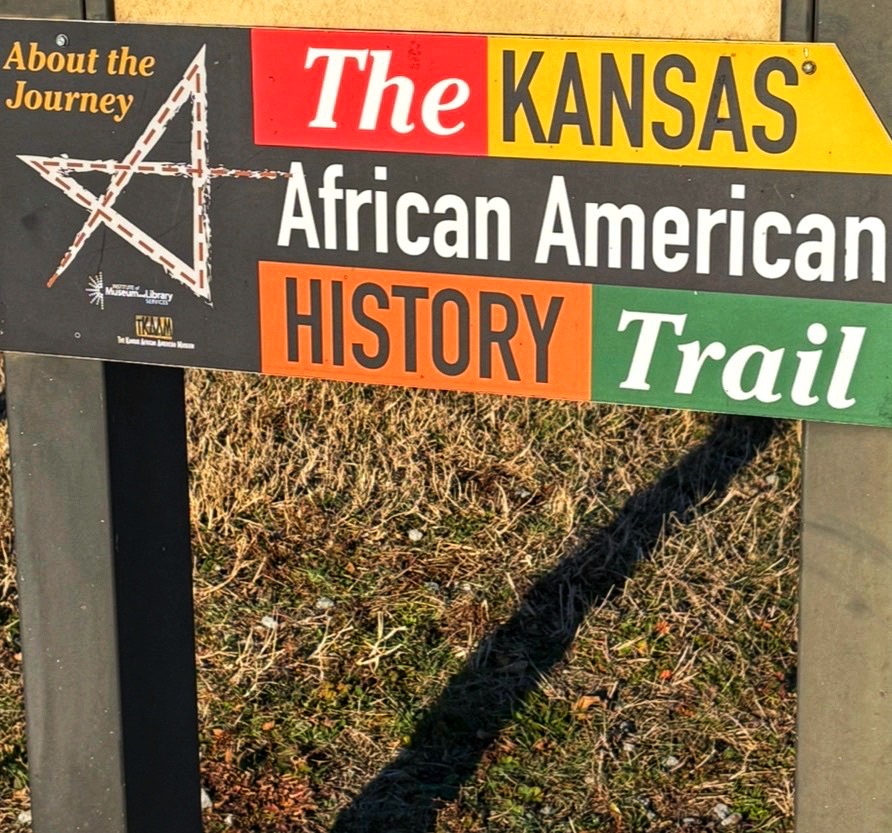
Learning about the Kansas African American History Trail while in Topeka, KS. In all honesty, I never realized how rich Kansas is with African American history. It’s easy to see the hay bales and sunflowers as you drive along I-70 but my eyes are now opened to the significance of Kansas in the battle for civil rights. I see the first black soldiers of the civil war. I see those who fought against unjust policies. I see the home of the abolitionist. Now when I drive through Kansas, I will think of those whose courage and faith led them to freedom.
Check out sites along the Kansas African American History Trail here.
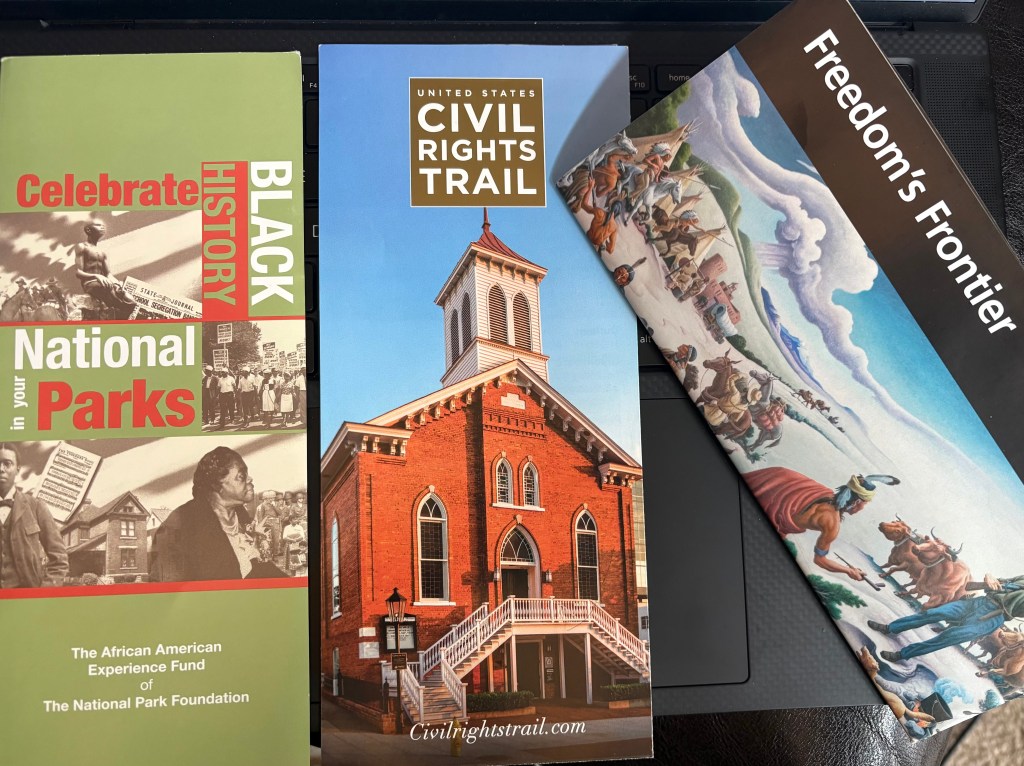
Brochures we collected on our trip that highlight the civil rights movement. Established in 2001, the African American Experience Fund is “the only national charity initiative of the congressionally chartered National Park Foundation that supports and preserves African American history in our national parks.” Learn more here.
From indigenous tribes who call Kansas home, to military forts and historic trails, to civil rights and Black homesteaders; Kansas is truly at the heart of American history.
Stay tuned…in the next post I’ll share about a detour we took through the historic town of Council Grove, Kansas.
1st Kansas Colored Infantry, African American Experience Fund, American West, Black History, Brown vs. Board of Education, Buffalo Soldiers, Fort Larned National Historic Site, Fort Scott National Historic Site, Kansas, Kansas African American History Trail, kansas-history, National Parks, Nicodemus National Historic Site, the-santa-fe-trail, Travel -
Public Lands are Sacred Lands
What do you hold sacred?

Ancestral Puebloan cultural site, (color saturation enhanced) 2025. Sacred means deserving of respect (typically in relation to a spiritual or religious affiliation).
Sacred is also used to describe sites or places too significant to alter or change.
For many indigenous tribes, certain landscapes are held sacred due to their spiritual and historical connections. Many indigenous tribes believe that the natural landscape is a living being, deserving of respect rather than ownership.
Public lands are places for our souls to connect with those who have passed on, they are places to connect with those who are here right now, places for our minds to find peace from the stressors of daily life, places to witness the diversity of wildlife, and places for the telling of our past so that we know how to move forward.
I am grateful for organizations that seek to PROTECT and PRESERVE our sacred public lands.
Will you help protect these places?

Owachomo Bridge at Natural Bridges National Monument, Photo: J. Foster 2025. I recently took a long weekend to explore some of our national monuments, many of which are at risk of being downsized. I wanted to visit them now, just in case something unfortunate happens in the future and they end up—heaven forbid—developed or taken over by industrial companies. I’m staying hopeful…but you never know what might happen.
Natural Bridges National Monument
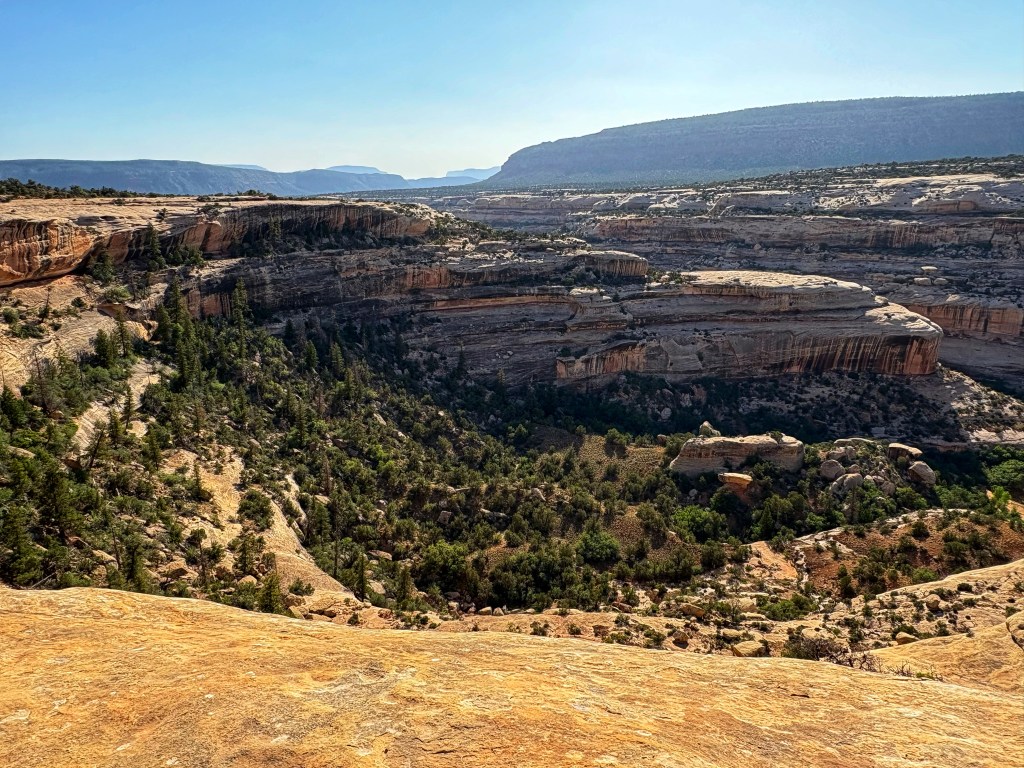
View from Bridge View Drive, Natural Bridges National Monument, Photo: J.Foster 2025. At Natural Bridges National Monument, the bridge formations are stunning reminders of the passage of time (even rocks age). These walls hold thousands of years of history and culture within them.
An unmaintained trail links a lot of the bridges together at the very bottom of the canyon. In the heat of the day, it is not recommended for those who are unprepared as the heat and the hike are pretty intense. However, you do not have to venture all the way down to appreciate the beauty and significance of the area. There are viewpoints all along Bridge View Drive to see the bridges: Sipapu Bridge, Kachina Bridge, and Owachomo Bridge. Interestingly, the word Sipapu is a Hopi term meaning “place of emergence,” eluding to the passageway by which the Hopi believe their ancestors entered this world.

Natural Bridges National Monument was the first designated International Dark Sky Park on March 6, 2007, Photo: J. Foster 2025 Living in a rural mountainous area of Colorado, I’m accustomed to stunning night skies, but the sky above Natural Bridges National Monument was by far the deepest and darkest I’ve ever seen.The next most beautiful sky I’ve ever seen was in the heart of the Navajo Reservation, about an hour outside of Flagstaff, AZ. We went to a night sky program hosted by a National Park Ranger at the Natural Bridges Visitor Center. The Milky Way was so vivid that my camera didn’t even need a special setting or filter.
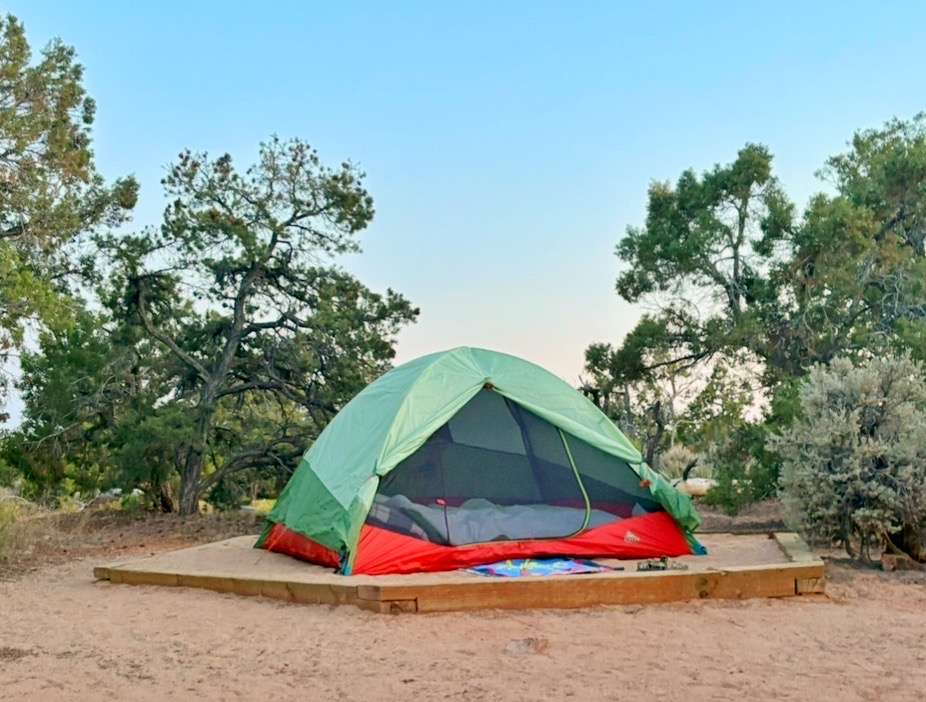
Camping at Natural Bridges National Monument, Photo: J. Foster 2025 I really enjoyed camping at Natural Bridges National Monument. There were other campers not too far away, but everyone was respectful of quiet hours, and it felt very peaceful at the campsite. I woke up in the middle of the night and stared up at the sky for a while, and for a moment, nothing else mattered. Just a moment of pure peace and an awareness of the earth around me.
I honestly didn’t know what to expect at this monument. I had barely heard of this place before, and I was not very familiar with it. But the stillness and the night sky were very refreshing to my mind and soul. I thoroughly enjoyed the views, the trails, and the cultural significance.
Hovenweep National Monument

Entrance to Hovenweep National Monument, Photo: J. Foster 2025 Hovenweep National Monument had been on my list of places to visit for over a decade but due to its remote location, it took me awhile to plan a trip out there. I was glad to finally see it in person!
“In the desert, the two primary elements are stone and water. Stone comes in abundance, exposed by weathering and a lack of vegetation. It is a canvas. Water crosses the stone with such rarity and ferocity that it tells all of its secrets in the shapes left behind.” -Craig Childs
Known for several ancestral Puebloan villages and a kiva, Hovenweep National Monument is a journey through time. Archeologists are still divided as to why these stone towers were built where they are. Were they built for defense? Were they built to protect water resources? One thing remains clear: the historical and cultural significance of this area is undeniable and the meaning that it holds for many indigenous tribes in the four corners region is vast.

Hovenweep Castle at Hovenweep National Monument, Photo: J. Foster 2025
Chimney Rock National Monument
“Even though Chimney Rock is no longer inhabited physically, it is still inhabited by spirits that have never left.”
-Paul Pino, Laguna Pueblo
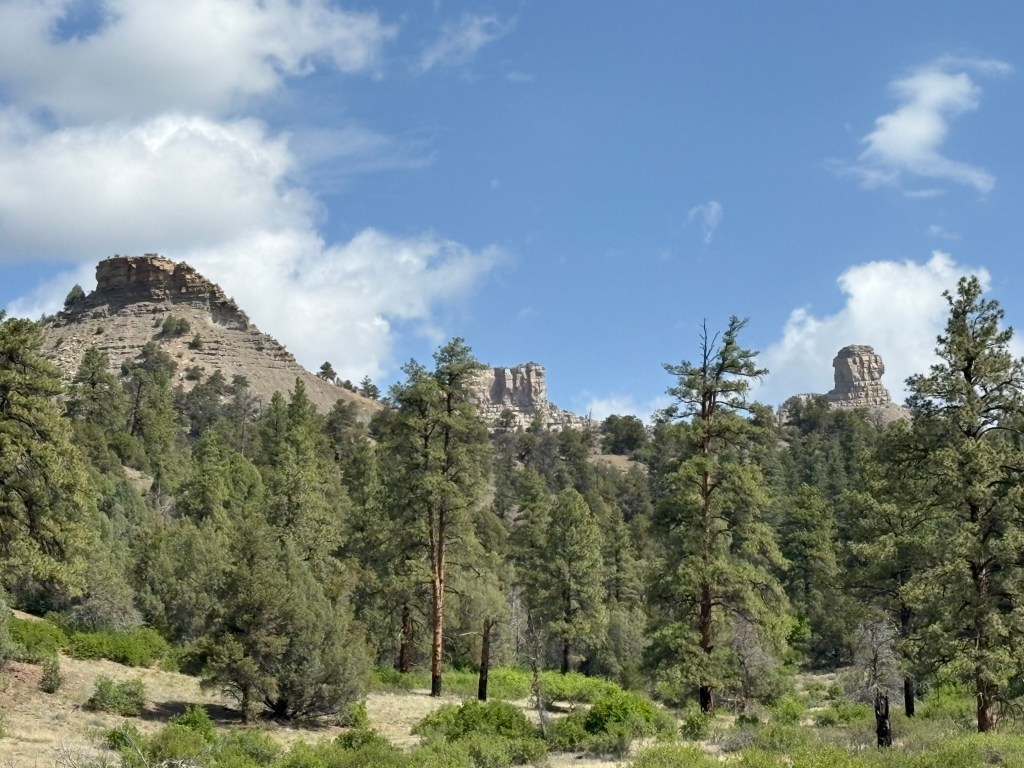
View from the Chimney Rock National Monument Visitor Center, Photo: J. Foster 2025 In southern Colorado there is a small national monument that many folks probably drive right by and have no idea how cool this site is. One of only 15 national monuments that is operated by the National Forest Service (as opposed to the National Park Service).
Chimney Rock National Monument is a really cool ancestral Puebloan site that was built with astronomical purposes in mind! Two sandstone pillars on top of a mountain were built to observe the northern major lunar standstill–a celestial event that happens every 18.6 years. There are also an ancestral Puebloan village and Chacoan-style Great House Pueblo. Thank you to the Forest Service for preserving and interpreting this site! The visitor center has also won interpretation awards from the National Association for Interpretation.

Chimney Rock Entrance 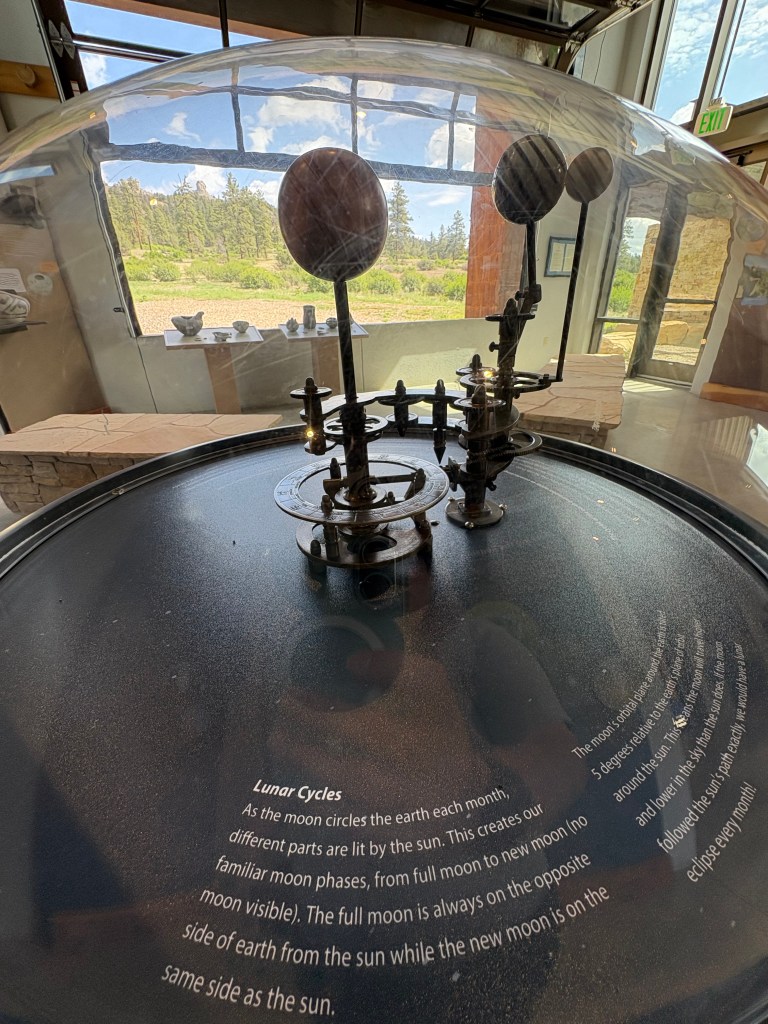
Exhibit at the Visitor Center
Bears Ears National Monument
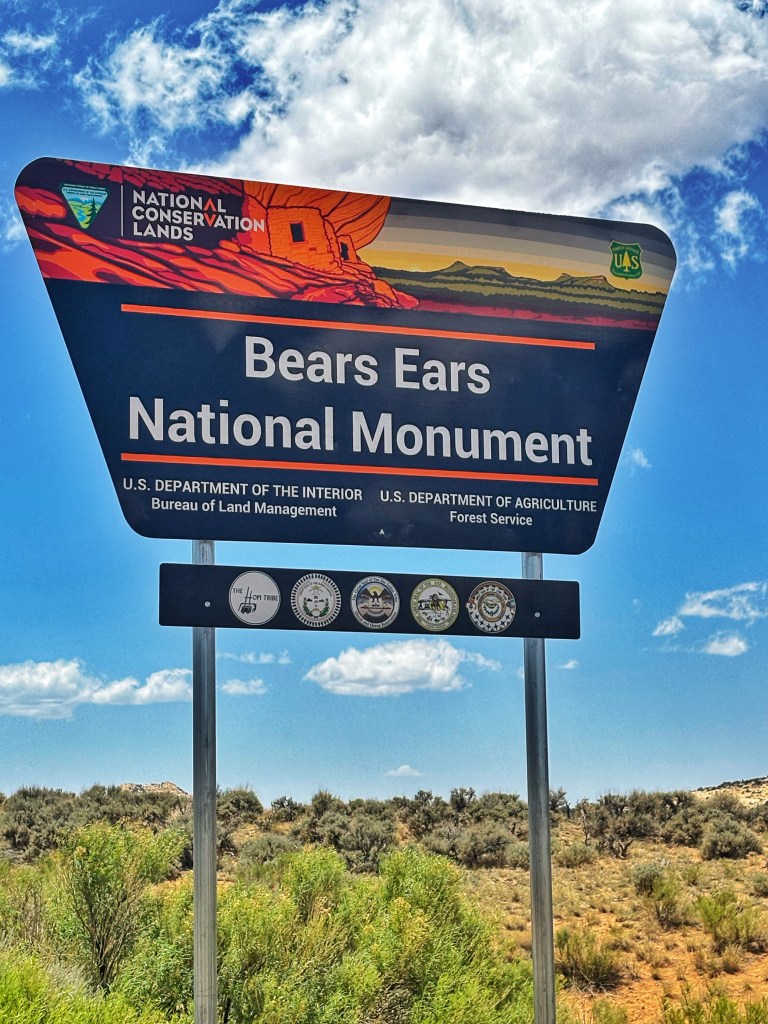
Driving through Bears Ears National Monument, Photo: J. Foster 2025 Bears Ears National Monument is co-managed by the Bureau of Land Management and the United States Forest Service. The land is held sacred by many indigenous tribes who continue to rely on these lands for traditional and ceremonial purposes.
This area of southeast Utah is considered sacred.
I don’t want to say too much about this area so as to protect the history and culture contained within its boundaries.
However, please know that this area is in need of ongoing protection.
Note: For those who collect the National Park Service passport stamps, you can get your Bears Ears National Monument stamp from the Kane Gulch Ranger Station, located on Utah highway 261, about twelve minutes southeast of Natural Bridges National Monument. (They keep the stamp secured outside so that you can get your stamp even when the station is closed.)

View of Bears Ears formations from Natural Bridges National Monument, Photo: J. Foster 2025
Devils Tower National Monument
Devils Tower National Monument was America’s first national monument, created in 1906 under the Antiquities Act by Theodore Roosevelt. The monument and surrounding area hold sacred significance to over twenty different indigenous tribes. The tower is known as Bear Lodge or Bear’s Tipi in several indigenous circles. Many tribal members often perform ceremonies and return to the area for prayers.

Bear Lodge (aka Devils Tower), Photo: J. Foster 2025 The name Devils Tower originated when Colonel Richard Dodge, on an expedition for the U.S. Geological Survey, misinterpreted the Lakota word wahanksica (meaning black bear) for the word wakansica (meaning evil spirit).
[Source: Standing Witness; Devils Tower National Monument A History by Jeanne Rogers, 2008.}
Devils Tower, made of the igneous rock phonolite porphyry, is the world’s largest example of columnar jointing! There are still a lot of theories as to how the tower was formed.
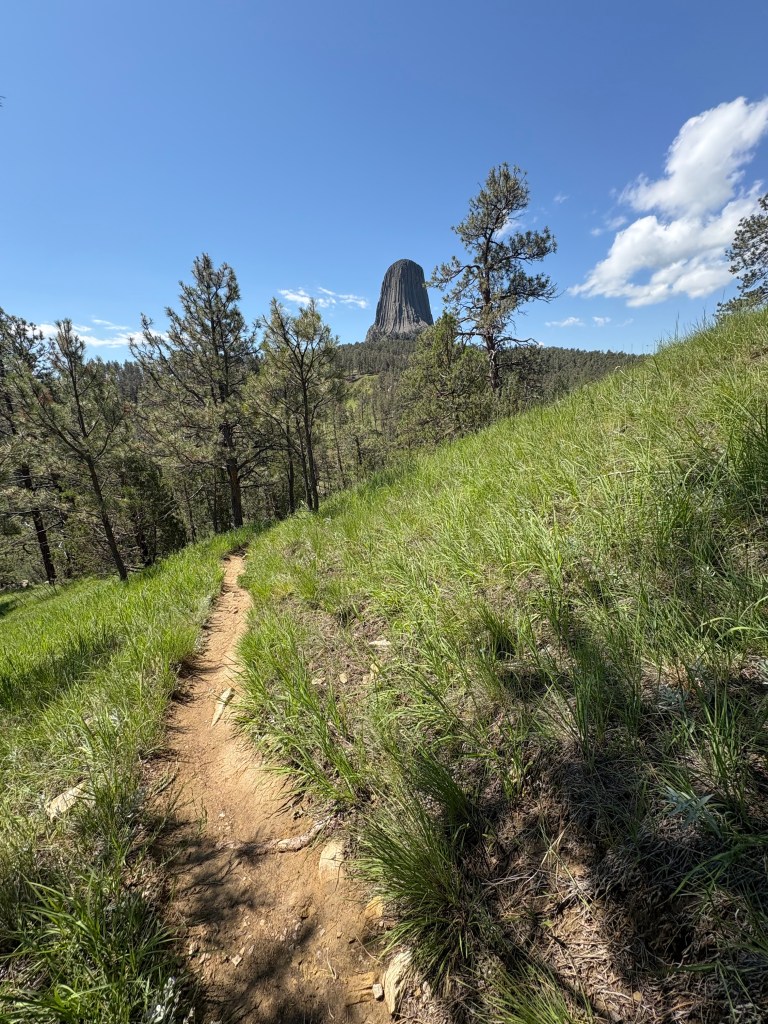
Hiking along the Joyner Ridge Trail at Devils Tower, Photo: J. Foster 2025 I traveled to Devils Tower not knowing much about the area except for its location in the Black Hills. I don’t usually go around talking about feeling energy, but I really did sense a certain spirituality surrounding this place. As I walked along the Joyner Ridge Trail, I stopped and raised my hands and remembered my own family members who have gone before me. And I felt a deep sense of gratitude for the present moment. I am grateful for open space and public lands where our hearts and minds are able to expand and breath.

Image: unknown copyright; I do not own the rights to this image. I came away from this trip not just with a deeper appreciation for these landscapes but also a palpable sense of the spiritual realm that is ultimately inherent in time and space. Observing the spiritual significance these sites hold for others, brought me into a mindset of the bigger picture: that many have come before us…they are always STILL around us…and one day we will also cross over from the physical world to the invisible. From a pictographic handprint left on a remote sandstone wall to a brightly woven prayer flag left tied to a branch; spirituality and wilderness go hand in hand.
Public lands are indeed sacred.
#Public Lands Forever
#Visit With Respect
-
Completing the Kentucky Bourbon Trail Passport!
With only two stamps needed to complete our original Bourbon Trail passport book, I met up with my dad again at the Nashville airport. This time we jumped in the rental car and headed to Owensboro, Kentucky.
If you are reading this blog for the first time, this is the conclusion to a five-part series. You can start from the beginning here.

Entrance to the Green River Distillery Day one:
Our first stop was the Green River Distillery (formerly known as the O.Z. Tyler distillery), located about two hours southwest of Louisville, Kentucky. We weren’t sure what to expect at this particular distillery since it was an outlier (on the map) and has been in transition over the years (after being abandoned for a while, the Bardstown Bourbon Co. purchased the property in 2022 and now also distills and distributes Green River Whiskey).

Green River Production Facility We arrived just in time for the last tour of the day. Founded in 1885, Green River holds the tenth oldest liquor license in the state of Kentucky, and we enjoyed learning about the history behind the brand. Similar to other companies operating when prohibition started, Green River at one point, became known for its “medicinal” qualities. Now it is known as “the whiskey without regrets.”

One of the highlights from this visit, besides the tour, was tasting Green River Wheated Bourbon. This one really stood out to me.
Wheated Bourbon:
Uses wheat in place of rye.
Usually has a sweeter flavor profile.Since it was already getting into the evening, we grabbed dinner and checked in to our hotel. Day 1: One stamp down, one more to go!

View of the Ohio River from Downtown Owensboro, KY. Day two:
We headed to downtown Owensboro to explore the city and grab some coffee. We stopped at the local coffee shop; the Red Swing. (They made a cozy pumpkin chai latte, perfect for this particular October morning).
We walked along the riverwalk, overlooking the Ohio River. I kept thinking about Patty Griffin and her song called, Ohio. I was glad to be here on this adventure with my family…seeing new places, checking things off of our to-do list, and simply being together.

Next, we headed to Louisville, Kentucky.
We made it to our early afternoon reservation for a tour of the Stitzel-Weller Distillery. I was really excited to see this facility as it has been associated with several well-known bourbon legends (e.g. W.L. Weller & Sons, Julian “Pappy” Van Winkle Sr., Arthur Stitzel). At one point in time, it was the home of Bulleit Whiskey but now it produces Blade and Bow.
We got our FINAL stamp, toured the facility, and then participated in a tasting. Day Two: FINAL STAMP COMPLETED!
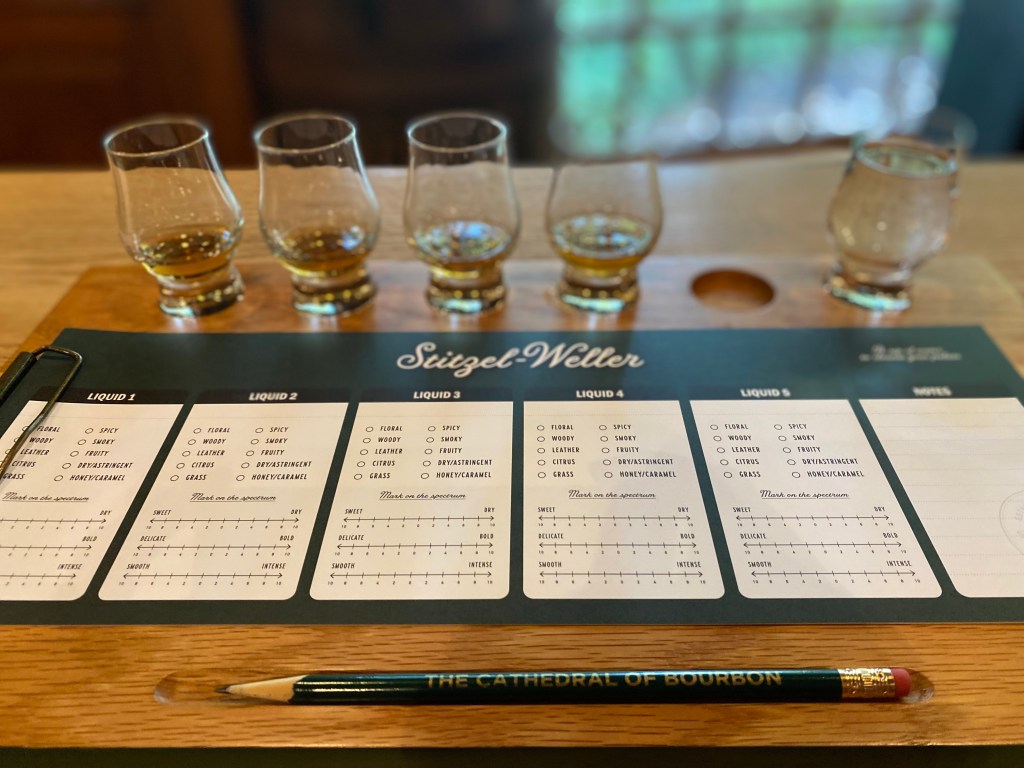

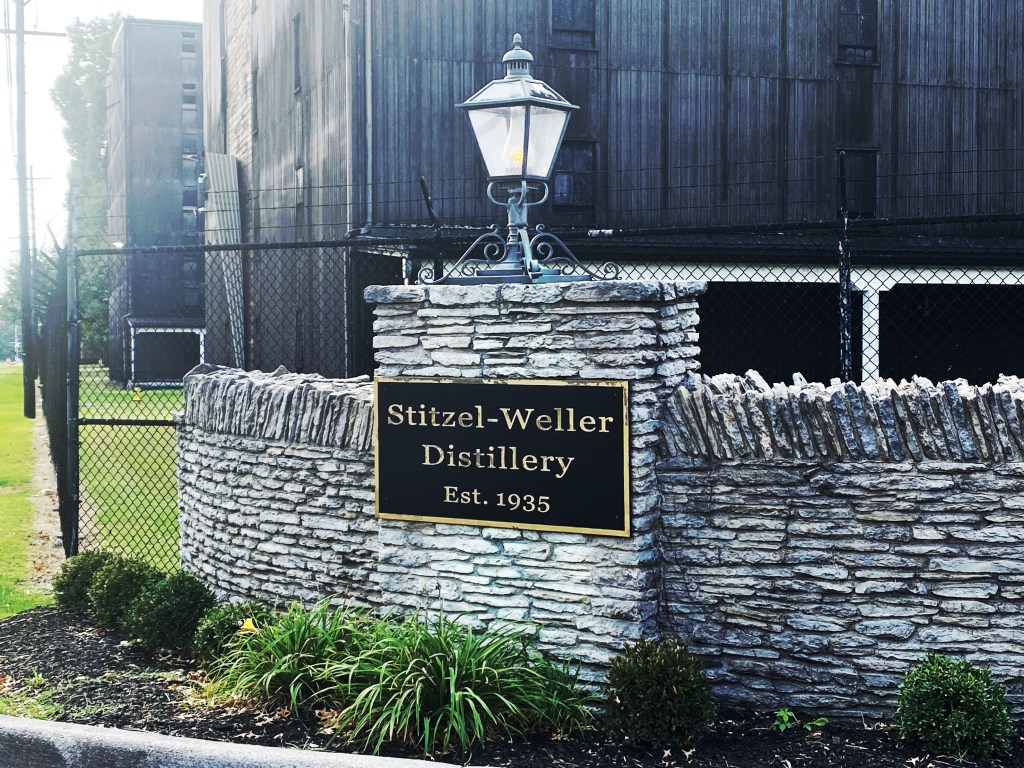


Our last stamp! Bourbons Bistro: One of our favorite finds!
One of the highlights from this trip was stumbling upon Bourbons Bistro. The place had good reviews and wasn’t at all on our radar. When we walked in, the ambiance gave a speakeasy vibe combined with a flare of curiosity. I was eager to see what their bourbon menu held–it was very extensive and impressive! I tried a new-to-me bourbon series called Filmland, as the dim lighting felt like old Hollywood to me. (I tasted varieties from: Ryes of the Robots and Moonlight Mayhem!). I enjoyed the bourbon and the bottle labels for this brand!
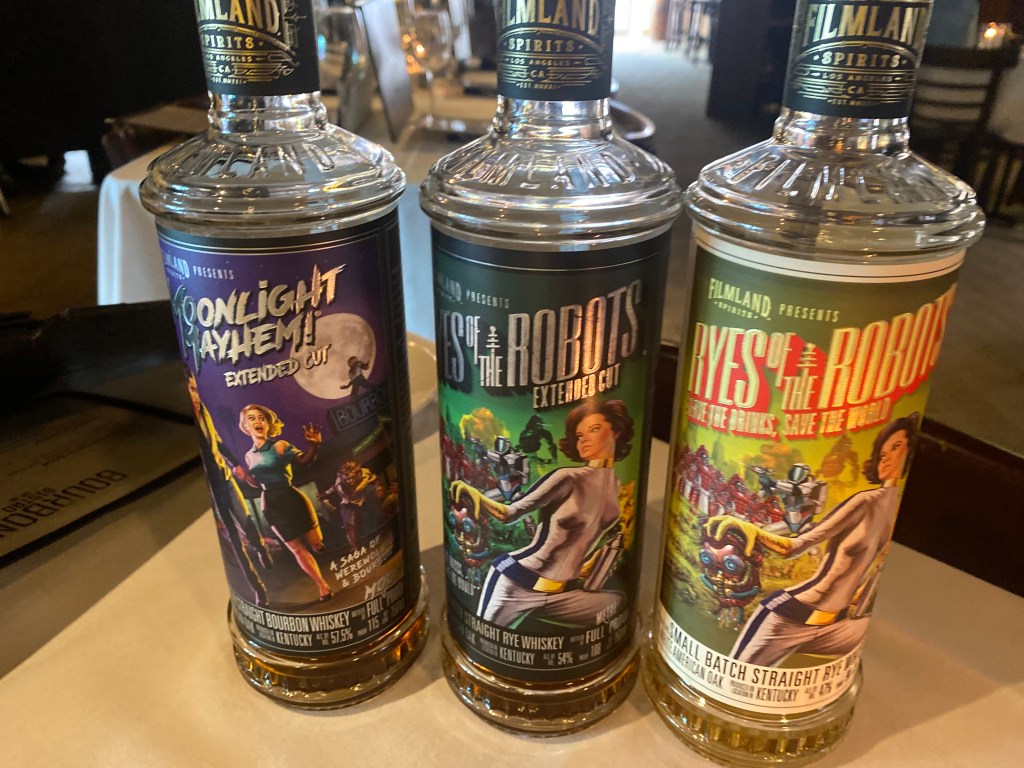
Filmland Bourbon Varieties And then there was the food…
This was-hands down- the best dinner we have had together on the trail. It was just the perfect combination of a last-minute surprise find, an amazing bourbon menu, quality comfort food, and great family bonding.
My spouse and dad were very intrigued by the bone marrow appetizer. They also both ordered the pork chop and loved it! I had the shrimp and grits, which was the best version of it I’ve had in a very long time! We ate, drank, and laughed together as our time on the trail was winding down. Thank you, Bourbons Bistro for the perfect evening!

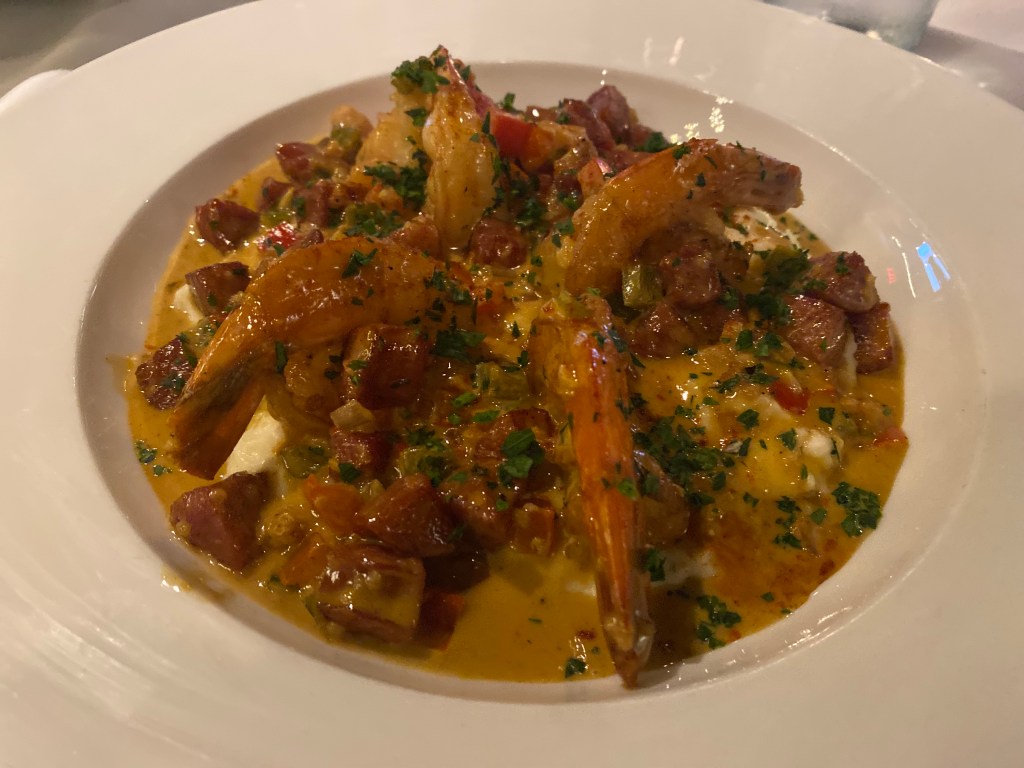
Shrimp and Grits 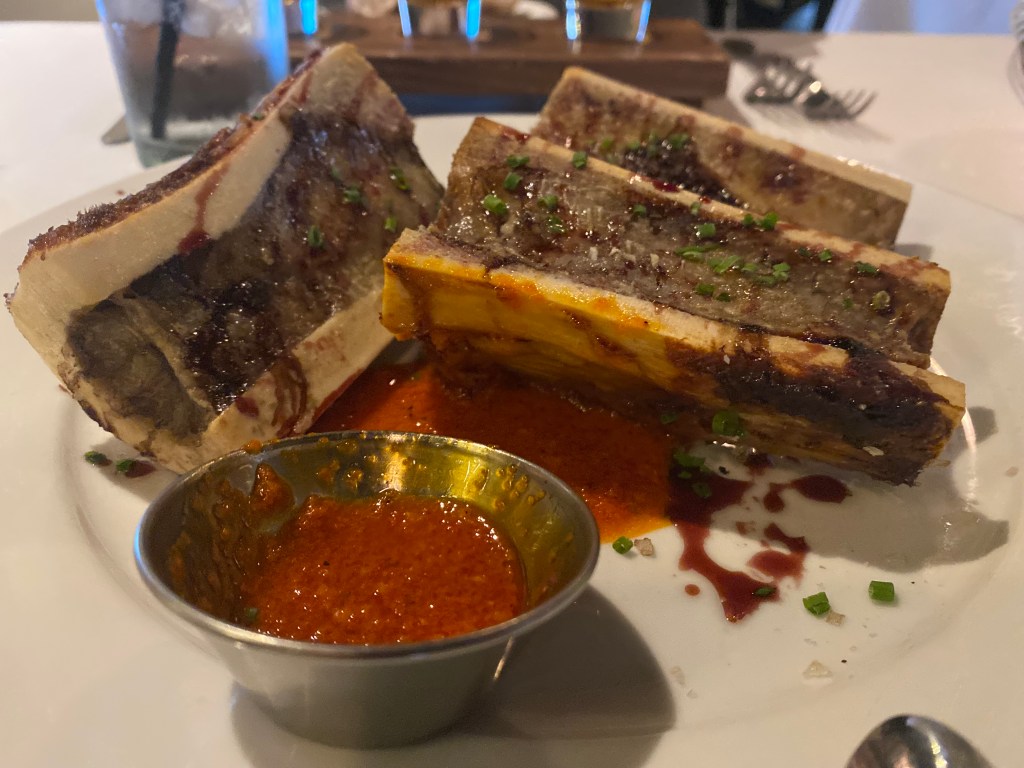
Bone Marrow Day three: just for fun.
We wanted to see the Bulleit Bourbon location and the Wilderness Trail Distillery before we wrapped up. So, we made a quick stop at Bulleit and then signed up for a tour at the Wilderness Trail Distillery in Danville, Kentucky. They’ve got a good thing going there at Wilderness Trail!
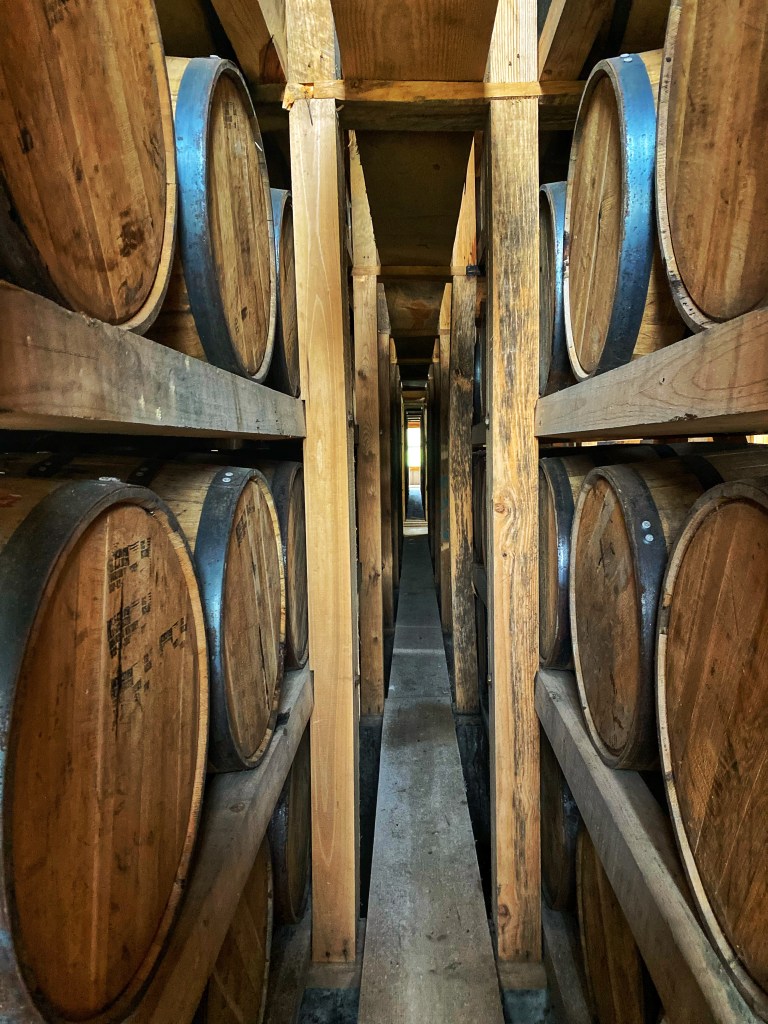
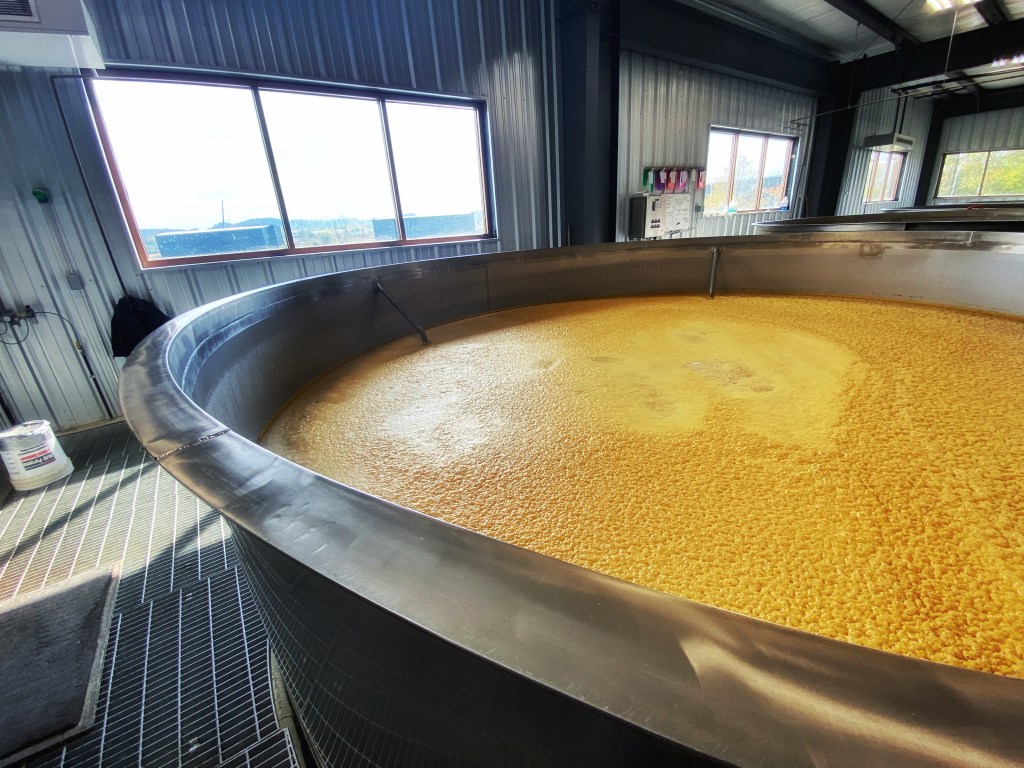


A stop at Camp Nelson.
In keeping with tradition, we also checked off another National Park Unit by visiting Camp Nelson National Monument, outside of Danville, Kentucky. This former Union Army base functioned as a supply depot, recruitment camp for black soldiers, and a refugee camp for many escaping slavery.
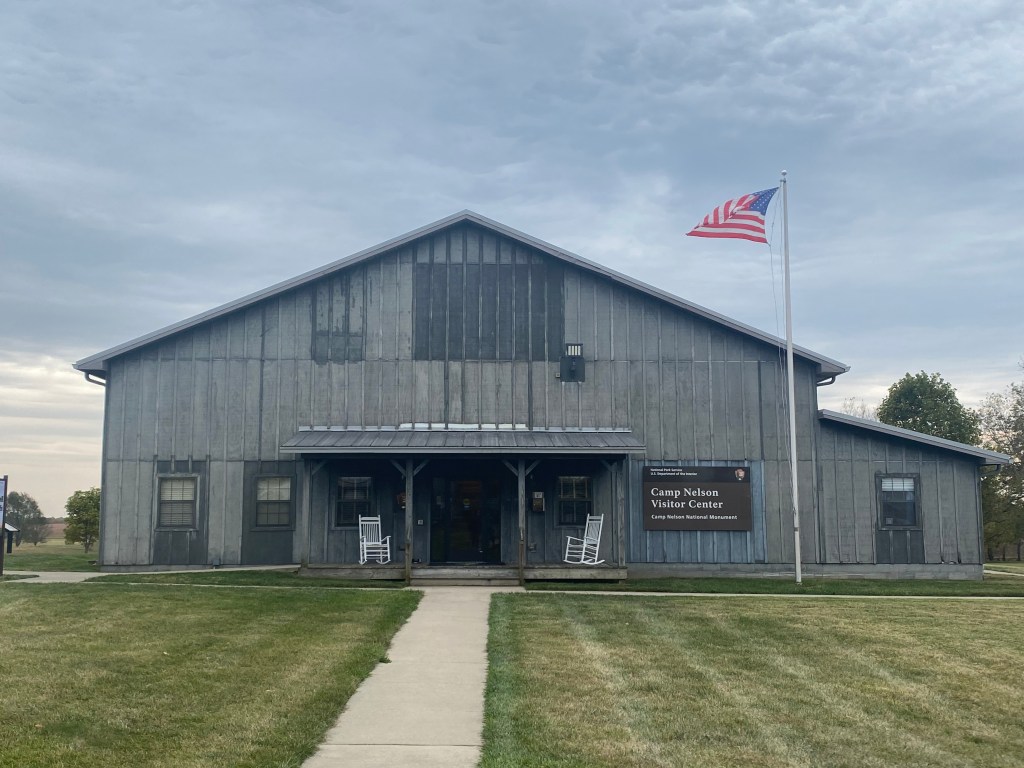
Camp Nelson Visitor Center 
End of the trail…or is it?
Finally, before we left Kentucky, we drove to downtown Louisville to where we first began back in 2019: The Frazier Museum (the “start” of the bourbon trail). We inquired as to how to turn in our passport books and tried to decipher what the “prize” might be. The person at the welcome desk gave us an email to respond to (this was October 2023). I’ll be honest, I wasn’t expecting much…maybe a sticker or t-shirt that said “I completed the Bourbon Trail” or something…. but…a few weeks later (after emailing someone) we received a tasting glass. Just a clear glass, with no mention of the bourbon trail. So, that was a little underwhelming.

The tasting glass prize next to our original passport book. However, this journey was never about the possible prize at the end. It was always about the experience: learning about the process of making bourbon, the people/places/history of bourbon, the tastes, the sights, and ultimately spending quality time together.
It took us four trips to Kentucky, over a five-year span but we finally finished our original Bourbon Trail passport book! However, by the time we completed it, more distilleries have popped up and there is now a newer, thicker version! So, what we thought was the end…might be a new beginning! Cheers to the trail and all of the memories we have made!

Left: the original passport book. Right: the current, newest passport book. Tips for exploring the bourbon trail!
- Get out the map! Like the Indigo Girls song, you’ll want to look at a map of Kentucky as you plan out your route/itinerary. There are some areas that are more concentrated than others with distilleries but overall, the “trail” is very spread out.
- Figure out which distilleries are top of your list, and figure out what kind of experience you want: a tour? a tasting? both? Then, make a reservation.
- Know your limits. Have a designated driver!
- There’s a lot more to explore in Kentucky besides bourbon! Have fun exploring!
- Making memories with loved ones is what life is all about! Cheers!

Good times had by all! -
Bourbon Trail Adventures: The First Time We Tasted Pappy Van Winkle!
Round three of our bourbon trail adventures! Highlights: touring the Independent Stave Company, exploring Lexington, and finding Pappy!
This is part four of a five-part series. You can follow us from the beginning here.
On our third visit to Kentucky, we hit the ground running! After meeting up again in Nashville, we drove straight to Lebanon, KY. We took a break from touring distilleries and decided to learn more about the black-charred bourbon barrels!
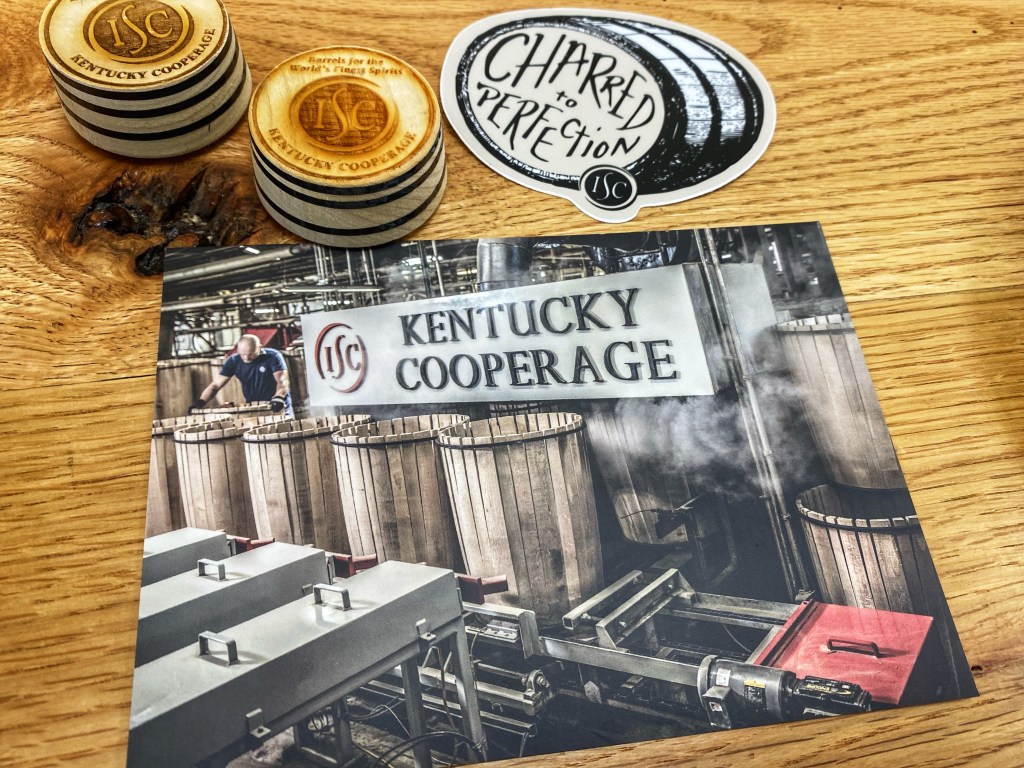
Postcard: Independent Stave Company’s Kentucky Cooperage The Independent Stave Company is the largest barrel production plant in the world! We kept hearing it mentioned on various distillery tours and decided to check out their Kentucky Cooperage. To this day, this is one of the BEST tours we have experienced! We watched as the barrel staves were assembled, charred, and then held together with a few finishing touches.
Currently, white oak has been the traditionally sourced wood but that could be changing as white oak forests are considered endangered. Several distilleries such as Makers Mark, Old Forester, and Buffalo Trace are doing their best to help with forest sustainability. However, this was an aspect of bourbon making that I had not considered-the impact on white oak forests. Most of the white oak comes from Ohio but those forests are not faring well. Will they use a different oak in the future? How can we mitigate this sustainability crisis? Something to think about…
After, leaving the cooperage we stopped at Limestone Branch Distillery. (My spouse was finally able to join in on this trip, so we picked up an extra bourbon passport and got stamping!)
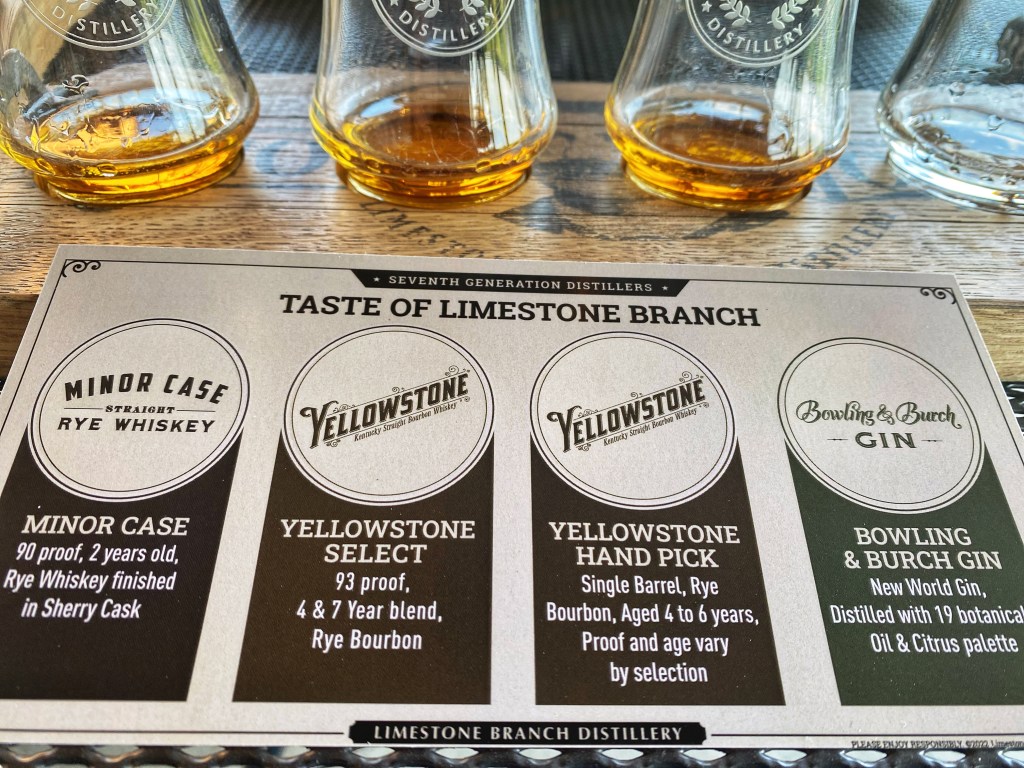
Limestone Branch Distillery: Producer of Yellowstone Select The main focus of this short trip was to visit the Kentucky Cooperage and to see the Four Roses Distillery–one of my dad’s favorite bourbons. So, we continued to Lexington, KY where we stayed a couple of nights at a cute Airbnb. We were quite impressed with the cool vibe of Lexington, a small college town with a lot of charm.
Day two:
Dad made everyone breakfast and then we were off for a tour of the Four Roses Distillery in Lawrenceburg, KY. The Four Roses Distillery was ornate and designed with Spanish Mission-style architecture, which seemed a little out of place in Kentucky…but it was a beautiful facility, and we really enjoyed the tour. The guided tasting room experience was probably my favorite so far. The knowledgeable tour guide combined with the quality flavors of Four Roses…definitely a great tour! I really enjoyed the Four Roses Small Batch!
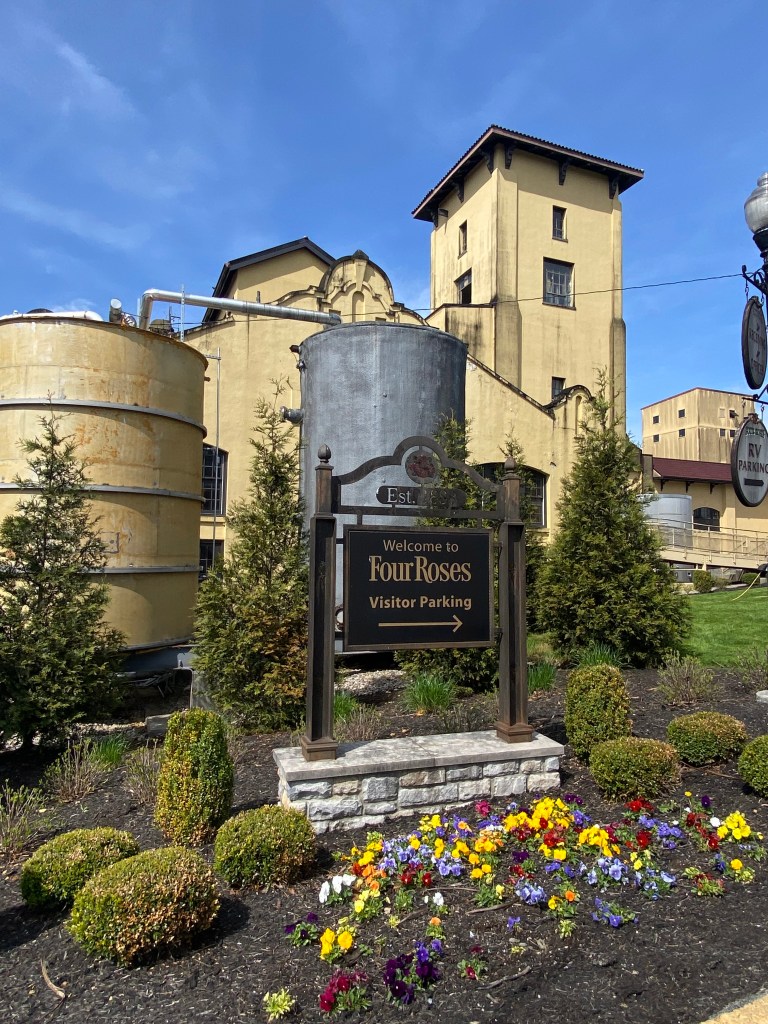
Entrance to Four Roses Distillery 
Four Roses Distillery: The fermentation room, a batch of sour mash 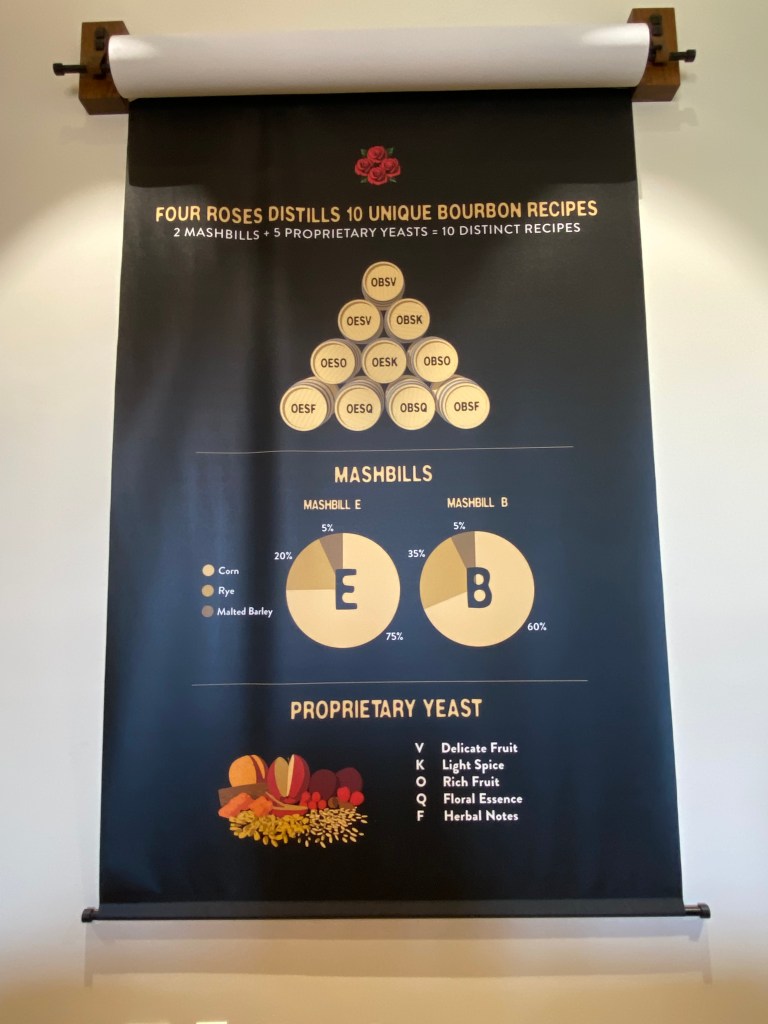
Four Roses Distillery did a great job of explaining their mashbill recipes. We were a little less than 30 minutes away from Buffalo Trace, so we decided to visit there again since it IS our favorite distillery! And I wanted my spouse to see what the big deal was all about!
We did a tour, tasting, had lunch on site, and toured the outdoor garden area. It really is a beautiful place, even if you don’t drink bourbon! (See previous posts for photos).
After walking around the gardens and being onsite at the facility where the Sazerac Company produces its infamous Pappy Van Winkle…we realized this was our third visit to bourbon country and we still had no idea what Pappy Van Winkle even tasted like….
We had tried in the past to find reasonably priced shots of Pappy but each time we found a place they were sold out.
We decided to try again and found a place that was advertising 1/4th of a shot for a reasonable price. We called ahead just to make sure they actually had some in stock.
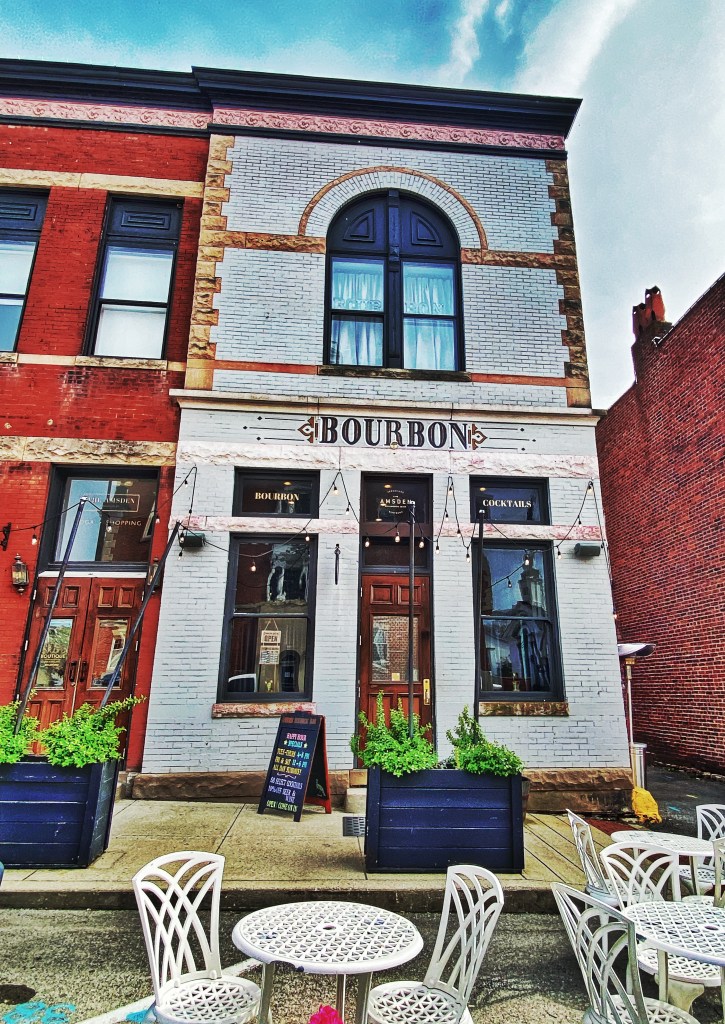
Amsden Bourbon Bar: The front entrance. We walked into the Amsden Bourbon Bar in Versailles, Ky. It was a small, studio sized bar with only a handful of tables. We sat down at the bar and discovered they had multiple selections of Pappy Van Winkle. We started to calculate how much it would cost for all three of us to try all of the available selections at 1/4th a shot. We figured this was probably our best chance considering the price and the availability. So, we went for it!
We tried the Pappy 10-year, Pappy 20-year, and Pappy 23-year!

That Pappy Moment! Our first taste of the famous bourbon! The moment we had been waiting for had finally arrived.
We raised the first glass and cheered together! Then, like they teach on all of the bourbon tours, we raised it to our nostrils and began to smell… hmmm…yep, it smelled like bourbon.
Then, our first taste. (It was the Pappy 10-year).
I tore off a piece of paper nearby and wrote little notes for memory’s sake.
Pappy 10-year: Four Roses Small Batch? Depth. (Maybe because we visited Four Roses earlier in the day …but this sip sure reminded me of the Four Roses Small Batch as far as flavor, texture, and taste).
Pappy 20-year: Hints of caramel, smooth on the palate, long smooth finish. Reminds me of the taste of 1792 (bourbon).
Pappy 23-year: Hints of caramel, has a kick, spice, pepper?
Given its reputation and price, I thought Pappy might offer a taste sensation unlike any I had experienced before. Yet, all I found myself doing was comparing it to other bourbons I enjoy, such as 1792, Four Roses, Larceny, Elijah Craig, Penelope, and so on. I’m certainly pleased that we had the opportunity to sample the famed Pappy Van Winkle. At the end of the day, I learned Pappy is just another bourbon, distinguished only by its reputation and price point, not necessarily because of taste.
And ultimately, our search for Pappy is one of those memories that will stay with me forever.
Thank you, Amsden Bourbon Bar, for making our Kentucky Bourbon Trail dream come true!
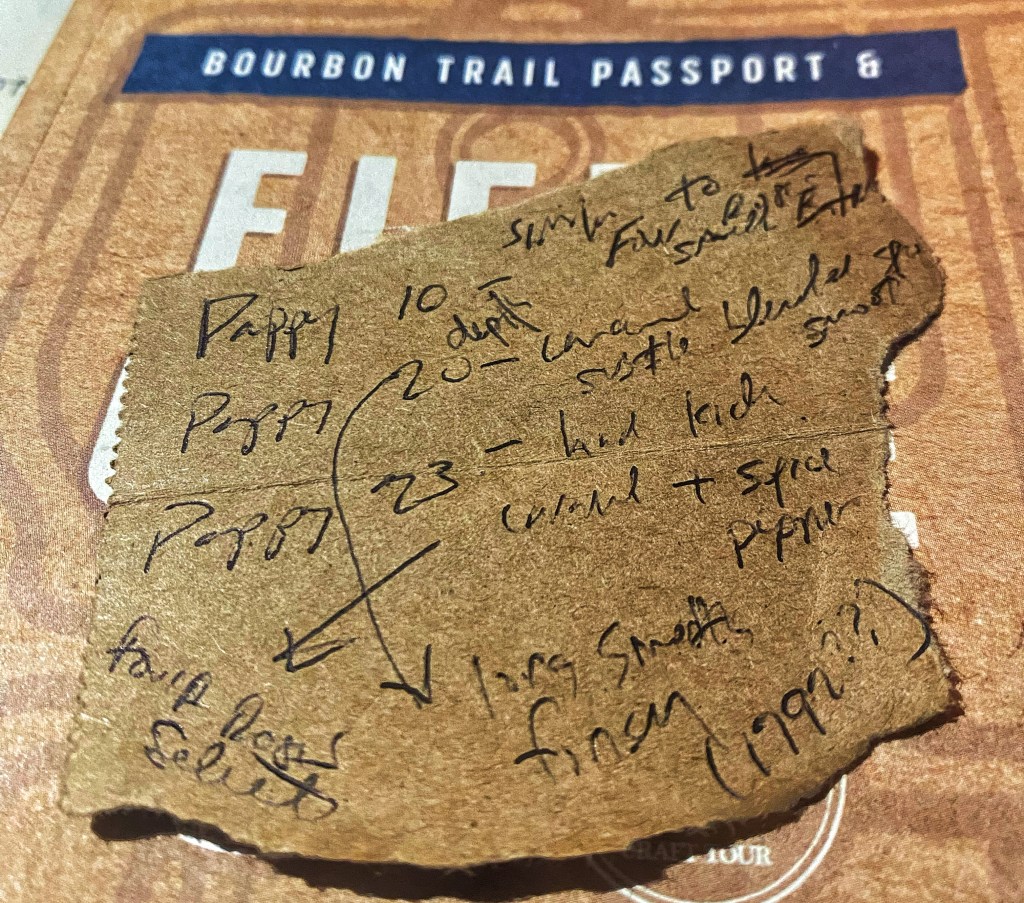
Notes about Pappy. We later had dinner at OBC Kitchen in Lexington, KY. We tried the baked pimento cheese and bacon dip–amazing! Returned to the Airbnb where we played dominoes and reminisced about our successful day!
Day three:
On our way out of town we stopped at the Lexington Brewing & Distilling Company (formerly known as Town Branch Distillery). They have a nice location right in the heart of downtown Lexington. They are known for their single malt whiskey.
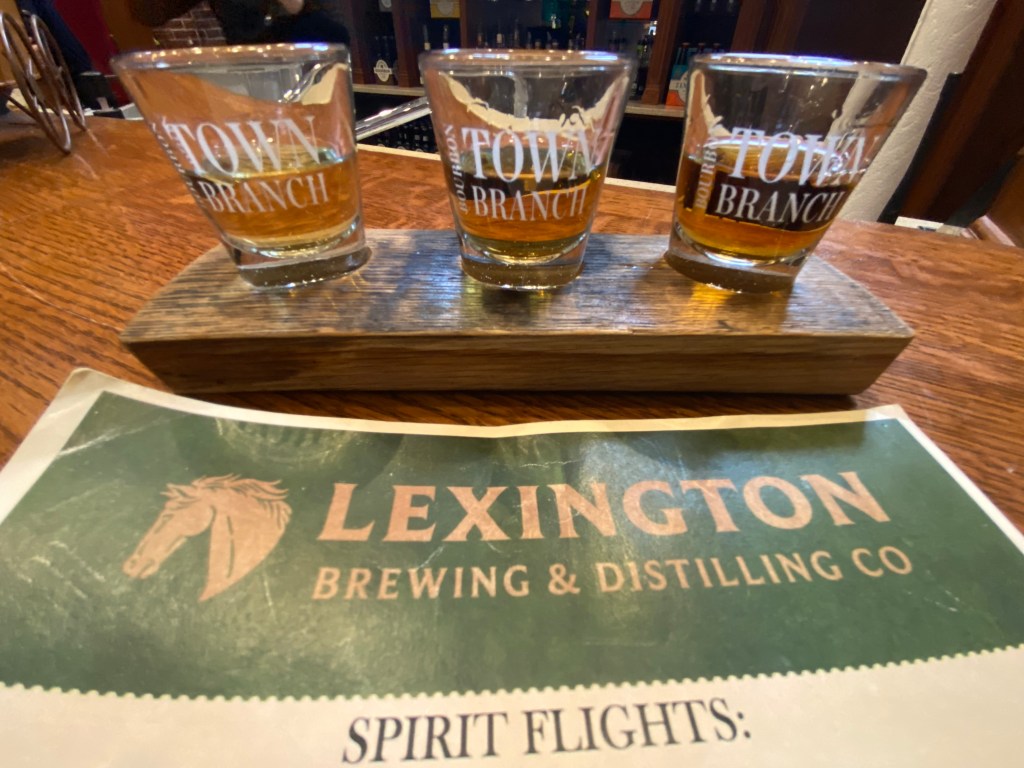
Whiskey Flight at Lexington Brewing and Distilling Co. Of course, if you have been following our journey, a bourbon trail adventure is not complete without a cave tour at Mammoth Cave National Park! This time we tried the Frozen Niagara Tour! (Reservations strongly encouraged).

Entrance to Mammoth Cave 
Frozen Niagara Tour 
A Common Cave Cricket (Hadenoecus subterraneus) at Mammoth Cave Year 4, Round 3 of our Bourbon Trail Adventures took place in April of 2022. The memories will last forever. I love you, Dad! I love you, Val!
Stay tuned for part 5…
-
The Legacy of Denver’s Mile Houses and Smoky Hill Trail.
There are mile markers, whether it be on the road of life or just your everyday commute, that signify where you are and how far you have traveled.
Most people are aware of Denver’s role in the early gold-seeking days but less know about the historic mile houses that marked the way to Denver City. A handful of these houses still exist.

(Image: Photo from Jerome Smiley’s, History of Denver, depicting the confluence of the Cherry Creek and S. Platte rivers, circa 1859). In 1859, present-day Colorado was still a part of the Kansas Territory, not yet a part of the Union, and was pictured on maps as indigenous territory. Denver continues to be the homeland for several indigenous tribes, including the Ute, Arapaho, and Cheyenne.
During the summer of 1858, a group of Cherokee prospectors along with three brothers from Auraria, Georgia found gold near present-day Denver. This event became a key development in what we call the Pikes Peak gold rush (also known as the Colorado gold rush). Nowadays we associate Pikes Peak primarily with present-day Colorado Springs but to those traveling on foot or wagons along the dusty wagon roads—Pikes Peak represented the gateway to the gold mines—from present-day Colorado Springs all the way to present-day Denver.
Due to the increased population of white settlers and gold seekers, Colorado became its own territory in 1861 and later was admitted into the Union in 1876. Settlements such as Denver City, Boulder City and Colorado City became established towns.
Side note: Many locals know that Colorado means “colored red” in Spanish. However, what many may not know is that it was representatives from Colorado City (near Colorado Springs) who lobbied for the name Colorado.
As you drive along Parker Road and Leetsdale Drive in the Denver/Glendale/Aurora/Parker areas, you are essentially riding atop an old pioneer trail called the Smoky Hill Trail. Named after the Smoky Hill River, which the trail follows most of the way, this was the most popular route for those traveling by foot, wagon, and eventually stagecoach from the eastern Kansas Territory to the gold fields.
Today, you can still trace the passageway of the Smoky Hill Trail. During the 1850s and 1860s, savvy business-minded homesteaders seized the new opportunities to profit from the increased volume of travelers. Like our modern-day rest areas and gas stations advertised along the highways, there were Mile Houses, often family-owned homesteads that were turned into public lodging or stagecoach stops.
The Mile Houses served as trail markers indicating how many miles remained until reaching Denver City, at today’s intersection of Colfax Avenue and Broadway.
Today, you can still visit two of the original Mile Houses, as well as tour the areas where a few of the others once stood.

(Image: Handout from the Four Mile Historic Park, 2017). The Smoky Hill Trail was composed of three branches: north branch, middle branch, and south branch. Each of these branches veered in a westerly direction and connected to the Cherokee Trail. The southern branch of the Smoky Hill merged with the Cherokee Trail near the site of the 20 Mile House, these two trails are sometimes referred to interchangeably. (The Cherokee Trail is the older trail as it dates to 1849 with a group of Cherokee who were headed to the California gold rush). According to Lee Whiteley of the Cherry Creek Valley Historical Society, “…the six mile houses were located on the combined Cherokee-Smoky Hill trails.”
The Twenty Mile House
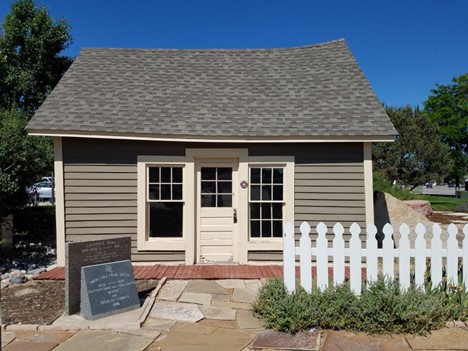
(Photo: The Pine Grove Post Office, formerly part of the Twenty Mile House, located about 20 miles east of Denver in Parker, Colorado. Taken by J. Foster 2017.) In 1864, Alfred Butters built a one-room log cabin near present-day Old Town Parker. Attached to his cabin was a makeshift post office for travelers to post notices or gather additional provisions. It became known as the Pine Grove Post Office. The old cabin was eventually torn down. However, the original post office area was restored by the Parker Area Historical Society and sits at the intersection of Main Street and Stage Run in Parker, Colorado. Today, visitors can see the post office and historic trail markers.

(Photo: Trail monuments onsite of the former Twenty Mile House, J. Foster 2017.) The Seventeen Mile House
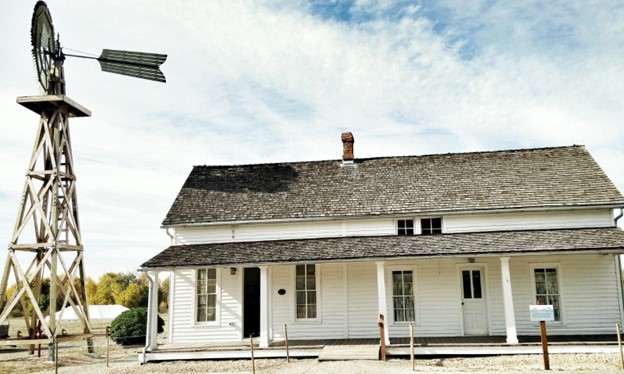
(Photo: Seventeen Mile House, taken by J. Foster, October 2014.) The Seventeen Mile House was built in 1862 by George C. Schleier, a former freight owner and former gold-seeker. He owned about 160 acres near present-day Parker Road and E. Long Avenue. It wasn’t until 1866 that new owner Mary Hightower turned the house into an inn for travelers.
The house transferred ownership several times and eventually was in danger of being torn down for development. The Cherry Creek Valley Historical Society helped to save the property from destruction. In 2000, the Trust for Public Land took ownership and shortly thereafter transferred the land to Arapahoe County. The Seventeen Mile House and surrounding 30 acres now belong to the town of Parker and Arapahoe County Open Spaces under a conservation easement. The Seventeen Mile House is a prime example of grassroots preservation where the community and local agencies have come together to preserve local history.
In 2012, the Seventeen Mile House opened its doors to the public for tours, open houses, and educational programming. Come visit the 17-Mile House!
Check their website for tours and events.
The Twelve Mile and Nine Mile Houses

(Photo: An interpretive sign at the campground office of Cherry Creek State Park, depicting the Twelve Mile House and information regarding the Smoky Hill Trail, J. Foster, 2017). Both the Twelve Mile House and Nine Mile House were located at the present site of Cherry Creek State Park. Nine Mile House sat near the intersection of Parker Road and I-225, near the edge of the present reservoir. Not much information exists on the Nine Mile House, except that it was a “small log cabin” and did not have a barn.
The Twelve Mile House was located near today’s Parker Road and East Orchard Rd (there is now a horse stable called Twelve Mile Stables near the vicinity of the old house). The Twelve Mile House was one of the larger hotels and like several other Mile Houses, it was common to host community dances. John and Jane Melvin, proprietors of the Twelve Mile House hosted dinners and dances for five dollars, including a five-piece orchestra. According to Margaret Long, “…the stage would stop once a day to drop off mail and change out their horses.”
Visit Cherry Creek State Park
Formerly known as Cherry Creek State Recreation Area and founded in 1959, it is Colorado’s first State Park. It has 35 miles of multi-use trails and offers opportunities for birdwatching, picnicking, boating, and camping!
Check out Cherry Creek State Park’s website for recreational activities and more information.
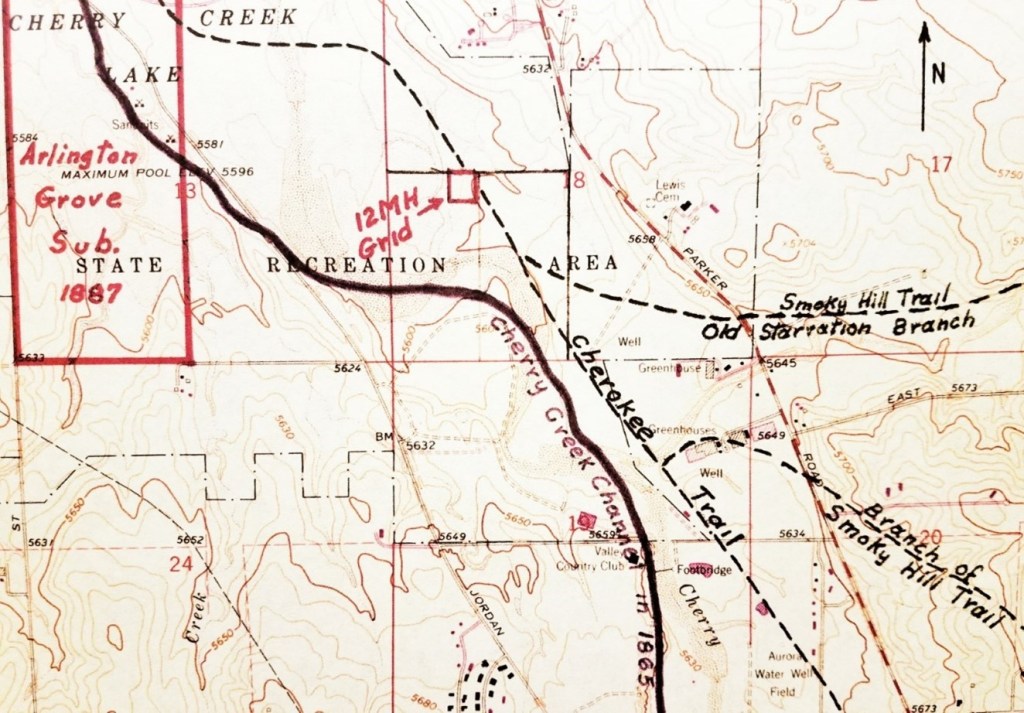
(Photo: 1965 USGS map showing the Smoky Hill Trail, Cherokee Trail, and former site of the Twelve Mile House, designated as site 5AH121, provided by OAHP, 2017.) The Seven Mile House
Unfortunately, less information exists regarding the Seven Mile House. However, an excerpt from Margaret Long’s book The Smoky Hill Trail, stated that the Seven Mile House, “was formerly the O’Neil Ranch” and located on the “east bank of Cherry Creek and the west side of the valley road which runs parallel to Colorado 83 (Parker Road).”
The Four Mile House
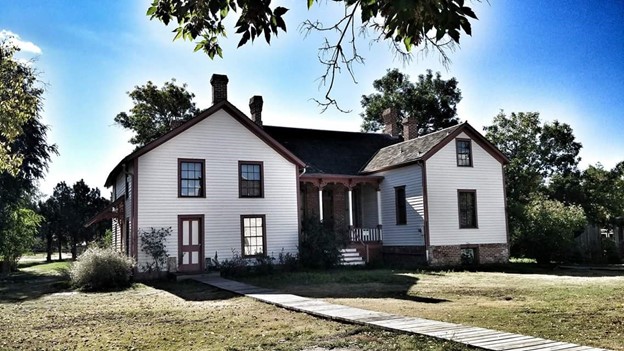
(Photo: Four Mile Historic House. From the outside, you cannot tell that the original log structure is inside of the left door. This log structure is considered the oldest standing structure in Denver, Colorado, J. Foster 2015.) Just four miles from Denver City, this was the last stage stop before arriving in Denver. Built in 1859 by brothers Samuel and Jonas Brantner, it was eventually sold to Mary Cawker a year later. Cawker was a single mother, and she was the first to operate the log home as a stage stop. The property consisted of a tavern, parlor, and sleeping area that you can still tour today—thanks to historic preservation!
The Four Mile Historic Park hosts tours for the public, field trip opportunities, and seasonal events such as a summer concert series, pumpkin harvest festival, and Spirits & Spirits.
Check out their website HERE.
Denver City: End of the Line.

(Photo: Trail Marker, Colfax Ave. and Broadway, J. Foster 2014.) Much has changed since travelers walked the dusty road along the Smoky Hill Trail. However, several significant structures and mile markers remain, reminding us of where we have been and how far we have come.
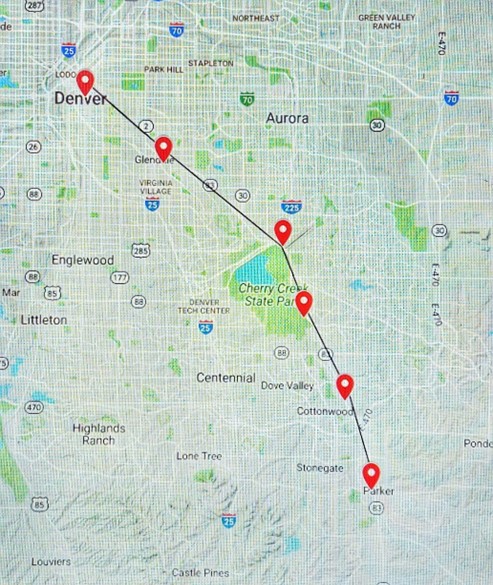
(Google map showing where the Mile Houses are in relation to Parker, Aurora, and Denver.)
Cherokee Trail, Cherry Creek State Park, Cherry Creek Valley Historical Society, colorado, Colorado History, denver, Denver’s Mile Houses, Four Mile House, Historic Denver, nature, Nine Mile House, Parker Area Historical Society, Seven Mile House, Seventeen Mile House, Smoky Hill Trail, Travel, Twelve Mile House, Twenty Mile House -
The Best Fun and Fare in Fairplay, CO.
A Summer Weekend Itinerary:
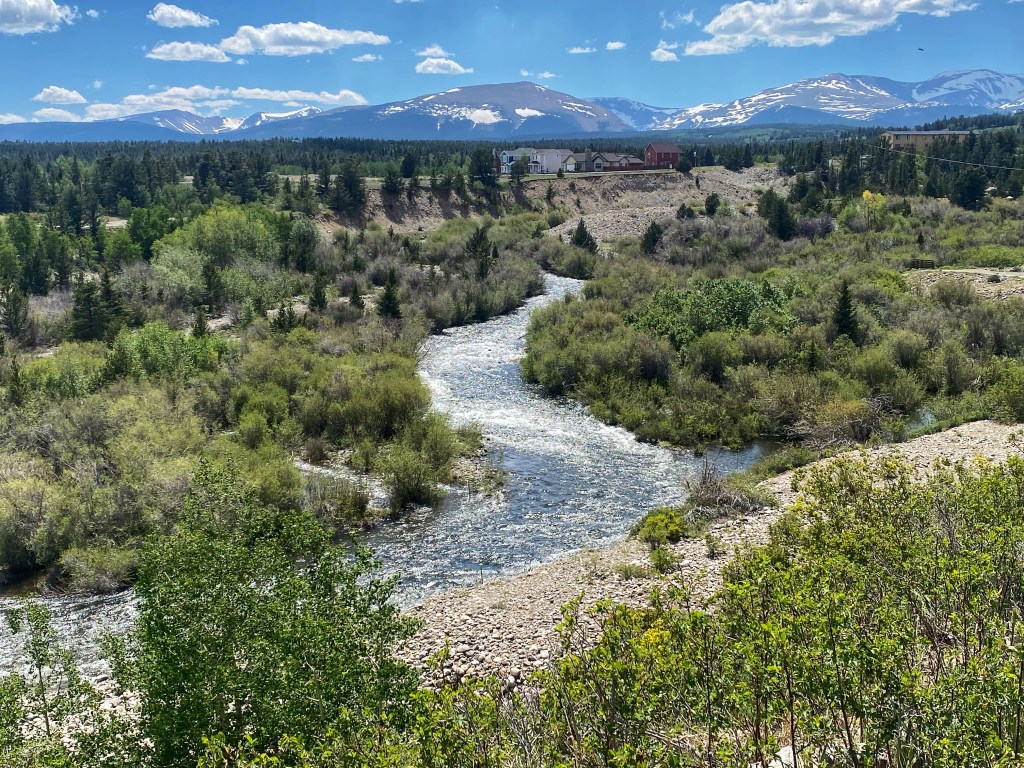
View of the Mosquito Range from Fairplay, Colorado. Best Breakfast in Town: Mr. Burro Cafe
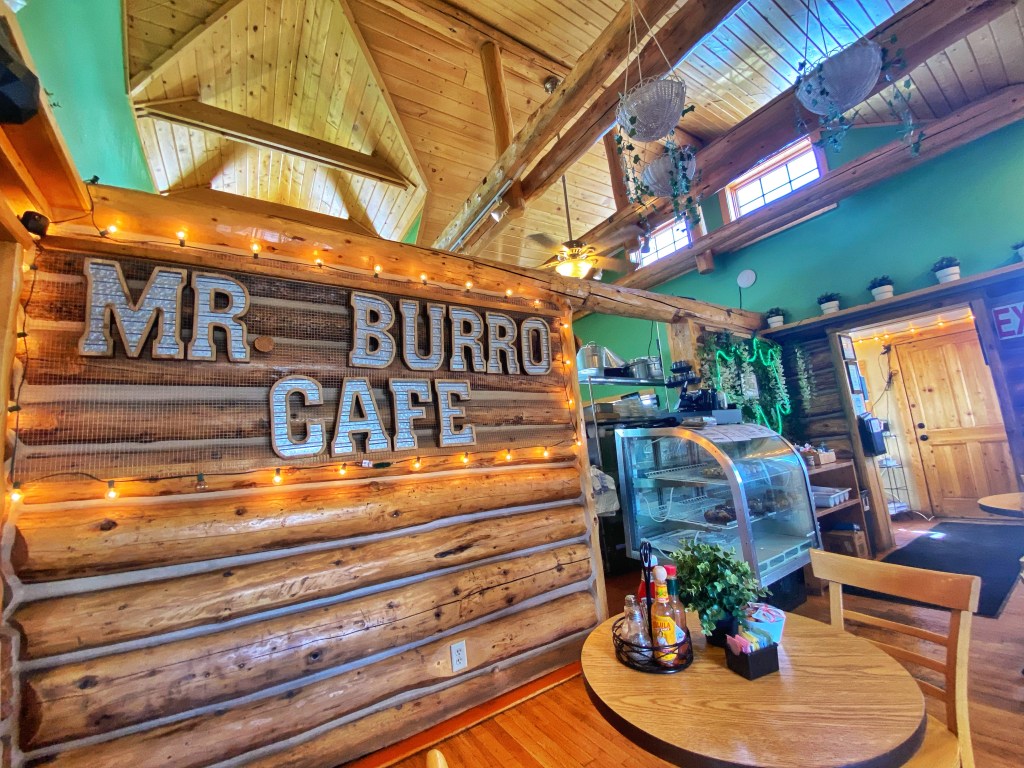
Main sitting area of the Mr. Burro Cafe 
White Chocolate Mocha 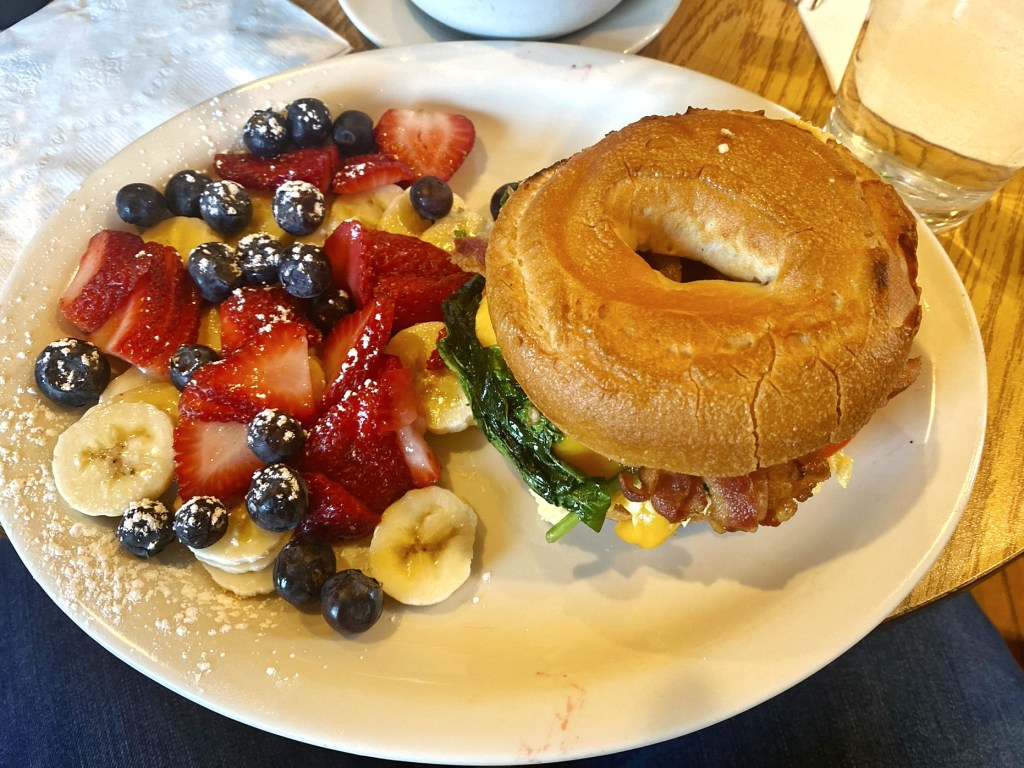
Breakfast sandwich and fruit Co-owners Mily Romero and Lula Frausto opened Mr. Burro Cafe in April of 2022. The cafe serves breakfast and lunch seven days a week. The food is delicious, and the service is very friendly! I highly recommend their lattes or breakfast sandwiches.
Take A Hike:

Trailhead for the Limber Grove Trail, located off of the 4 Mile Creek Rd. Limber Grove Trail:
Situated approximately 30 minutes from downtown Fairplay, the Limber Grove Trail offers a 3.5-mile round trip hike. This scenic route crosses a stream, winds through dense woods, and navigates over scree slopes, leading to an ancient grove of limber pines. Mount Sherman looms in the distance as you ascend 564 feet near the base of Sheep Mountain.
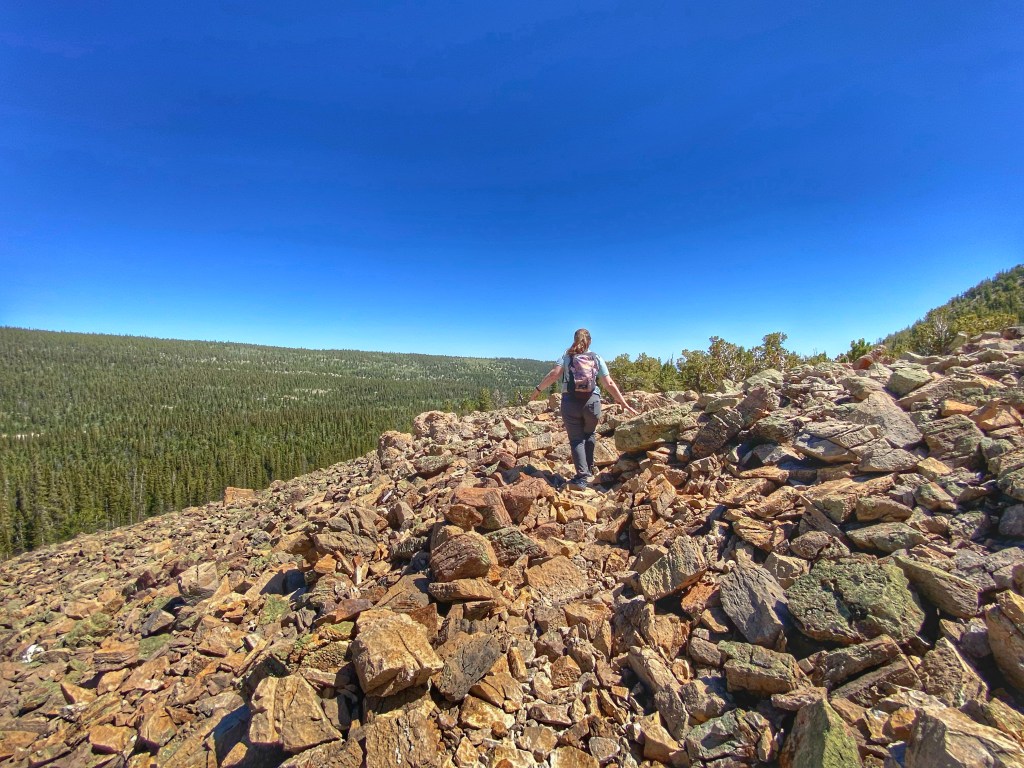
Traversing scree piles 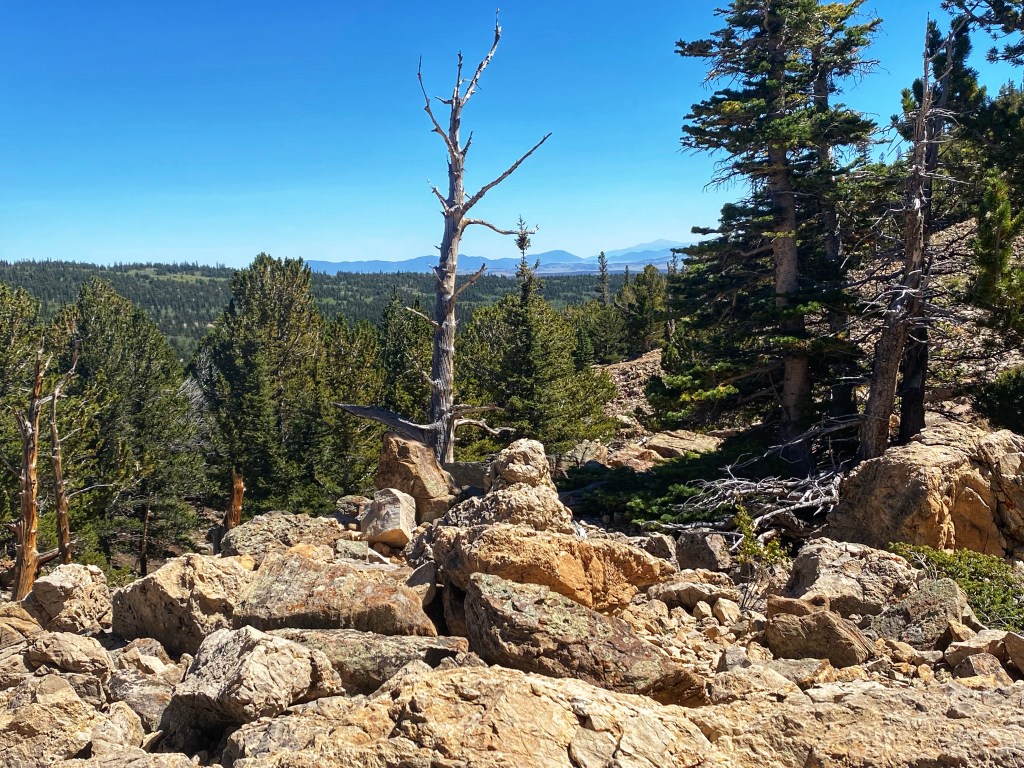
Mountain views Mount Sherman:
Looking to explore a 14er? Mount Sherman is a popular 14er for beginners as the trailhead starts around 12,050. Therefore, the actual hiking distance is only about 5 miles roundtrip. There are various listings for the actual height of Mt. Sherman, but most put it somewhere between 14,034-14,036. Even though the hiking distance is shorter, it is by no means “easy.”

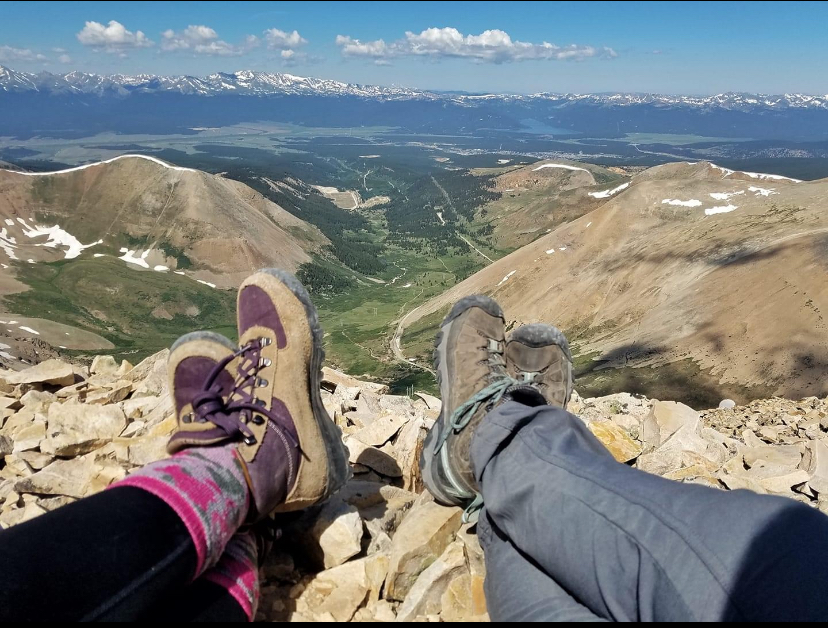
View from the top of Mt. Sherman Be Prepared:
Know the signs of altitude sickness and be prepared for fast-changing weather conditions. Treat this like any other mountaineering experience: Start early, dress in layers, bring plenty of water and snacks, extra sunscreen, and know your route. Know your limits.
Directions:
Both of these hikes are located off of the 4-mile creek road. This road is a gravel, washboard road so allow extra time for travel. It will take about 11 miles to get to the trailhead for Mt. Sherman.
Not a hiker?
Explore South Park City

When people hear the name South Park, they often think of the cartoon sitcom from Comedy Central but South Park is the real name of a valley that formed from the Rocky Mountains in central Colorado. Fairplay, Colorado is the most populated town in the South Park region, as well as being the county seat. At the western end of downtown Fairplay is a reconstructed mining town with thirty-five authentic buildings that were relocated from various locations but represent the gold and silver boom era of 1850-1880. This outdoor museum is called South Park City.
During the second weekend of August, they host Living History Days where volunteer docents re-enact life during the gold rush days. Several of the buildings are on the National Register of Historic Places (e.g. South Park Brewery and the Summer Saloon).
Check out the South Park City Museum website for hours and programs.
Enjoy the Burro Days Festival
The Town of Fairplay hosts the annual Burro Days Festival at the end of July. There are burro races, llama races, arts and crafts vendors, and plenty of summer food and fun! The town hosts this event to honor the many burros that played a crucial role in the mining process during the late 1800s, transporting millions of dollars’ worth of gold and silver from the nearby mines.
Video: Burro Days 2023 Llama Race! Downtown Fairplay, CO. 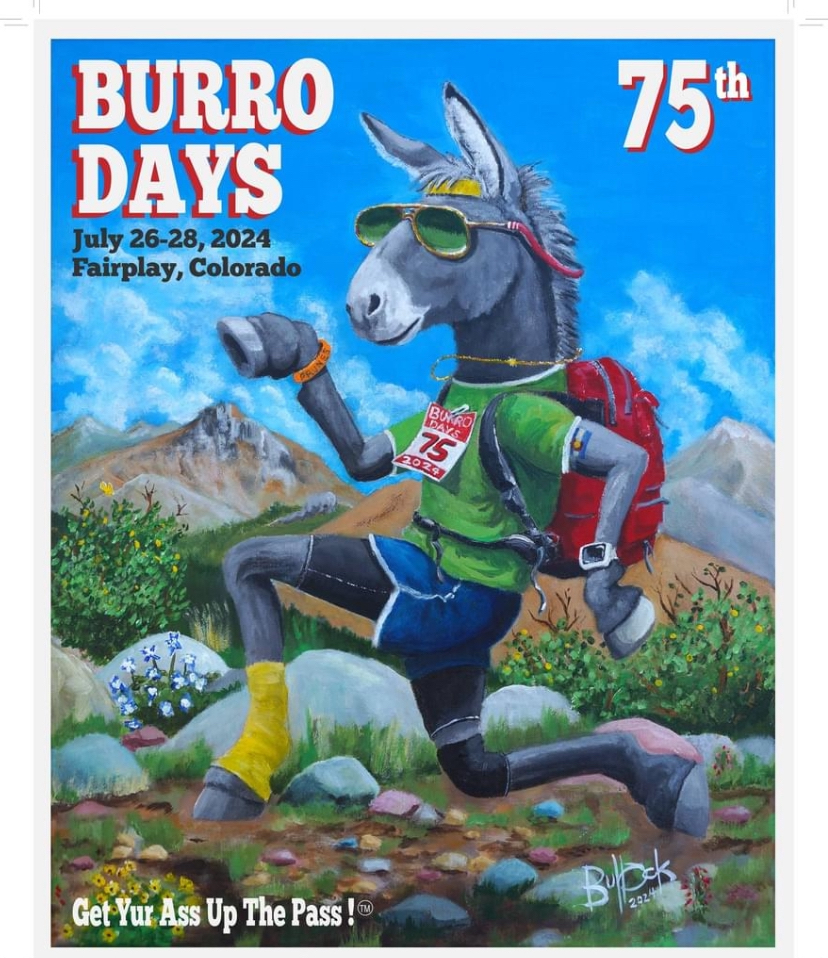
Screenshot: Poster design by artist Scott Bullock, 2024 Burro Days poster. Dinner at Salado!
[***UPDATE: As of August 4, 2024…Salado closed its doors…and, unfortunately, is no longer open. So bummed! However, thanks for the memories!!! And you served Fairplay well!!]
I’ve written about Salado before, but I seriously am obsessed with this hidden Colorado gem! Try their jalapeno poppers or pumpkin seed encrusted mahi! They also have fantastic mocktails like the new-fashioned, a fresh spirit-free take on the classic old-fashioned.
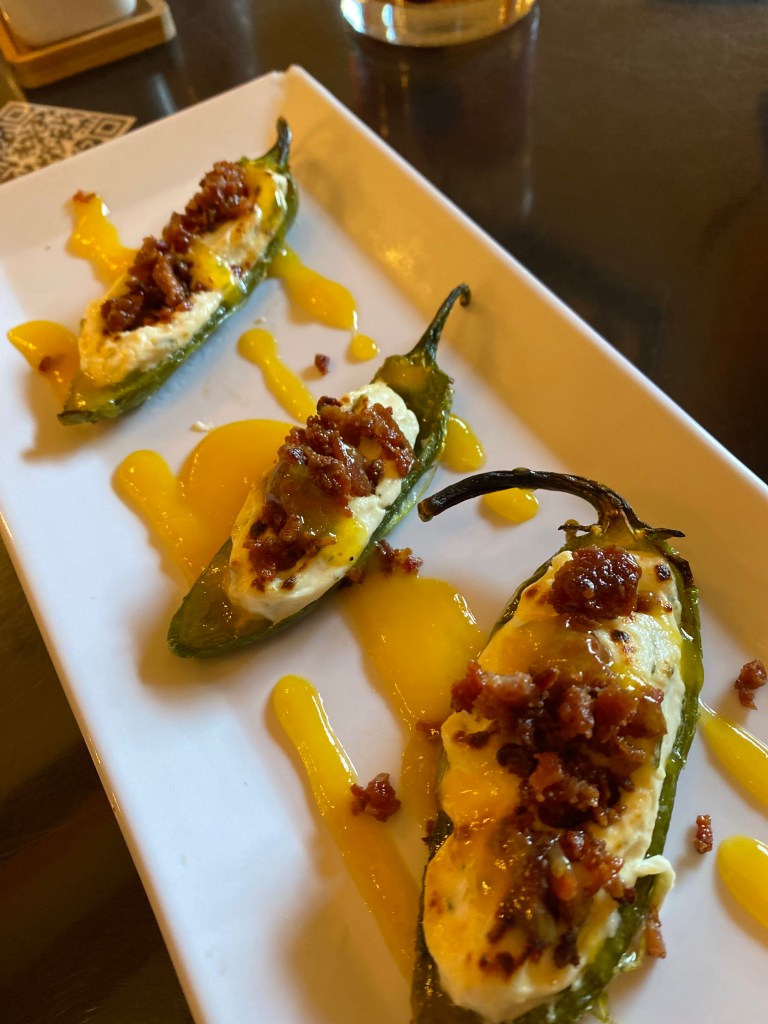
Jalapeno poppers from Salado Looking for Local Whiskey?
Snitching Lady Distillery

Above: Silhouette of the Snitching Lady on an ice block. Love this! 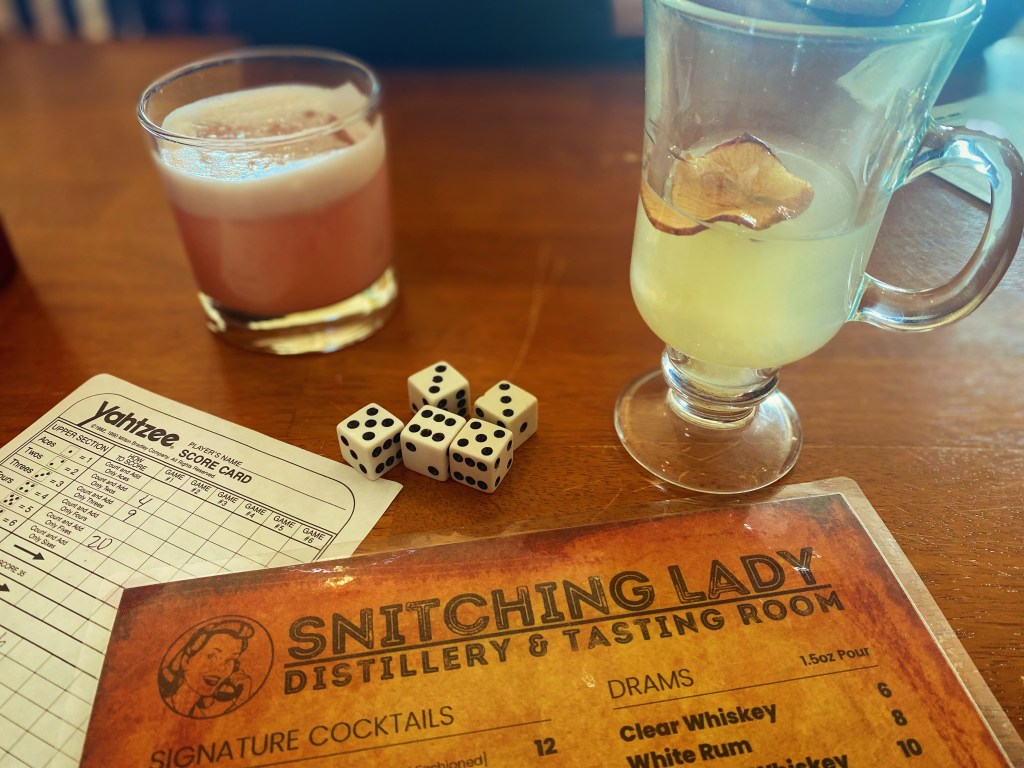

The Snitching Lady Distillery is a local family-owned distillery. Try their Parson Brown, an old-fashioned with the branded ice cube. Or try the Snitch, their flagship whiskey sour! They serve whiskey, brandy, and rum! If you want a good feel of the town, check this place out.
Fairplay: The Trout Fishing Capital of Colorado!
Fairplay, Colorado is known as the trout fishing capital of Colorado! So, get your gear and find a spot along Fairplay Beach or another nearby stream or river! Enjoy!

-
Discovering Bardstown, Kentucky: A Bourbon Enthusiast’s Journey
Kentucky Bourbon Trail: Round 2!
(This is part three of a five-part series. Parts one and two can be found here and here.)
After experiencing the bourbon trail for the first time, Dad and I made a return trip six months later! Our interest and thirst had been piqued! We decided it only made sense to visit Bardstown, Kentucky since it is known as the Bourbon Capital of the World (R).

Trip Itinerary: Day 1
We met up again in Nashville, TN and then drove together to Bardstown. We were eager to explore more about the history, production, and nuances of the bourbon culture.
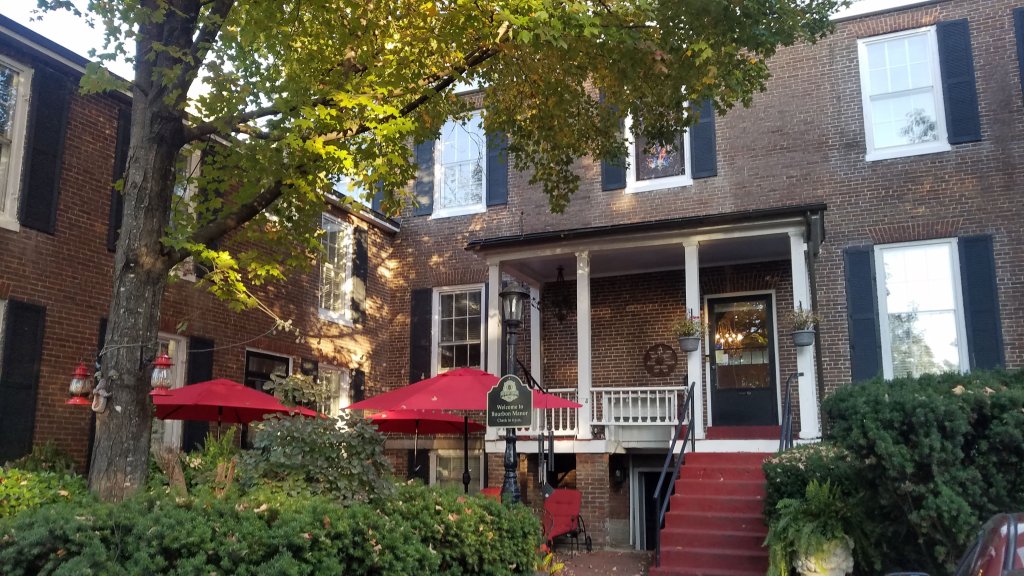
Bourbon Manor Bed & Breakfast We checked in to the Bourbon Manor Bed and Breakfast. The owner was very helpful, and the breakfast was excellent!
[Note: I later learned that this Bed and Breakfast had previously been a plantation home. I have had mixed feelings about how to write about this stay. In my research on how to better think about and understand slavery-era structures and plantations, I have come to believe that such places should have a sign or plaque honoring those slaves who lived, worked, and died in these areas. I also do not want to write in a way that romanticizes or sanitizes plantation life, as slavery was a very real and grievous part of American history.]
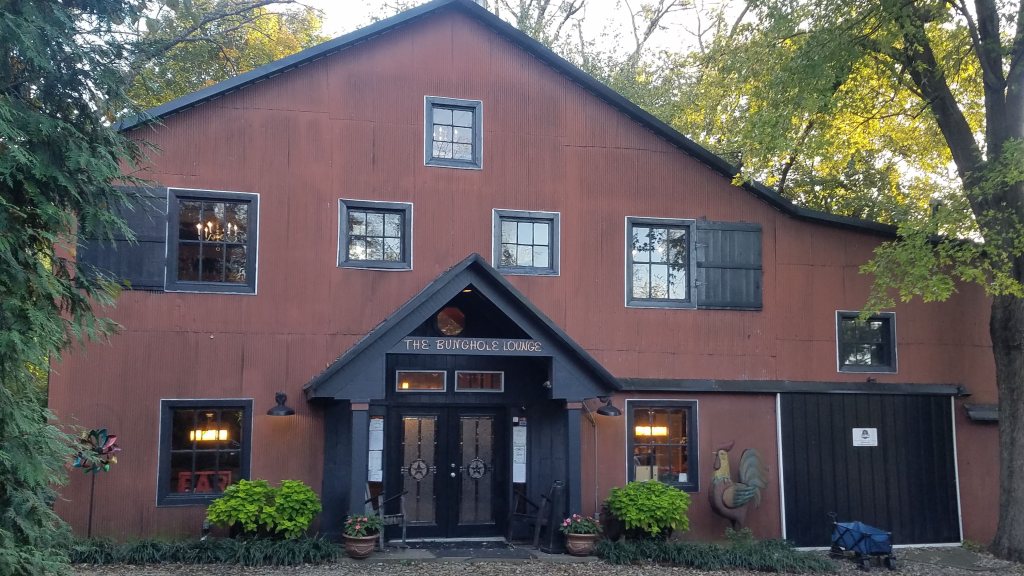
An old tobacco barn was converted into the Bunghole Lounge. If you are wondering what a bunghole is…look up the anatomy of a bourbon barrel. As we sat at the bar of the Bunghole Lounge, my Dad stumbled upon an article listing bourbons similar in taste to Pappy Van Winkle. It may have been this one from Men’s Journal. Thus, in addition to our pursuit of Pappy, we began to explore Wellers, Larceny, and Maker’s Mark. Familiar with Maker’s Mark, we savored it anew, mindfully discerning its flavor notes in anticipation of the day we might sample the legendary Pappy.
For dinner, we decided to explore downtown Bardstown and we found Mammys Kitchen and Bar. They served a hot brown, which is something I got to check off of my must-try southern food list.
Hot Brown: The hot brown originated in Louisville, KY at the Brown Hotel by Fred Schmidt. It is an open-faced sandwich consisting of turkey, ham, and bacon drenched in gravy. The bread is baked or broiled until crispy.
Trip Itinerary: Day 2
Bardstown, KY


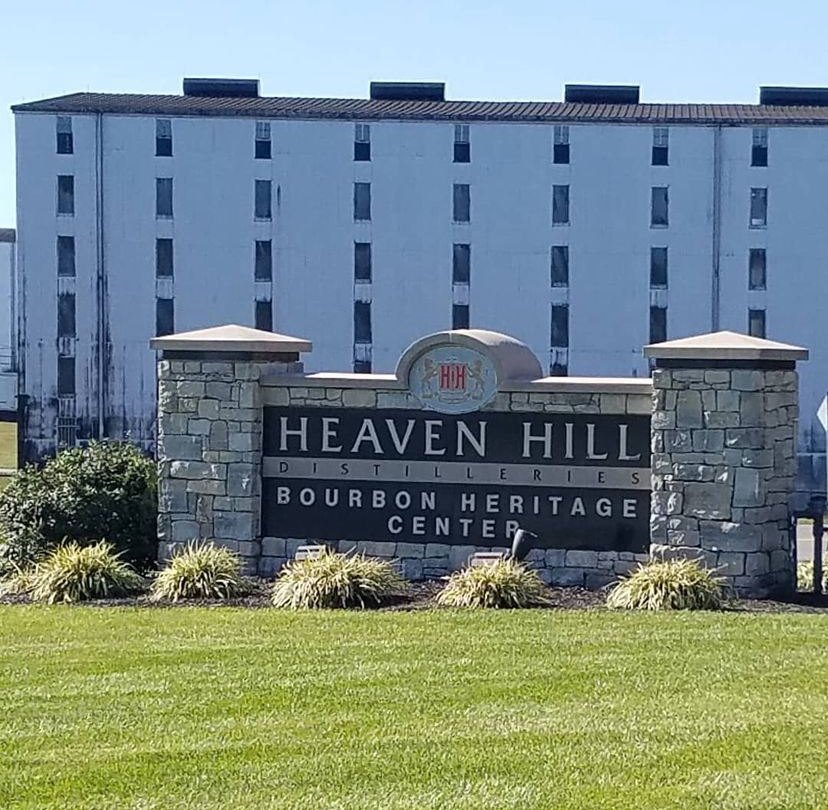
We checked out of our Bed & Breakfast and began to explore distilleries around Bardstown. We started the day by visiting the Bourbon Heritage Center and distillery located at Heaven Hill.
We explored one of the numerous rickhouses on the estate—they were abundant! Heaven Hill is in fact the distillery responsible for 100 different bourbon labels!
Following the tour, we participated in a tasting, which was my first encounter with Elijah Craig Small Batch. Very impressive. We thoroughly enjoyed the tour, especially since Heaven Hill is the largest independent bourbon producer! There was a wealth to observe and discover!
We then visited Bardstown Bourbon Company. During our visit, this distillery had just opened, and a lot of the focus was on the cafe area. So, we had lunch in their new facility and got our bourbon trail passport stamp. We had to leave to make our reservation at Maker’s Mark.

We enjoyed the tour at Maker’s Mark! We also go to hand dip our own take home bottle in the red wax. Like several other distilleries that we have visited, Maker’s Mark had a sprawling property consisting of many different rickhouses, production facilities, and a cafe. We enjoyed the tour and the smells of the fermentation process! I particularly enjoyed learning about Margie Samuels, the co-founder, who designed the distinctive label and creative branding, including the famous red wax bottle seal. You can read about the meaning of the Maker’s Mark symbol here.
At the end of our tour, we signed up to make our own hand-dipped bottle! It made a great souvenir!
Side Note:
If you are a true crime enthusiast, then you might be interested to learn that there have been several unsolved murders in Bardstown. While we were driving around town visiting distilleries, I kept seeing signs posted around town referencing missing women. So, I explored further and found this podcast detailing several unsolved cases. You can explore the podcast called Beyond Bardstown.
Trip Itinerary: Day 3
Downtown Louisville, KY
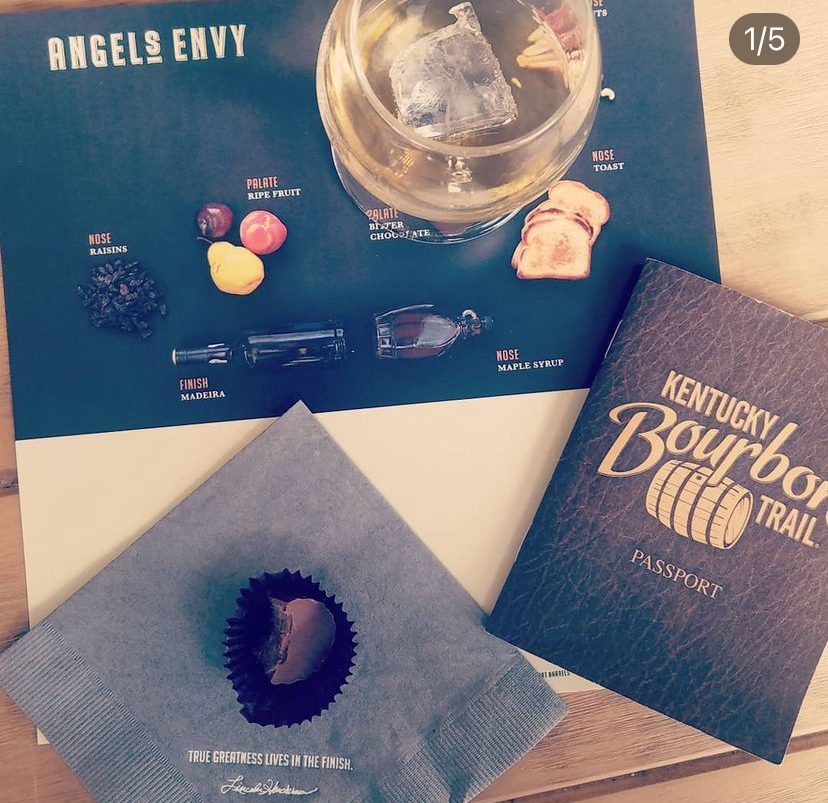
Angel’s Envy: Tour & Tasting. Touring the Angel’s Envy distillery was a delightful experience! The guide conducting the tasting was exceptionally informed and humorous. We savored the bourbon selection paired with an assortment of fruits and chocolates—a perfect combination! Additionally, the view of the production area and the copper stills was fascinating.

Dad and I, in front of the copper still at Angel’s Envy. Old Forester, Evan Williams, and Michter’s distilleries are all on the main drag in downtown Louisville. So, we walked around downtown and explored.

Old Forester tasting flight. The staff at Old Forester were incredibly fun and friendly. This was my least favorite bourbon as far as taste, but a lot of folks seemed to enjoy this one.

Michter’s tasting flight. I really loved the renovated building and architecture that housed Michter’s Fort Nelson Distillery. The building was centrally located on the corner of W. Main Street and N. 8th Street–had a lot of character! The bourbon tasting was fun, and I felt partial towards the Kentucky Straight Bourbon sample. Dad seemed to prefer the Kentucky Straight Rye.
We did not plan on touring the Evan Williams distillery due to time. But we were able to see where they were located and got our bourbon passport stamp.
We wrapped up the bourbon trail section of this trip and then ventured to what has now become our tradition after bourbon tasting: Mammoth Cave National Park!
This time we met up with my aunt and uncle and tried the lantern tour of Great Onyx Cave!
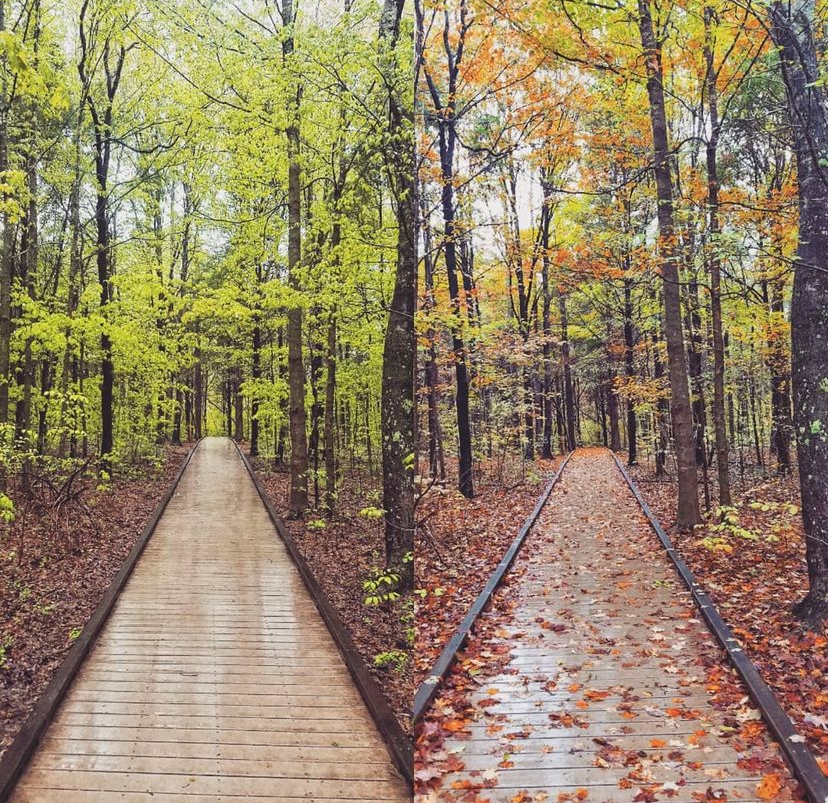
Left: A trail at Mammoth Cave in April 2019. Right: The same trail in October 2019. 
A park ranger at Mammoth Cave National Park points out features of the Great Onyx Cave. 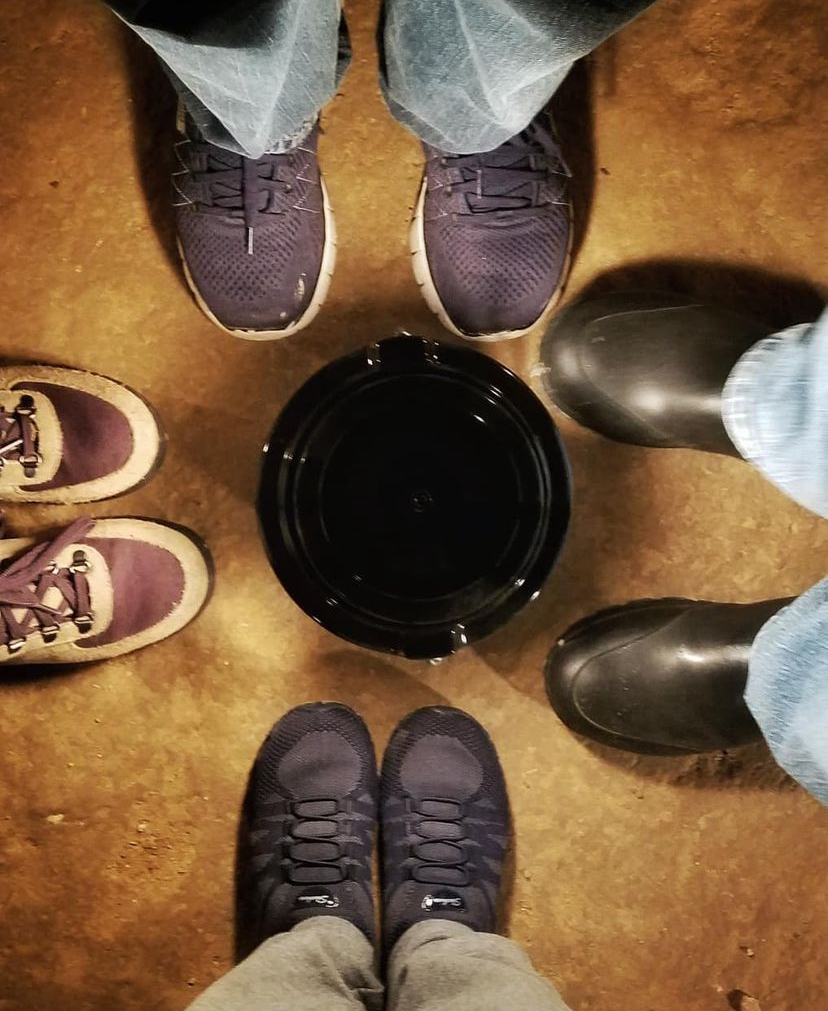
Waiting for the tour to begin, standing around the lantern. The lantern tour was awesome! The geological features of the cave came alive with the lantern light. Lots of stalagmites and stalactites! We even saw a cave salamander (Eurycea lucifuga). So cool!
We said goodbye to my aunt and uncle and then headed back to the Nashville airport to await our flight.
So, what do bourbon and caves have in common? Family bonding. Grateful for our time together.

I love you, Dad. Stay tuned: In the upcoming series, I’ll recount the time we finally savored Pappy Van Winkle bourbon, discovered an astonishing bistro with an exceptional bourbon collection, toured the largest bourbon barrel manufacturing plant in the world, and experienced completing our first Kentucky Bourbon Trail Passport book.
-
Indigenous Homelands, Historic Trails, and Amazing Fossils: Exploring NPS Sites Near the Wyoming and Nebraska Border.

Gone Exploring: Somewhere in Southern Wyoming. On a whim and a three-day weekend, my spouse and I decided to jump in the car and head three hours north of Denver to Gering, Nebraska. For the next 48 hours the Gering and Scottsbluff areas were our base for exploring two remote National Park sites: Fort Laramie National Historic Site and Agate Fossil Beds National Monument.
While at times it seemed like we were in the middle of nowhere, it was also in those moments when we could sense the presence of the past all around us–especially when we stood right in the middle of original wagon ruts along the Oregon Trail.
We first stumbled upon the Gering/Scottsbluff area ten months ago when we went to explore Scotts Bluff National Monument. I wrote about our experience at Scotts Bluff National Monument here.
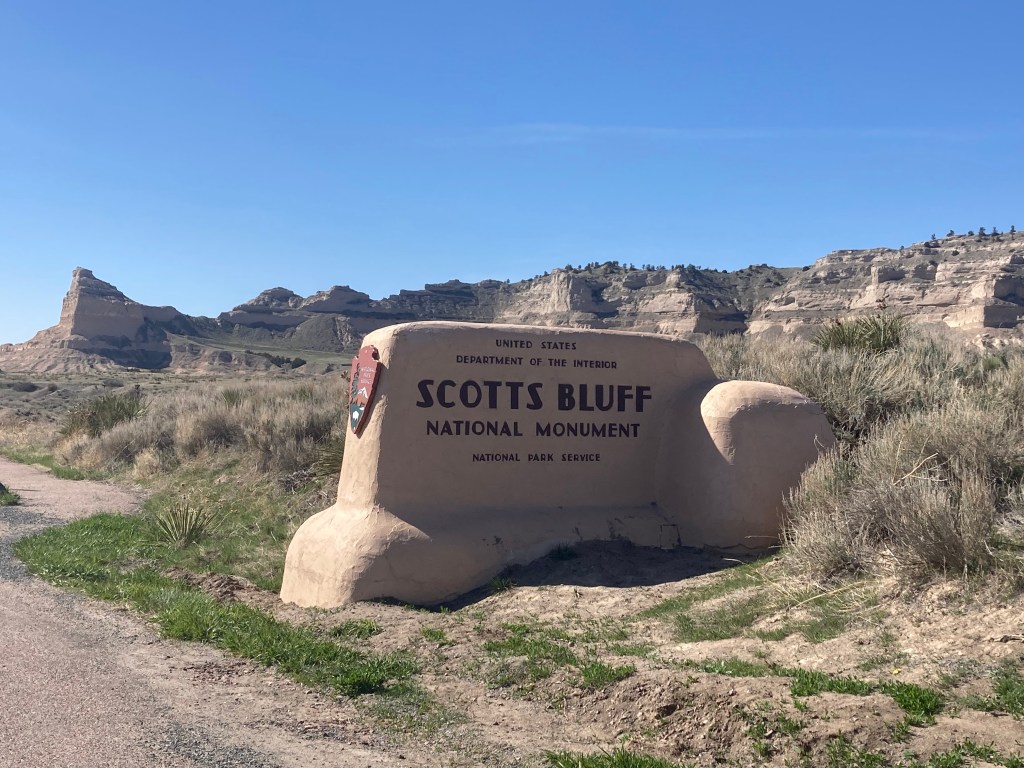
Scotts Bluff National Monument located in Gering, Nebraska. Returning to the area, we were eager to explore more of this remote, high prairie landscape and get another stamp in our NPS passport book.
Trip Itinerary:
Day one:
We arrived in Gering, NE and found Hotel 21 & Co., a trendy boutique hotel that was fun, clean, and modern.


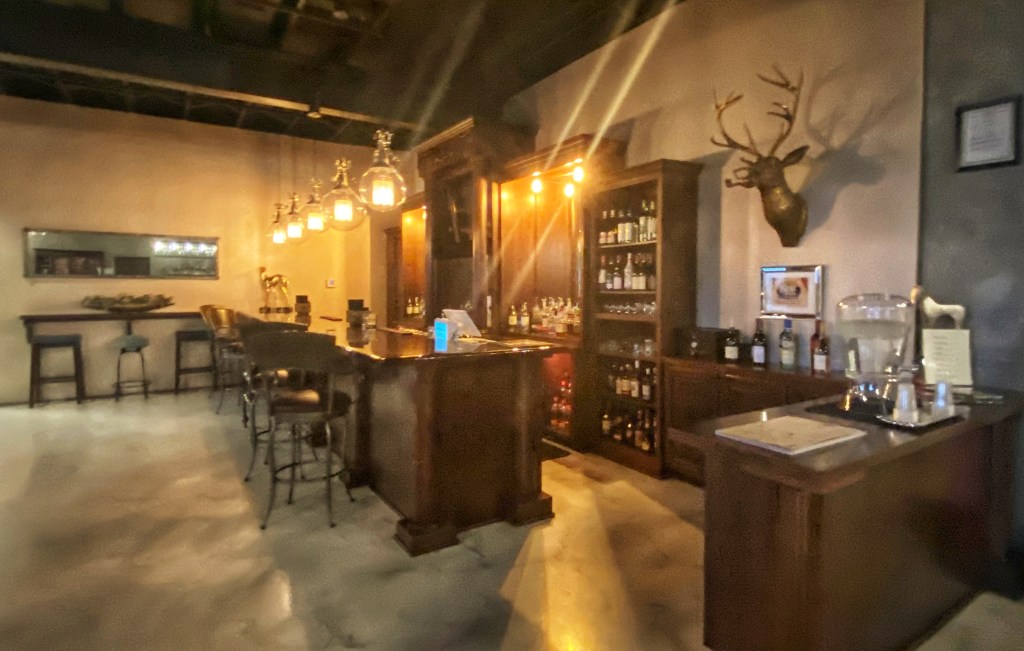
We grabbed a bite to eat and then made our plan for the next day.
Day two:
Fort Laramie National Historic Site


One of the things I enjoy most about visiting National Park sites is the opportunity to learn more about history, nature, cultures, and people.
Situated at the confluence of the Laramie and North Platte Rivers, Fort Laramie NHS is located in the heart of the American West. Today it is an NPS site, but it has also operated as a military fort and popular fur trading outpost.
Fort Laramie NHS is located on the ancestral homelands of several indigenous tribes such as the Lakota, Cheyenne, Arapaho, and others. This area was central in the tensions between indigenous tribes, white emigrants, and the U.S. government. In fact, it was the Treaty of Fort Laramie (1868) that started the pushing out of indigenous tribes onto reservations.
Chief Red Cloud was a prominent leader of the Lakota and we learned about him and his wife (Good Road) at both of the NPS sites we visited.

Army Iron Bridge over the North Platte River, built in 1875. To do:
We enjoyed viewing the quality selection of books in the bookstore, watching the 18-minute film in the Visitor Center, stepping inside the historic buildings as we toured the grounds, and imagining this site in its various eras and operations.

Old Bedlam: Wyoming’s Oldest Standing Military Building. Note: Although the name Laramie might be familiar, some might be surprised to learn that it is derived from a French fur trader named Jacques La Ramee, who disappeared and was thought to be killed. The Laramie River was named in his honor.
Oregon Trail Ruts
After talking with the friendly staff at the Fort Laramie NHS bookstore, we learned we were only 20 minutes away from a unique portion of the Oregon Trail.
The Oregon Trail Ruts State Historic Site is a place where you can literally see where history left its mark. This site is unique from other trail ruts I’ve seen in that the wagon ruts are preserved in sandstone instead of a grassy swale. The depth is also quite apparent and makes the trail incredibly obvious. This was such an amazing sight to experience!

Oregon Trail Ruts near Guernsey, WY Register Cliff Historic Site
When we arrived at the Oregon Trail Rut site, we saw signs for Register Cliff and later made our way down the road to check this site out as well.
Apparently, it was custom as you traveled on the Oregon Trail, California Trail, and Mormon Trail to “register” your name as you passed by–on your way out West! Register Cliff is one of three such register rocks and the most eastern. The two others are Independence Rock and Names Hill, each located in Wyoming. Obviously, this custom is no longer in practice–please practice Leave No Trace principles when in the Great Outdoors.

After passing through Fort Laramie, emigrants heading west would stop near Register Cliff. Travelers started registering their names as early as the 1820s. Between 6-10% of emigrants perished on the overland trails, predominantly from diseases.
Agate Fossil Beds National Monument
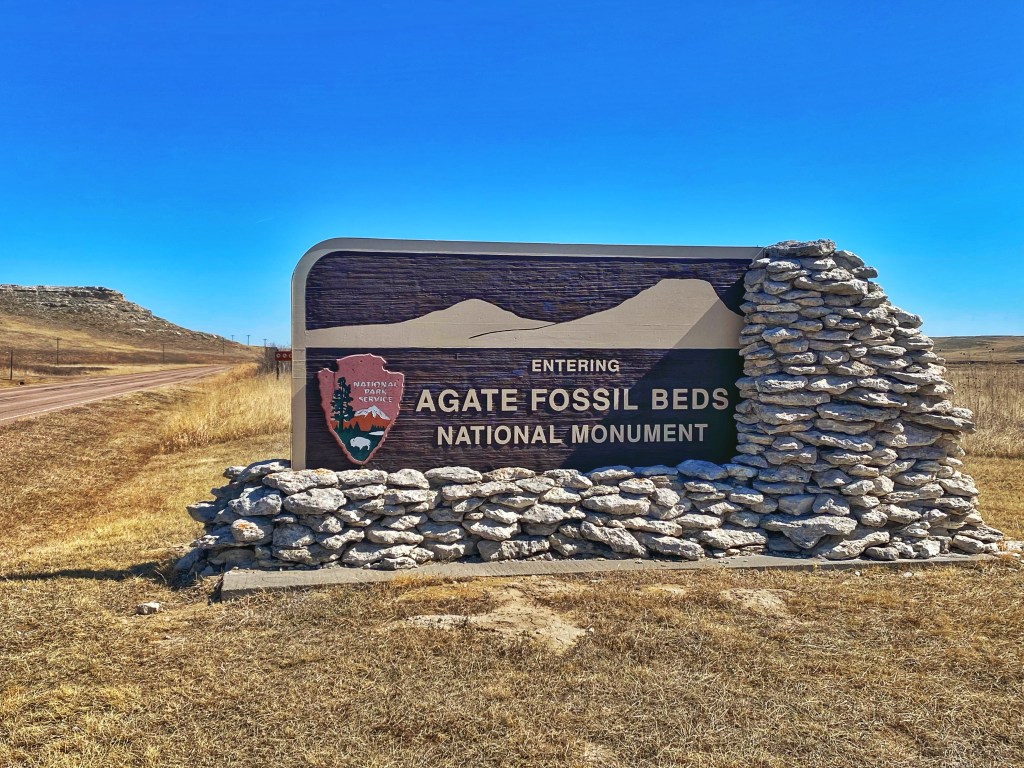
After a long, remote stretch of driving we arrived at Agate Fossil Beds! Have you ever heard of a beaver-like animal called a paleocastor?
Have you ever heard of a beardog?
Have you ever heard of a two-horned rhino called a menoceras?
No, these are not from the next best sci-fi thriller (or maybe they could be!!) …. These are just a few of the MANY rare and amazing fossil species found at Agate Fossil Beds!
My mind was blown that there were so many various species that we had never heard or seen of before!

Got my passport stamp from Agate Fossil Beds. To do:
**One of the highlights of Agate Fossil Beds National Monument is the James H. Cook Collection: A Window Onto Lakota Life. Two rooms inside of the Visitor Center are dedicated to Lakota life, as well as the friendship between James H. Cook (owner of Agate Springs Ranch who formed Agate Fossil Beds) and Chief Red Cloud of the Lakota Sioux nation. Many of the items in the collection were gifts from Chief Red Cloud and his family to the Cooks.


Good Road’s dress made from three tanned elk hides. **There is a 12-minute film about the history of the Agate Fossil Beds, which provided images for the fossils found nearby and how they came to be discovered.
**TRAILS: There are two popular trails for visitors to explore.
Fossil Hills Trail: 2.8 miles roundtrip to the historic dig sites. You do not see fossils on this trail, but you do see where they were found.
Daemonelix Trail: 1 mile lollipop loop where you will see “in situ fossil exhibits of the spiral corkscrew fossil of the Paleocastor.” This was one of my favorite parts of this visit!


Devils Corkscrew After a full day of exploring, we headed back to Gering to refuel and chill for the evening.
Good Grub in Gering, NE
On our last night, we visited the Tangled Tumbleweed for some refreshments. Though it’s marketed as a tapas restaurant, which usually means small plates with a Spanish flair, the servings were quite generous and had a distinct Midwestern twist. Nonetheless, every dish was delicious! The cheese curds, in particular, are a must-try; they were exquisitely made, and the raspberry jalapeño jam that accompanied them was just perfect!


They offered a variety of gluten-free choices and an impressive whiskey selection. Should we find ourselves in Gering once more, we’ll certainly return!
Day 3:
We had some morning coffee from Cappuccino and Co. and then we hit the road back home!
We had a super fun, educational, and spontaneous road trip to the Great Beyond, that is Wyoming and Nebraska!

Happy Adventuring!
adventure, Agate Fossil Beds National Monument, American West, California National Historic Trail, Chief Red Cloud, Flyover Brewing Co., Fort Laramie National Historic Site, Gering, Hiking, Hotel 21 & Co., Indigenous History, Lakota, Mormon Pioneer National Historic Trail, National Park Site, nature, Oregon National Historic Trail, Oregon Trails Ruts, Register Cliff Historic Site, Scotts Bluff National Monument, The Tangled Tumbleweed, Travel, Wyoming -
The Kentucky Bourbon Trail: Our First Time on the Trail.
(This is part two of a five-part series. Part one can be found here. Stay tuned for the rest of the series.)
The Bourbon Trail started as a way for my dad and I to continue bonding after my mom passed away. It wasn’t about the drinking (well, maybe we were excited for a little taste or two) but rather finding a common ground and a shared new adventure.
We had no idea what we were getting ourselves into or how much we would come to learn and love- not just about bourbon- but also about Kentucky!
Terms of the Trail:
Rickhouse: A building or structure used for storing or stacking barrels of bourbon.
Mashbill: The recipe of the grains contained in each bottle of bourbon.
Angel’s share: This refers to the amount of liquid that evaporates out of the bourbon barrel during the aging process.
Devil’s cut: This refers to the amount of bourbon or whiskey that gets absorbed into the wooden barrels during the aging process.
White dog: Raw, unaged whiskey distillate.
Still: A distillation apparatus used to distill liquors, some are columns and others are pot stills.
Kentucky Hug: This refers to the opening of flavors and warmth that “hug” the mouth and body after tasting bourbon.
Fermentation: This is the first step in bourbon production. The grains from the mashbill are ground together and then hot water and yeast are added to convert the natural sugars to alcohol. The chunky liquid produced is called distillers beer.
Distillation: This is the second step in bourbon production. The distiller’s beer is heated in a still and the alcohol vapors are condensed and collected as a liquid. The product is often distilled 2-3 times.
Maturation: The final stage of bourbon production. The distilled product is stored in charred, new oak barrels and follows the rules of the bourbon ABC’s.
Trip #1 Itinerary:
First stop: Louisville, KY.
Instead of flying into Louisville, KY (Bourbon Trail headquarters) we met up in Nashville, Tennessee and drove three hours north to Louisville. It was my first time exploring the Bluegrass State and my first observations were that it was quite lush and beautiful–lots of rolling hills (which Dad called mountains) and red barns with farms under a big, open sky.
About thirty minutes outside of Louisville we saw signs for the Jim Beam Distilling Co. We didn’t plan on making the stop but we were so excited to see our first distillery that we decided to go for it. Shortly after the exit, we saw the iconic Jim Beam logo on an old white barn.

Our first stop on the trail; Jim Beam Distilling Co. (J. Foster, 2019). It was in that moment I realized the full effect of marketing and advertising that surrounds our daily lives. For the next several days we would be delving deeper into these familiar logos and brands, learning what they were all about. I instantly wanted to see the process of how these products were created from start to finish–from grain to distilling to being placed on the shelf.
We made it to the main entrance and gift shop just before closing. We missed the last tour, but it gave us an idea of what we might expect to see on this trip: gift shops, tasting rooms, historic buildings, distilling rooms, and iconic labels surrounded by lush landscapes. As we walked around and looked at the products, I noticed a small brown book labeled “bourbon passport.” The clerk behind the counter explained how it worked and suddenly we were more committed than ever to tour the trail!
We arrived in the city center of Louisville, KY after dark. We found a good deal for lodging at the Galt House, located on the Ohio River. The city and the riverfront felt alive. We checked-in to our room and then walked down the street to Merle’s Whiskey Bar; southern-style food and whiskey? Yes, please!

Downtown Louisville, KY and the Ohio River. (Goodfreephotos.com, stock image). Day 1: Hitting the Trail
The next morning, we woke up and ate breakfast at the hotel, overlooking the river. It was a cloudy, rainy day but we felt energized and glad to be together.
Our first distillery tour of the day would be Buffalo Trace Distillery. In my previous post I mentioned that not all of the distilleries in Kentucky are on the official Kentucky Bourbon Trail, Buffalo Trace is one of them. However, it is definitely one of the best bourbon tours in the country (and one of our personal faves)!

Buffalo Trace Distillery; Frankfort, KY. (J. Foster 2019). What really stood out to me was the vastness and beauty of the property itself, along with the many historic rickhouses. You just feel surrounded by history at Buffalo Trace.
As we later learned, many well-known bourbon makers have had an association with what is now known as Buffalo Trace…such names as: EH Taylor, George T. Stagg, Blanton, Pappy Van Winkle, Elmer T. Lee, and more.
Note: Prior to our first bourbon trip, I was not familiar with the oh so popular Pappy Van Winkle….So, in addition to getting bourbon passport stamps, we also began our quest for a taste of this hugely hyped (and expensive) bourbon. I will share about the moment we finally got to taste some Pappy in post #4 of the series.


Not all distilleries are the same. Some only offer tastings, others have tours and tastings. Most charge for one or the other. The cool thing about Buffalo Trace is that the tour is FREE and includes a tasting! However, reservations are definitely a must! Click here for availability.
The Process:
Fermentation–> Distillation –> Maturation = Bourbon

It starts with the grains, (J. Foster 2023). The above process is essentially what you get to witness when touring the Kentucky Bourbon Trail distilleries. It is such a cool experience to get a behind the scenes look at how our country’s leading brands produce their bourbons! It feels like being in a big science lab! As you explore different distilleries it is interesting to compare mashbills and see what makes different bourbons and brands unique!

STEP 1: FERMENTATION 
STEP 2: DISTILLATION 
STEP 3: MATURATION
Next Stops Along the Trail:
After Buffalo Trace we then drove 20 minutes south to Woodford Reserve Distillery. The outside of this distillery felt like quintessential Kentucky with white picket fences and gorgeous buildings! We enjoyed lunch in the main visitor center and signed up for a tasting. We didn’t have time for a tour but enjoyed their bourbon tasting selections, the straight bourbon was my favorite.

Bottles of Woodford Reserve, (J. Foster 2019). Next, we continued another 20 minutes south to Wild Turkey Distilling Co. This was a smaller venue compared to the other two distilleries, but the friendliness of the staff was top notch! We sat and tried a small flight of their bourbon offerings. We tried the Russell’s Reserve Rye and the Longbranch (mesquite). They both contained a long Kentucky hug for my palate.
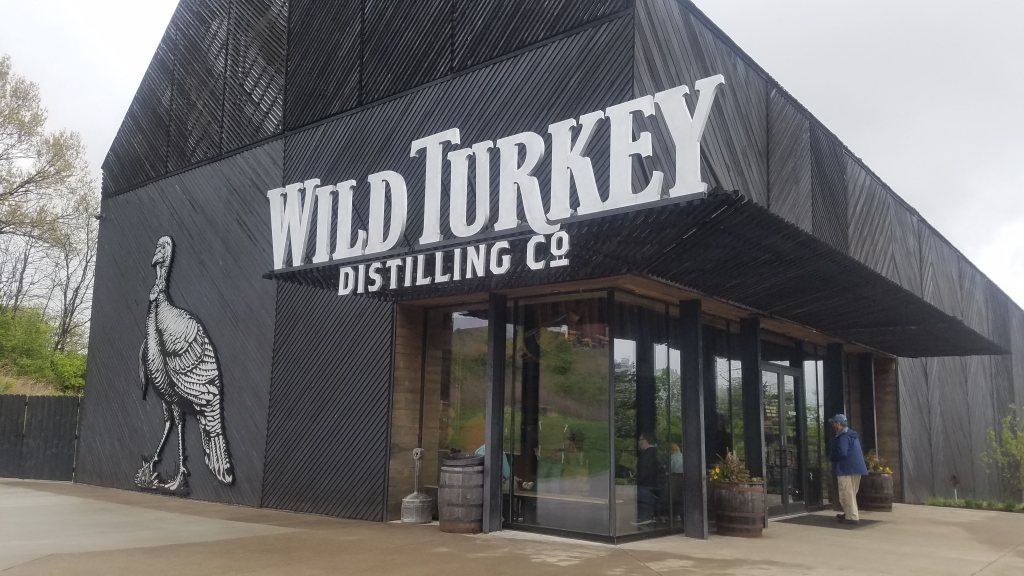
Wild Turkey Main Visitor Center and Tasting Room, (J. Foster 2019).
Bourbon Trail Trip # 1 Totals:
Distilleries: 4, Passport stamps: 3. Memories: Abundant!

Photo from our Woodford Reserve tasting, (J. Foster 2019).
We Had Fun Off-Trail:
Since this was our first trip, we planned things to do on and off the bourbon trail in case we didn’t return to the region. (Little did we know we would be back several more times and still counting….)
We continued our way back towards the Nashville airport. However, we couldn’t leave Kentucky without visiting Mammoth Cave National Park. We checked into the Lodge at Mammoth Cave and stayed in one of their cabins for the night. Not every National Park has onsite lodging so that was really cool to stay inside of a National Park.

Entrance to Mammoth Cave National Park, (J. Foster 2019). We had reservations for the Extended Historic Tour, which was a 2-mile tour that included seeing an 1840s tuberculosis unit inside the cave! We walked through narrow passageways along with huge rotundas! It was an awesome cave tour adventure! We definitely had fun! You can read about the cave tour descriptions here and make your reservations here, through Recreation.gov.

Former tuberculosis unit inside Mammoth Cave. After our time at Mammoth Cave, we arrived back in Nashville. We checked in to a hotel close to the airport and then took a rideshare to downtown. This was my Dad’s first time to experience Nashville’s honky tonks. We walked up and down Broadway, popping in and out of live music venues. Tootsie’s and Layla’s are two original venues and are still hot spots for good singer-songwriter talent. We had dinner on the rooftop at Ole Red’s (Blake Shelton’s new restaurant and live music venue). It was a great way to wrap up our first bourbon tour.
We headed back to the hotel and sat in the lobby. We talked, laughed, and then packed up for the morning flight.
Grateful for our time together on the trail and off the trail!

Dad and I, honky tonking. (J.Foster 2019). In the next post, I will share about historic Bardstown, Bourbon Manor, Heaven Hill Distillery, Maker’s Mark, and several other stops. Stay tuned.
-
The Kentucky Bourbon Trail: An Introduction.
During the first series, we will learn what makes bourbon unique, as well as, introduce the Kentucky Bourbon Trail. In series 2-5, I will share my bourbon trail trip itineraries and a few insider tips!
Part One: What is Bourbon?

Photo: The front page of the original bourbon passport. Now there is a newer, expanded Field Guide, 2019. So, what is bourbon? What makes it different from whiskey? There are several rules that help to distinguish the essence of bourbon. Those in the industry often call these rules the ABC’s of bourbon:
A–Bourbon must be made in America.
According to the 1964 Senate Concurrent Resolution 19, bourbon is “a distinctive product of the United States.”
B–Bourbon must be aged in a new charred, oak barrel.
*Note: Previously, rules stated that the barrels had to be made of white oak.
C— Corn! To be a bourbon, the recipe must contain at least 51% corn.
D— Bourbon cannot be distilled above 160 proof.
E— Bourbon cannot enter the barrel at more than 125 proof.
F— Bourbon bottles must be filled at 80 proof or higher, or 40% alcohol by volume.
G–Genuine! Bourbon cannot have anything added to it throughout the entire process–except water. No added flavors or color, except the color that comes from the charred oak barrel.
If you’re still wondering what the main difference is between bourbon and whiskey…think about it this way: whiskey is essentially grain, water, and yeast (similar ingredients as bread and beer) …without any rules!
Bourbon, on the other hand, has rules.

Photo: Large vat of sour mash, one of the steps in the fermentation process, Wilderness Trail Distillery, 2023.
Kentucky: The Bourbon State
As mentioned in the rules above, bourbon has to be made in America. Bourbon does not have to be made in Kentucky. However, Kentucky is the leading state for bourbon production.
Bardstown, Kentucky is currently known as the Bourbon Capital of the World, as it has the most distilleries per capita of any other city in Kentucky.
Before Kentucky was known for bourbon, it was known for its whiskey. Immigrant farmers from Ireland and Scotland soon started to make whiskey from their excess corn harvest. Prior to this, rye was the main ingredient in whiskey. As the popularity of whiskey began to grow, so did the production. The corn-based whiskey from a little county named Bourbon County (named after French royals) soon became known as bourbon. In more recent times, instead of being a byproduct of frugal farmers, bourbon has become its own niche in the world of distilled spirits.
(Source: Bourbon, Straight; The Uncut and Unfiltered Story of American Whiskey, Charles K. Cowdery).
Hit The Trail…The Kentucky Bourbon Trail!

Photo: A display at the Frazier History Museum in Louisville, KY. The “official” start of the Kentucky Bourbon Trail, 2023. According to my last Google search, Kentucky has over 86 distilleries and each year more pop up! Many of these distilleries offer tours of their facilities, where visitors can watch and learn how bourbon is made.
In 1999, The Kentucky Distillers’ Association trademarked the term “Kentucky Bourbon Trail” and created passport books featuring distilleries that are members of the Kentucky Distillers’ Association. Now, the Kentucky Distillers’ Association has created essentially two tours: the original Kentucky Bourbon Trail Tour (featuring 18 signature distilleries), as well as, the Kentucky Bourbon Trail Craft Tour, which came onto the scene in 2012. The craft tour is different from the original trail tour in that they are marketing it for a more intimate, hands-on experience compared to some of the larger tours at the other distilleries.
Note: It is important to know that there are several awesome distilleries that are not members of the Kentucky Distillers’ Association, and therefore are not featured in the Bourbon Trail Passport & Field Guide (e.g., Buffalo Trace) but are still worth the drive and the time to taste and explore!
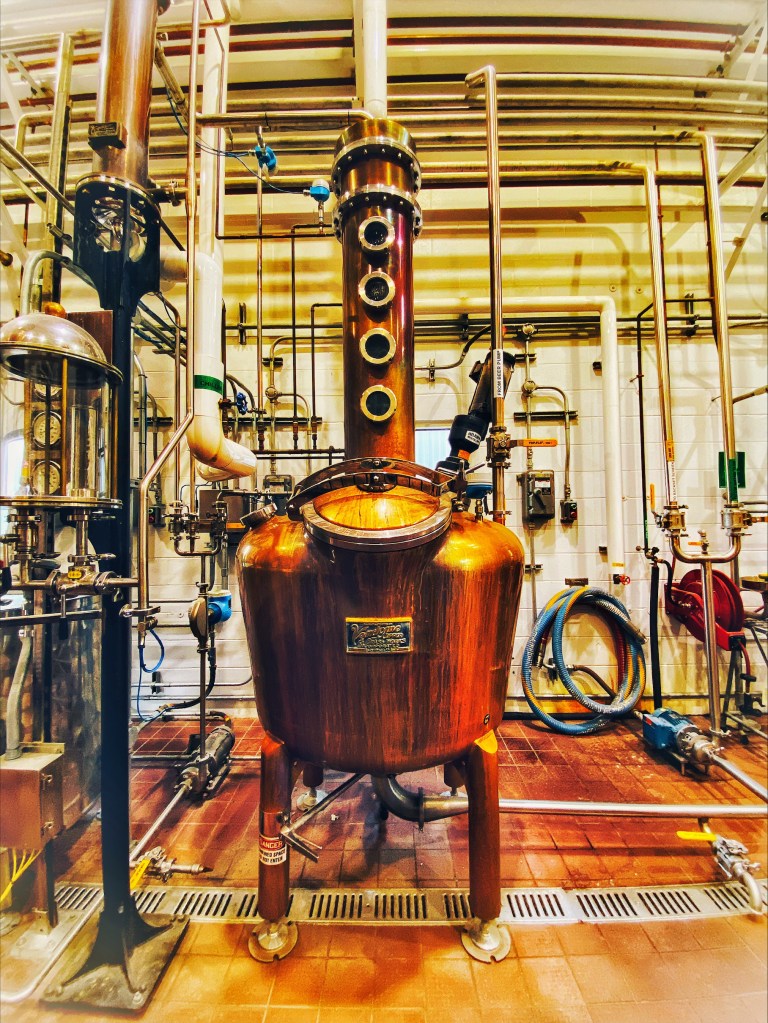
Photo: Vendome brand pot still,
distilling operation at Stitzel-Weller, 2023.When my family and I first set out to tour the Kentucky Bourbon Trail, we had no idea what to expect. Along the way, we have enjoyed the rolling hills of Appalachia, viewing the limestone rock that holds up Kentucky–and is what gives its water such purity for its bourbon concoctions, visiting all 18 of the original trail distilleries and learning the vocabulary of the bourbon-making process.
Most importantly, our adventures on the Kentucky Bourbon Trail have given us plenty of memories and stories to share.
Stay tuned for Parts 2-5, where I will share more photos and information about the fermentation and distillation processes, helpful bourbon vocabulary terms, trip itineraries, insider tips, and stories about my family’s time exploring the backroads of Kentucky!
Order your Bourbon Trail Passport and Field Guide HERE.
-
Subscribe
Subscribed
Already have a WordPress.com account? Log in now.
 Wilderness & Rye
